Time to pull over?

It is easy to drive too long without a proper rest. Both Leonie and myself find that two hours is a comfortable time. Especially when the road is straight and the scenery a little featureless, it is very easy to lose concentration. This is why highway authorities put ‘rest areas’ along the highway. It is here that a few things need to be said about the road side stops in New South Wales along the Newell Highway. In a word, the greater majority of these are pathetic. If you want to pull over and rest, sure, you don’t need much. Everything changes, however, if you want to get out of the car…

For a start, the rest stops on the Newell Highway often a basic shelter constructed in a clearing with little creativity or beautification. There is rarely a toilet. I am a tax payer, and I know all this costs money. The reality is, however, that there are lots of taxpayers driving this highway every day. They all need to rest every two hours or so. But on the Newell, most of them are greeted with a 44 gallon drum for rubbish, a dusty parking area, and on closer inspection, toilet paper and other bits of ‘refuse’ left by previous travellers. They get to enjoy all this under the shade of the aforementioned shelter. It’s all a bit ugly, and who would want to do it?

My thought is this: if we are really concerned about driver fatigue the authorities would do something about it. And if there was any sense of aesthetics they would make rest areas the kind of places that people would want to use. They would install composting toilets, put in a few plants, and an information board about the local area or the original inhabitants (or what happened to them).

Places like that would be way more relaxing than some of the highway service centres we have seen. These are typically a few service providers in collaboration with a fuel stop. These places have toilets. They have fast food. Some have good coffee. But they are soulless and sterile. Sitting in one at Wallan on Sunday I found myself wondering what the occupants did for any sense of community. The clientele of itinerants changes constantly, and with the centre located along a section of Hume Freeway there was no town centre or village to give it a sense of place.

For me, the best places to meet people are in the towns along the highway. Here you can talk to the locals, and at least get some sense of what the town is like. Outside the towns, a thoughtfully constructed rest area is much more relaxing break than buying fast food somewhere. You can smell the bush, hear the birds, and feel the breeze.

If government would consider this, and act on it, the end result might be something that encourages drivers to rest more effectively. Travellers would have a more pleasurable driving experience. Roads would be a safer, and people would be happier.


Take me home, Country Road

After having such a full Christmas Day celebration, I was surprised to find it a little hard to switch off when we finally rolled into bed at 2300. Even though I was looking forward to sleep an hour or two before I actually got to bed, I found that when I finally lay down my brain was still asking, ‘did I pack that jacket?’, ‘should I set an alarm?’, ‘should I get up to close the window in case the rain blows in?’, and the worst of all ‘what if can’t get to sleep easily tonight?’ I am not sure why, but for some reason the prospect of spending two days in a car still appears to be exciting enough to interrupt sleep…

Even so, the next morning we managed to leave just 15 mins after our scheduled departure time. 0545 and we were on our way. The rains we had expected intensified as we crossed Cunningham’s Gap and made our way to Warwick. There are probably better places (!), but we always gravitate towards MacDonald’s in Warwick. McCafe coffee is at least Rainforest Alliance (which is close to Fair Trade) and the breakfasts are reasonable. While waiting for the coffee, I noticed the man next to me was reading two copies of The Weekend Australian, Naturally, I assumed that they were both provided by the management for clients like me…

“Hey mate, can I have a look at the copy underneath the one you’re reading?” I ask.

“Nope. Coz their both mine…” replied the man with the weathered face, who just had to be a farmer.

“Oh, sorry mate, I thought they were restaurant papers.”

“Nah mate, bought ’em both. We’ve got a mob up from Melbourne, and what do yer reckon would happen with just one paper? So I bought two… but I’d have to be a bit of an arsehole if I wouldn’t let you have a look at one while yer waitin’ for yer coffee…”

There is something about the Australian humour: dry, straight-faced, and specifically designed to make you think you’ve met a closed door. Then surprisingly, the door swings wide open. The subtle smirk at the corner of the mouth, the almost imperceptible wink- or is it a twinkle – tell you you’re speaking to a friend and not a foe. A few minutes later I walked away with a roughly hewn latte, and realised I did not even ask the man’s name. I was blessed by his friendship, and yet did not pay him the courtesy of asking his name of offering mine. I have to do this differently next time, and see if I can out-bless the other.

A big country

As you make your way through Warwick, Goodiwindi, Moree, Narrabri, Coonabarabran and on to Dubbo, you very quickly realise how huge Australia is. There are hundreds of kilometres to cover, and you’re not even halfway to where you want to go. On the Newell Highway this means long stretches of highway driving, punctuated by what seems like equal periods of time stuck behind someone’s Winnebago or caravan. It used to be that the exception to this was Akubra wearing famer, accompanied by his dog, driving a ute. Things are less certain these days. The Toyota or Mitsubishi has replaced the Holden or Ford. But farmer, hat, and the dog, however, appear to have outlasted any innovation the auto industry can throw at them. And they still slow you down…

Road Trip – Boxing Day

It’s 0500, the birds are waking up, the rain is falling heavily in Wellington Point, and we’re about to leave on our trip to Melbourne, with an overnight stay in Dubbo, NSW, about 12 hours driving away.

One complication right now is that the remains of a tropical cyclone in the Kimberleys in dumping a lot of rain over parts of Queensland and NSW. There is a possibility that this could cause flash flooding that may disrupt our trip. The radar images indicate that it’s not too serious at present, so at this point we plan to follow our original route. Our track will take us west of Wellington Point, over Cunninghams Gap, and then to Warwick, where we will have some breakfast.

The bags are near packed, we’re doing last minute preparations, and we hope to leave within 30 mins.

Can’t wait! Here we go!

Chat later,

Dave

A Million Miles in a Thousand Years – Don Miller


The story starts when a movie producer wants to make a film about Don Miller’s life. This is all very exciting until Don realises how boring it’s all going to look. So Don and the producers wrestle to develop a storyline that will hold interest. As they wrestle with this, we are drawn into what Don discovers, not only about movies, but about life itself. We start to see how life might work better, both for Don and for us. The surprise this book has for us is how this ‘better story’ might become our reality. 

A Million Miles in a Thousand Years drew me into the questions of my own life. I wondered about the ‘story’ or my own life, and before I knew it, I was thinking about how it could or should develop. As Don and the people of his book faced their challenges, I thought about how I was facing my own challenges, and whether I would meet them more resolutely, or further seek to avoid them.

I was also struck with the observation that the restlessness we sometimes feel in life often arises out of an ignorance of what our story actually is. Too often we do not know what sort of character we are supposed to be. As a consequence, we rarely get the idea that identity and meaning are formed as we grapple with the conflicts that inevitably come our way. Surprisingly, this realisation did not get me withdrawing from the challenge, it actually drew me deeper into it.

Miller’s book does that to you: it is an enticing invitation into hope. You read it and you want to be a better person. I love the way Miller’s warmth and spirituality sneaks up on you, whets your appetite for a fullness of life, and sometimes takes your breath away.


I have provided this review as a member of the Thomas nelson Book Review Blogger program. You can be part of it too by signing up at http://brb.thomasnelson.com/


Funerals: celebrating life

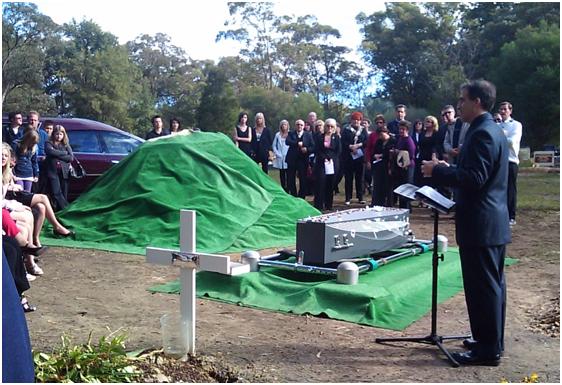
I have seen a lot of coffins, but I had never seen a coffin decorated with piano keys and music notes. Handles for the pall bearers were chrome cylinders attached with piano strings. I liked it. A lot. It was a tasteful expression of Eric’s love for music. While no professional musician, guests spoke of how he listened to, and drank in, and played music on a daily basis.

Before the casket was lowered, instead of throwing in soil, or laying a flower on the casket, people chose a piece of chocolate from a bowl, and placed it on top. I very deliberately placed by piece on B-flat. I don’t know that Eric was so into blues, but it suited my mood on the day.

Later, at the service of celebration, there was a tasteful mix of grief and laughter. Some of Eric’s children spoke, some performed musical pieces, his pastors spoke, guests spoke (more about that tomorrow), and once again, profound hope was expressed in music and song.

I have also seen funeral celebrations turn into a form of crass denial. Where it’s all made out to be a party, where banal humour and christo-pagan superstition permeates proceedings. “Yeah, I bet Bob’s up there now, beer in hand, looking at us all down here, wondering what all the fuss is about and when we’re all gonna get back to work…”

We can all do without that. And really, funerals do more harm than good when they trivialise life like that.

At Eric’s funeral we wrestled with life and its wending course. Together we sought to make sense of Jesus’ claim to be resurrection and life. We did that through our tears. And we celebrated everything Eric had brought into our lives, the talents he used to serve others, the expertise he brought to his workplace, and his quirky style of humour, we were celebrating the work of an extraordinary God in the life of an ordinary man.

But celebration? Seriously? How can you walk out of a funeral more in the lightness of hope than the heaviness of grief? This is the reality of Jesus’ life in us. His is a promise of hope, of life, that cannot be extinguished by death. This is what we have in the good news. When that deep celebration and profound joy resonates, even from a grieving community of followers, resurrection joy is palpable.

This is what we should celebrate at a funeral. How we have seen God’s life come to expression in this person. How we have seen beauty. How we have sensed a pursuit of justice and right. How they showed us a healthy spirituality. How we have learned about relationship, how others have been valued, honoured, and served.

Memories like anchor our affirmation in God’s work of grace in the life of another. We’re reminded that the Gospel is not just a religious idea or a doctrine to be intellectually accepted. It is an invigorating, transforming reality. When these transformational realities take root n a person’s life, they anticipate the new world Jesus will bring: God has already started his work of transformation in his people. Proof positive that Jesus is renewing minds, attitudes and values, and through them bringing change to his world. One life at a time.

Shalom,

Dave

Thoughts Occasioned by a Funeral

Last week we buried Eric. He was a fine person. A good man. A great follower of Jesus. And the first of my youth group generation to die. All that has got me thinking.

I met Eric in 1973 when I started attending his church in Blacktown. My parents had been solid in their faith for years, and had recently decided to switch churches. The church they chose was were Eric and his family attended. I was at a stage in life where I was making big decisions about life direction. I wasn’t being particularly principled about it. I was just in ‘default’ mode. When you are 15 years old, and your parents attend a church where there are no kids your age, there are always going to be more attractive options on a Sunday morning. I did not know it then, but I was at faith’s fork in the road. My parent’s decision to switch was a life saver. The life that was saved was mine.

Looking back now, I see how God used Eric, and a few others, to draw me into faith and followership. They helped me belong. They draw me into a small group who opened the Bible and sought to find its relevance for our lives. It was great. It was real. I came to see how following Jesus could be fun, exciting, and a rich broadening of what it meant to truly live.

At Eric’s funeral I remembered all this. I remarked how we shared a love for music, and great bass lines. He was into keys, I was getting into bass guitar. I remember now that he loved a good Monty Python line. And he loved his trail bike (he had a Kawasaki 250 or something). He let me ride his bike. He even let me ride his bike when I fell off it.

I don’t think Eric was my closest friend, and probably was not his closest friend either. Even so, it was the community, the friendship that Eric and others provided, that became the soil God used to nourish my faith. I am incredibly thankful for that. And I was blessed to have the opportunity to say so at Eric’s thanksgiving service.

Eric was the first of that generation of friends to die. Many of those present had made the same comment. It has given me reason, not only to reminisce, but also to consider life and death, and some of the important aspects of what it means to follow Jesus in such a time as this.

I hope my thoughts will be of value to you.

Shalom,

Dave

Where is God in all this?

Are you asking why? I am. I do regularly when things happen that that hurt and leave me a mangled.

My problem is that I don’t ever get too far past that question.

And I’m guessing that there are many people in Australia and the world over for whom the question ‘why’ is a regular and relentless visitor.

As a follower of Jesus I am not immune to pain and grief and doubt. The questions come

  • What have I done to deserve this?
  • Why did this happen?
  • Is this how God works?
  • Where is God in all of this?

Those questions were driven home with even more intensity this morning as I learned of a Melbourne Pastor who has announced his view that the fires in Victoria are a result of that state’s abortion laws. I am no supporter of abortion, but these words are ugly.

Reading them made me sick. Right in the gut. Angry. And very, very sad.

That voice sounds so arrogant, insensitive, and judgemental. It is devoid of all hope and grace. It reminds me of fingernails running down the blackboard: just stop it. It is callous and heartless. It perpetuates the pain of this tragedy.

And then I got thinking about the big question: ‘where is God in all of this?’

While I’m wary of platitudes, I think there’s something in the Bible’s picture of a seeking God, who risks his own comfort and safety to go after the lost and the broken.

So here is my portrait, for what it’s worth…


I saw Jesus this morning. You may disagree, and others may doubt. But I saw Jesus. I did.

He’s the fellow in the orange suit, the red goggles, the gloves, and the big hard hat.

He was standing there, leaning forward against the pressure of the water.

Beating back the flames.

Now, his face is blistered and burned from the heat.

He’s feeling spent.

But he’s there to save people, to fight fire. To turn back hell on itself.

He’s the bloke wiping the sweat from his brow. Staring. Cuppa in his hand, it’s tipping a little, like he has no strength left.

And you can see the tracks of his tears down the blackened, dirty cheeks.


See the pilot of the Ericson Aircrane dousing the flames with water?

Did you see the woman, weeping on the shoulder of another, because her husband had died?

Or the policewoman, with the mask to her face, looking into the shell of the burnt out car. What is she holding back?

Or the ambo, holding the mask to the guy with the badly burned arm.

Or in every one of the $15m currently pledged from one man to his mate.

This is where God is. At the rescue’s front line. Bringing hope. And a new beginning out of hell’s inferno. He’s been in this business a long time. And we shouldn’t be surprised to see him show up the way he does.


Shalom

Let’s unite to bring relief in flood & fire tragedy

Hear the cry… Help the grieving… Lift up the broken… Bear the burdens… Share with those in need…

Today I have been struggling to grasp the size of the natural disasters in Victoria (Bushfires) and northern Queensland (Floods).

I was watching the Channel Nine news last night, when I heard that well known Melbourne newscaster Brian Naylor and his wife, Moiree, had perished in the fire. I choked up a bit about that. I did not know the Naylor family personally, but he seemed a likeable man, someone who genuinely cared for other human beings. It then occurred to me that there are many other families affected by the fires, either by death of friends and loved ones, significant loss of property and homes. Or simply the terror of being threatened by fires, or in the case of northern Queensland (the town of Ingham in particular), rising floodwaters.

It’s Monday afternoon here in Brisbane, 2:45pm, and the death and damage toll is rising every hour. Everyone says the numbers will get worse in the next few days.

Here are a few stats as they stand at present

Queensland

Cyclones and heavy rains have brought severe flooding to northern Queensland

  • Ingham residents isolated for the eighth successive day
  • Townsville residents sandbagging in expectation of a king tide
  • Millions of dollars of fruit produce have been lost, the cane harvest in worst affected areas has been ruined http://tinyurl.com/aeagcm
  • Many towns are isolated, many people are homeless
  • Damage bill could exceed A$190million

Victoria

  • 128 confirmed dead in Victorian Bushfires
  • The towns of Kinglake and Marysville have been almost wiped off the map
  • Over 30 fires still raging
  • Over 5000 people homeless as a result of the fires

Excellent news coverage for both Queensland and Victoria on the ABC News web portal: http://www.abc.net.au/news/

Give Generously

Now is not the time to argue about which agency should receive the funds, whether they go through churches, or community or denominational groups. People have died, thousands are homeless. Grief, trauma, and severe hardship has invaded the lives of too many people.

Now is the time to act. Act now. Be compassionate. Help your brother. Hear the cry of your sister. Care for the children. Read Matthew 25:31-40

And God would just want us to come to their aid, so here’s how you do it:

Bushfire Appeal: channel funds through the Australian Red Cross. Red Cross have stated that 100% of the funds donated will go to victims and their families. You can go straight to the donations page at https://www.redcross.org.au/Donations/onlineDonations.asp

Queensland Premier’s Flood Relief Appeal: Anna Bligh, Premier of Queensland, has launched a special fund to help alleviate the effects of flooding in northern Queensland. People can donate to the Premier’s Flood Relief Appeal by:

• Phone: 1800 173 349. The Smart Services Qld Call Centre will be open 24 hours a day.

• Mail: Premiers Disaster Relief Appeal, PO Box 15185, City East, Qld 4002.

• In person: Visit CBA, NAB, Westpac, ANZ, Bank of Qld or Suncorp.

• Internet banking: Premier’s Disaster Relief Appeal, BSB: 064 013, Account number: 1000 6800

These agencies have a proven track record, capacity to deliver, forces on the ground, and public transparency.

God loves cheerful, generous and courageous givers.

Now is the time to act. Go for it!

Shalom,

Dave Groenenboom

Books I read on holidays…


Jesus Wants to Save Christians, Rob Bell & Dan Golden, Zondervan, 2008

Incredibly rich understanding of the Biblical narrative, Bell & Golden’s manifesto for followers of Jesus is an incredibly stimulating read.

If you’ve ever wondered about the calling of Christians and the church in the 21st century, you have to read this book.

It made me dream about meeting the challenge of implementing and anticipating the new heavens and the new earth in the here and now.

Every church leader needs to read this book. I bought copies for RCRC’s leadership and ministry teams

—————


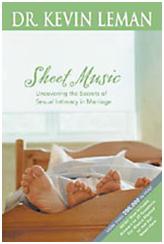
I have read a few books on sexual intimacy over the years, and Lehman’s “Sheet Music” is one of the best. There are no embarrassing euphemisms, and no ‘cringe factors’ that I can remember.

This a great resource for couples who want to share a deeper and warmer sexual intimacy. Also great for couple preparing for marriage.

——— ½


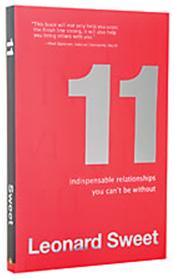
11 opens up a raft of relationships any person will do well to cultivate. No one possesses all wisdom and foresight, and I think we all know that truth comes best in a team setting.

Len Sweet is a great wordsmith, an insightful critic of culture and a wise interpreter of Scripture. His book helped me see a little more of what’s going on in my life. He made me ask whether my team and close friends are having a wholesome impact on my life.

I wondered, though, whether 11 critical relationships was a few too many? I am not sure I can have close relationships with that many people effectively.

I also was looking for a sharp, purposeful angle in the book, and apart from acknowledging these relationships will help you cross the finish line well, I struggled to maintain forward momentum. Could be my issue, I guess. But I suppose I would have benefitted from a more purposeful development of the material.

——— ½


The account of the events surrounding the death of Cameron Doomadgee on Palm Island on November 19, 2004

Chloe Hooper walked with Andrew Boe through the trial of Chris Hurley. We hear the cries of Doomadgee’s family, we sense the fear of Hurley, we gasp in disbelief at the inequity. Most of all we ache with the sheer hopelessness of the case. Prejudice. Indifference. Seemingly intractable problems. I was disgusted by the history of my own State (Queensland) and the sort of bungling and apparent corruption which has made justice, in this case, almost an impossibility.

I started inquisitive and interested. I finished angry and broken.

All Australians need to be more aware of the oppression that is happening even in this day. Queenslanders, we should all read this book, and at least learn something as Hooper lifts the lid on our own history, past and present (see Chapter 1, The Island, p.7 ff)

———— ½


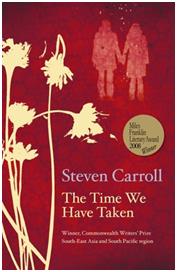
A gift from Leonie, The Time We Have Taken is an ambulatory study of several suburban characters in the 1960’s. We see how they interrelate, how they love and fall out of love, how they live and die.

Carroll develops his characters with great depth and warmth. We’re drawn into the naiveté and intricacy of Australian homes, hearts, and proclivities.

———


 The story of how a Jewish Haggadah from the 16th century was discovered and conserved. We are taken into the lives of various people associated with the Haggadah.

You will read sub-stories and adventures from the Yugoslavian Partisans, Jewish communities in Spain, and the infamous Spanish Inquisition.

Brookes’ research brings great texture, and the diverse nature of her characters makes this consuming reading. No wonder this author has been honoured with a Pulitzer.

————


While not a terribly recent title (2004) I thought this would be good to decompress and get me into holiday mode. Wrong. Having read a number of Jodi Picoult’s titles, I found James’ style irritating. She takes great care developing the back story in the first chapters – stacks of detail there. But I found myself saying “I’m up to page 115 and there hasn’t even been a murder yet!”

I thought her vocab was a little forced in places: transmogrification is a great word, but how much does vocab like that add to engagement and reader value? I thought it was a bit of a pose in places.

But as one person said to me a few days ago, “It’s still not bad for an old woman with a black handbag…”. Enough said.

———

New Year’s Revolutions

Welcome to 2009

It may be nineteen days late, but I’ve been on leave for the last three weeks, so this is the first chance I’ve had to express some thoughts and prayers I have been working through for the two months. I have called these ‘New Year’s Revolutions’, because most of them I just want to keep rolling around, returning, reforming and reframing with greater focus.

So here’s what I am looking at

  1. I want a more prophetic and challenging ministry. That means I want to listen to what’s going on in my life, the lives of people around me, the culture in which I live, and hold that up to God’s call to be a people implementing and anticipating new creation. I want to speak to and expose our blind spots and the complacencies of my own culture. I want this to be decisive, incisive and breathed by the Spirit. Please understand: I do not want to suggest that we are all slacking off. The truth is, there are lots of people at RCRC who are great servants in great ministry. But we do have a tendency to favour what like and want, rather than true needs around us. I 2009 I would love to see that change
  2. I want to see more spiritual passion. I could be wrong, but sometimes I sense that we’re wary about a rich expression of following Jesus in life and worship. Whether it’s a lavish gift, some outward expression of heartfelt joy, or a rich sense of community and acceptance when the community of Jesus followers gather. For this reason, I think it would be good to ask a few questions of ourselves:
    1. Is my celebration of God as expressive as my celebration of great exam results or the victory of the team I love? Which one is better? Which gives me more hope?
    2. Is my welcoming of Jesus followers on Sunday as warm, expressive and heartfelt as the meeting of a best friend I have not seen for a long time? Does our expression of community say something about the wonderful transformation Jesus has brought and is bringing?
    3. Is God really the centre of my celebration on Sunday? How could I give better expression of this with his new community?
  3. I want to lead and preach toward full commitment and Christ centeredness. We all know perfection only comes when Jesus returns so I’m not thinking of dividing us into business class Christians and the economy variety: some Christians who have ‘made it’ and others who haven’t. But let me ask you – and let me keep asking you:
    1. Are you in top spiritual condition? Where do you rate yourself on a scale of 1-10 where 1 is ‘not at all Christ centred’, and 10 is ‘as Christ centred as I think I can be’. Let’s say you give yourself a 6/10. Do you think God is satisfied with that? If not, what do you have to do to move up a notch? What attitudes have to change? What do you need to put to death? What needs to come alive?
    2. Is RCRC in top spiritual condition? What needs to change? What do we need to do more, and what should we be doing less?
    3. Are you in a context where you are being stretched theologically? Where your desire to know God and serve him is really being deepened? Are you seeking greater opportunity to grow? Have you made a goal to nurture your faith significantly in 2009? Have you signed up for Foundations? (watch this space)
  4. I want to see RCRC truly embrace a healthy outward focus. We’ve talked a lot about this: serving our community, being salt and light, being an agent of hope for Redlands. Now we have take it to the next level. I know we are all busy. Me too. I probably can’t do more things than what I am doing at present, so I need to think of the following:
    1. What can I drop or do differently? Letting something go doesn’t mean I no longer agree with it, or that it’s become bad. It may just mean that as I change and meet new opportunities being a good steward means I need to do things differently
    2. What will I do to specifically serve the outward mission of the church? Jesus has given his transforming love to me minute by minute – so how will I implement something of his transformation in my life? You may not be Mother Theresa, but here are 10 suggestions (as distinct from commandments) to start you on your way:
      1. visit some lonely people
      2. cook a meal for the single mum a few doors away
      3. ring/email school chaplains to let them know I’m praying for them
      4. offer to mentor a child at a local school
      5. get involved in something like the Matthew Stanley Foundation or the Melanoma Awareness Foundation – two causes that have been too close to home for many
      6. help Meals on Wheels
      7. pray for the Missional Communities group at RCRC
      8. send regular encouragement to those involved in RE teaching
      9. support RCRC specifically engaged in evangelism ministry
      10. just pray daily for my church to move from ‘in here’ to ‘out there’. Pray for Ministry Team people like Dan Neville, Geoff Hughes and Rod McWilliams as they seek to lead us into this

And then, a wish: I would love to see some healthy creative ministry develop, specifically for powerful communication at Sunday services. I am not talking about ‘skits’ so much, as well produced, well presented, dramatic presentations that support, add texture, and harmonise with what preachers like me present. These can be so powerful!

I wouldn’t mind betting that there are a few people in the RCRC family who could run with this – speak to me! What a great way to use your talents and gifts to bring God’s message of grace and hope to people!

Friends, I know this year will have its share of challenges. We all, by God’s grace, need to pull together and in the same direction. Ours is the rich privilege of taking the blessings God has so richly poured out on us, and using them to bless those who have no hope, or power, or love. God has blessed us with life in Jesus, and this year we get to celebrate it afresh with one another.

What we need to understand it that the purpose of that life and blessing is to carry it to the community around us, so that the world may know there is a God who is transforming His world through His Son, Jesus.

Shalom,

Dave