I love Jesus, but do I have to be radical?

My opening post reminded us that growth is natural and normal. It also openened up the thought that health is desirable. Whether we are talking about growing vegetables, human beings, organisations, or the church – it is a normal expectation to want them to be healthy.

As we worked through these concepts at Gateway, we began to think that God actually wants us to be radical followers of Jesus. But we knew the word using ‘radical’ would be a little risky. We hear how people become extremists by being taken in by a militant leader and radicalised over a period of time. Normally, the consequences of such actions are terrible.

At other times, when we hear the word ‘radical’ we think of those rent-a-crowd protesters we see on TV. People who don’t wash their hair, don’t eat meat, and don’t use deodorant. A caricature, I know, but you get the drift.

‘Radical’ may have some negative overtones in our culture, so we need to understand the word well. To be ‘radical’ is to go right to the core, right to the heart, right to the root. So, when we’re talking about being ‘radical disciples’ we’re talking about people who not only accept the teaching of their Master Jesus, who not only accept Jesus at an intellectual level. We are really talking about people who take his transforming grace right to the core of their lives, right to the heart of their values, right to the root of everything they seek to do and to become. To be a ‘radical disciple’ is to be as totally transformed by the grace of the Gospel as we possibly can be.

when we’re talking about being ‘radical disciples’ we’re talking about people who take his transforming grace right to the core of their lives

If this is what being a radical disciple is, then it is hard to imagine anything better than everyone being exactly that: a radical follower of Jesus.

Here’s the challenge: the call to be radical disciples pushes us away form some of the negative expressions of the church and Christians today.

Radical disciples are not people who keep their Christianity for Sunday, and who forget about Jesus’ claim on their lives as leave their palace of worship.

Radical disciples are not people who have an occasional thought about Jesus, or who restrict their ‘time with Jesus’ to 10 or 20 minutes every day. They don’t divide their time into ‘time for God’ and whatever the rest is: time without God? Who knows.

They are not people who worship every now and then. They don’t just put in an appearance at weekly gatherings, or who tilt at doing a ‘church job’ every now and then.

Here’s what radical disciples are: They want their entire life, everything they do, everything they think, to be an expression of the new life they have received in Jesus.

Every hour of every day they want to breathe the new heavens and the new earth, to be living, walking, talking, loving expressions of life the way God created it to be.

Radical disciples live in the profound privilege of bringing Jesus’ new creation to expression.

More and more they live and breathe this desire to honour God in everything: their family, their work, their sex life, their relationships, their leisure choices, their spending habits. Everything.

Radical disciples display something similar to my overzealous gardening habits: they check themselves out regularly to see whether they are growing. They know that growth is normal, growth is natural, and health is desirable.

Q: Do you think the call to be radical is helpful? Do you think we can make it a positive value in today’s cultural climate?

Next: Is the focus on growth something God calls us to in His word?

Being a disciple: Growth is normal and natural

I’ve been working on material which outlines some of the big picture responsibilities of the church today. I thought this material might be of interest to a wider audience, so here it is.

This material has already been preached at Gateway Community Church, and while these posts won’t be in the form of entire sermons, you are free to use the material in any way that helps you. Please give credit where credit is due…

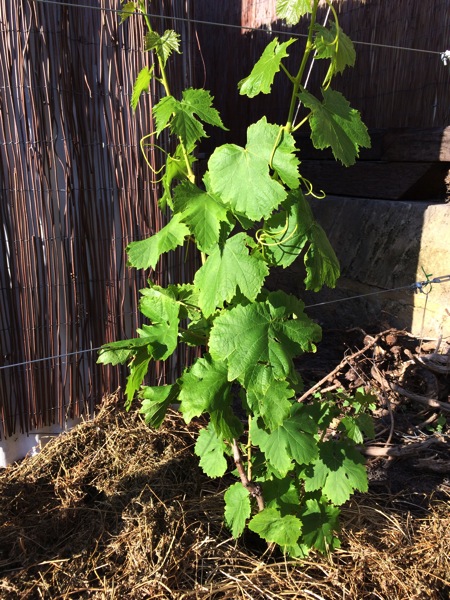
IMG 0189

Since moving to Perth a few years ago, I’m developing a new appreciation for the challenges of gardening. We’re trying to grow a few vegetables, and it’s proving to be more difficult than I thought. This is basically because growing things in Perth is like trying to grow things at the beach. The last time I went to the beach, I did not see too many vegetable plots or rose gardens. Our problem is that our suburb used to be an actual sand dune. Actually, it still is a sand dune. It’s just that we have covered the sand dune with places to live.

So, if you want to grow some vegetables you will need to develop some skills in soil improvement. There is a lot to do: Add bentonite to create a loamy consistency. Add organic matter: compost, sheep manure, blood and bone. Keep an eye in the pH balance. Don’t forget to mulch your vegetable garden with lucerne hay.

In addition, I have been trying to become a more biblical gardener.

The prophet Zechariah talks about life in the new heavens and the new earth, and says ‘In that day each of you will invite your neighbour to sit under your vine and fig tree,’ declares the LORD Almighty.’ (Zechariah 3:10, NIV)

I thought this was good advice, so I planted some a couple of grape vines and two olive trees. I know olive trees are not figs. But being olives, they are biblical enough for me.

Gardening teaches you patience. This is not an easy lesson to learn. So much is instant these days. Entertainment. Power. Hot water. Music. But this does not work with a garden. You plant the seed and wait. Nothing is fast. The fastest result will still be a few weeks away. Most of the time, you’ll be waiting at least two or three months to harvest some produce.

Growth is slow. I go out every other day and see how the plants have grown. I check the vines. Do they need more support? More training? De-budding?

I check the olive trees. I look for the tiny blossoms, sure signs that there will be a harvest. After a few weeks the flowers start setting to fruit, and things are looking positive.

Interestingly, one of our olive trees doesn’t have any flowers on it at all. This is a bit of a mystery. I go every other day, searching for those tell tale buds, but there’s nothing. Nada. Zip. And I think to myself: that’s just not right. It should have blossoms like the other one. It’s the same variety, it’s in the same stage of development, bought from the same old Italian man on the other side of town, propagated with the same arthritic hands, coaxed along in the same broken English. Identical contexts, but different result.

So I am wondering whether there’s something wrong with that second tree. It may have a problem. (You may even suggest that if I am going out there every other day to look for blossoms, maybe I am the one who has the problem!)

The question is: why am I thinking there might be something wrong with that tree?

I am asking that question because it is natural to grow, to be healthy, to be fruitful. Isn’t this the basic direction of life? Vegetables should grow and be fruitful. Olive trees should get buds and produce a delicious crop.

Growth is natural and when it is not happening we have to ask some important questions.

Same with people. We expect little ones to develop and thrive and grow and learn. Parents rejoice when their baby takes that first step, when they utter their first word. This is growth. It is natural. And it is very good.

It’s the same for people who follow Jesus. For Christians. For churches. Growth and development is the most natural thing. I’m not necessarily saying a church which grows in number is automatically healthy. I am pretty sure that a church which offered free beer every Sunday would probably experience some good growth. Doesn’t mean it would be healthy.

It is true, though, that healthy churches and healthy Christians grow.

As far as this post is concerned this is still an unproven statement. The next posts will build a case for growth. I hope they will challenge us into it. For now the lesson of the olive tree is probably enough. Growth is natural, and when it’s not happening, we have to ask some important questions.

Security Alert

Shared this post on CRCA Catalyst yesterday. Helpful information about reducing your exposure to hackers, phishing, and identity theft.

Leave a comment to share your suggestions on internet safety

davidgroenenboom's avatarCRCA Catalyst

Internet Security

Hi everyone,

I read an excellent article in the Sydney Morning Herald today about personal internet security (see link below).

We all have passwords for various things on the internet (email, websites, Facebook, etc.), that much we know.

What we might not realise that many people use the same password for just about everything. That way, it’s easy to remember.

It’s also makes it a lot easier for someone to hack into your accounts. If this happens, it may well be more than embarrassing: you could lose a lot of money, your identity could be stolen, your loved ones could be put at risk.

So, I encourage you to take a few minutes to read this excellent article. I also encourage you to take necessary steps to make your internet experience more secure and safe.

You can read the SMH article here.

If you have some suggestions on the…

View original post 29 more words

Paradise of Dad’s Work – Bernard Salt

144989 130914 wap salt
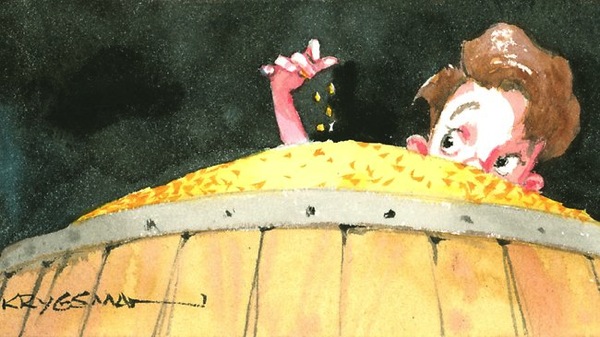
(Graphic: Stuart Krygsman; Source: The Australian)

[Reposted with kind permission from Bernard Salt, originally printed in The Weekend Australian, Sep 14-15, 2013]

MORE than 50 years ago, before going to school – I must have been four – I spent half the day with my father at his work. Mum must have been ill; I can’t quite remember the circumstances. Dad worked in the produce department of a country co-operative store in a small town in western Victoria.

Dad’s workplace was the most wondrous place. It was a drive-through shed that was cavernous, cool, dark and terribly manly.

The store sold farming and building supplies, as well as clothing and groceries. They even had what was known as a “fancy department”, which sold gifts and dainty stuff and was staffed by women. But down in the produce department, where dad worked, it was men who were always scurrying about, busy at their work. They wore Yakka overalls. They rolled their own cigarettes. Have you ever seen a man roll a cigarette? I know it’s a confronting concept now but back then I thought it was a choreographed work of art.

One man wore a leather apron; he had a pencil balanced permanently behind his ear. The shed was filled to the rafters with stacked hessian bags of wheat and chaff. Have you ever smelled hessian? Have you ever run your fingers through a bin of wheat? Have you ever wondered at the lightness and fluffiness of chaff? Have you ever smelled timber being dressed?

There was a joinery attached. It had a buzz saw that was strangely reassuring; it was the sound of work. At morning tea the men would gather in the joinery and pull up a saw-horse to sit on, drink black tea from tin cups, eat broken biscuits that couldn’t be sold in the shop, and joke and laugh and talk about football. I was in heaven. They had names like Tom and Jim and Harry and Bill.

Dad dispensed a product known as millet. I think it was fed to chooks. It smelt malty. It smelt delicious. I ate some. Damned lucky chooks, I say.

Every year the co-op store had a company picnic. Maybe 30 families would board buses to a park on the foreshore at Port Fairy. There were egg-and-spoon races, sack races and three-legged races. There was a sprint once. Dad didn’t win, but then he didn’t come last either. Late in the afternoon the entire picnic would bus to the wharf for a joy ride on a fishing boat out into the blue water beyond the breakers. Perhaps 30 people would cram aboard a single boat. No safety harnesses. No life vests. Kids were left to wander the deck of a working fishing boat that would pitch and roll. Salt water would spray in your face if you managed to get into the right position. Back then it was “your lookout” and not someone else’s to ensure that you didn’t fall off the boat.

The danger, the fun, the adventure, the edge that was that boat ride is something that has stayed with me for decades. On the way home, in the cool of the summer’s evening, there would be singing on the bus: Irish Eyes are Smiling and It’s a Long Way to Tipperary were favourites.

It’s odd, the seemingly irrelevant minutiae from childhood that stays with you for years, and that perhaps will stay forever.

Bernard Salt is founder of the facebook page Decent Obsessions.

saltb@theaustralian.com.au

———-

Dave:

Bernard Salt’s piece brought back memories of my grandfather, Jan Groenenboom. He was a greengrocer and mixed business operator in Lidsdale, NSW. He had one of those leather aprons. It had silver rivets on the corners. He wore the trademark pencil behind the ear. I can still see him, stand there with his hands in his pockets, underneath the apron, and a Ritmeester ‘Little Cigar’ between his lips. I can smell the fruit and veggies. I can hear the compressor pump kick in under the work bench.

And I remember the hessian bags and the smell of wheat and grain from the back of the shop in Portland where Leigh Eave’s father worked. The whole footy team would be weighed in there on his big produce scale. Me, Bellamy, Kearnesy and all the others. And an older man from the team would be there, writing everyone’s weight in the sheet in his knife chiseled pencil…

Great memories. Thanks, Bernard, for bringing them back…

Is your life about getting treasure, or being treasure?

IStock 000022010807Small

Returning to our discussion of money and wealth…

We recall that Israel was called to be a kingdom of priests, a holy nation, God’s special possession (see Exodus 19 and my previous posts “God & Treasure” and “What is your Treasure?“).

That was then. What about now? Does that call still apply to us? If so, how should we respond? What bearing does it have on how we live, on how we view treasure, or possessions, or wealth?

The truth is that the call to be an alternate society, a contrast community, comes just as powerfully to us today as it did to Israel then. Right at the start of his ministry, Jesus made it clear that he was restoring what his Father had intended, and what Israel had failed to achieve. This had implications for all who followed Jesus. Their first priority was not to seek treasure and wealth. Their treasure was to live out God’s rule and be treasure.

Jesus says, “So do not worry, saying, ‘What shall we eat?’ or ‘What shall we drink?’ or ‘What shall we wear?’ For the pagans run after all these things, and your heavenly Father knows that you need them. But seek first his kingdom and his righteousness, and all these things will be given to you as well.” (Matthew 6:31–33, NIV) God was promising to bless them, provide for them, and bring his Kingdom to light through them.

Jesus addressed the matter of treasure directly in Matt 6:19-24. This passage has often troubled readers. People wonder what ‘treasures in heaven’ are, and whether they are working for the right stuff.

The nature of ‘treasure on earth’ is reasonably clear. By talking about ‘earth’ Jesus refers to the human domain and dimension. We seek earthly treasure when we build our lives and aspirations around the things that represent fallen humanity. In the context of Jesus’ metaphor, ‘earth’ is a place of decay, an impermanent existence where everything disappoints. The things we strive for: success, beauty, reputation, influence, possessions, the sense of security that our relative wealth brings – none of these things will last. None of these will deliver the life we aspire to, or the peace we long for. This is what it means to be ‘of the earth’. To store up ‘treasure on earth’, then, is to make these impermanent and ultimately unsatisfying things the focus of your life.


seeking ‘treasure in heaven’ is to build our life around the things of God

If earth is the impermanent dimension of humanity, then heaven is God’s dimension. Heaven is the place where his will is done perfectly. Where there is grace, beauty, justice, relationships of perfect love and integrity. These are things that will last. This is where life is perfectly centred in Jesus, expressing the full perfection of God’s original design.

So, seeking ‘treasure in heaven’ is to build our life around the things of God. To centre our lives and aspirations around the things that matter to him and the things that reveal his true intention for life and his world. Heaven is where God’s will is done. Heaven is where Jesus’ new life and his better way come to perfect expression. Grace, humility, justice, compassion, beauty, faithfulness – eloquently revealed in relationship with him.

When Jesus enters peoples lives, his rule comes to expression as they stop living to gain treasure, and instead start to live as treasure bringing love, forgiveness, care and mercy into every part of their lives.

Q: What one thing is God calling you to change? How would your life be different if you started to live this way every day? How would your church be different?

Australian Refugee Policy for Dummies #1: Disingenuous Rhetoric

Mark Glanville has been following the Australian Refugee debate closely over recent years. Mark addresses the issue from a standpoint of familiarity with the policy, and more importantly, a deep knowledge of and respect for God’s word in Scripture.
Can I encourage you to subscribe to Mark’s blog to stay informed with a well informed Christian response to the issue of asylum seekers in Australia!
Grace and peace, Dave

The Bible – You’ve read the book, now see the movie…

72947 184926108322074 151959343 a

I wanted to let you know that this evening (Tuesday 16th) Channel 9 will be screening Paul Burnett’s miniseries production “The Bible”. The is the miniseries’ introduction to Free to Air television in Australia

Disclaimer: I have not seen any of this series, nor have I read the reviews widely. There may be other reviews which may draw other conclusions – feel free to post those links in the comments section.

I am letting you know about this series because any production of this type says something about the culture we’re in, and how we see the events of God’s rescue of his people. Like anything else, these are best watched with an open mind and a discerning eye.

It could be that if it’s well done, this series will be a tool for your church, or something to discuss in your home groups.

View the trailer

Read some of the reviews here:

IMDB’s review page

Alpha Australia’s publicity release

The Gospel Coalition: David Nilsen’s Review

Christian Film Database Review

Follow the discussion on

Facebook  Version 2

Facebook

God and Treasure

IStock 000004408974Small

We hear a lot today about nations operating in the national interest. Sometimes, hopefully often, that is a good thing. Like keeping people safe and protecting them from aggression. There are times though, when ‘national interest’ is code for naked national self-centredness.

The book of Exodus was written after God delivered his people from a superpower which, to put it bluntly, was just operating in the national interest.

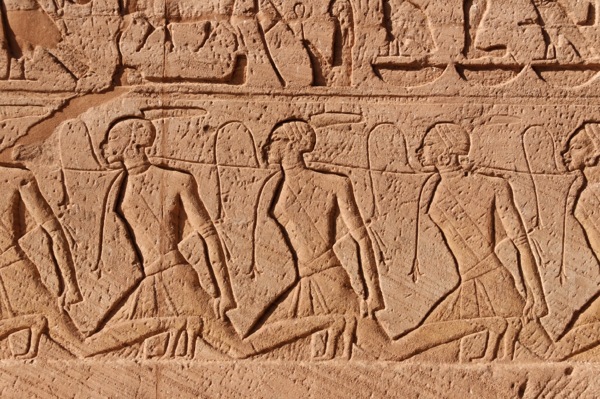
Ancient Egypt was a mighty nation, dominating the world stage at the time. And Pharaoh was using the people of Israel as cheap labour – the cheapest, actually, because they were slaves and had no choice in the matter.

So God’s people cried out. And the Lord heard their cry.

Pharaoh, however, ignored it. He made the people of Israel work even harder. Worked them to death.

Why?

Because Pharaoh valued production above people. Pharaoh would have fitted comfortably into some of today’s developing world labour markets. Places where the dollar matters most, where questions are never asked about the actual human cost of the item or the project.

Into this kind of ugliness came the Lord of life: Yahweh the Rescuer, the Saviour.

“The LORD said, “I have indeed seen the misery of my people in Egypt. I have heard them crying out because of their slave drivers, and I am concerned about their suffering. So I have come down to rescue them from the hand of the Egyptians and to bring them up out of that land into a good and spacious land, a land flowing with milk and honey — the home of the Canaanites, Hittites, Amorites, Perizzites, Hivites and Jebusites. And now the cry of the Israelites has reached me, and I have seen the way the Egyptians are oppressing them.” (Exodus 3:7–9, NIV)

The Lord hates it when any people are oppressed. Even more so when they are his people. So he led them out of Egypt with a mighty hand and an outstretched arm. He led them across the Red Sea on dry ground. The Lord did this because of his covenant with Israel. He had promised to bless them, and make them a blessing. He had promised to make their descendants as numerous as they stars in the sky and the sand on the seashore. God’s promises matter. He never goes back on his word.

So now, with the Red Sea sand still stuck between their toes, as they camped on the border, ready to enter the land of promise, God renewed his covenant with them:

“‘You yourselves have seen what I did to Egypt, and how I carried you on eagles’ wings and brought you to myself. Now if you obey me fully and keep my covenant, then out of all nations you will be my treasured possession. Although the whole earth is mine, you will be for me a kingdom of priests and a holy nation.’ These are the words you are to speak to the Israelites.”” (Exodus 19:4–6, NIV)

These verses show the kind of nation Israel was to be:

First, in contrast to Egypt, and other nations, Israel was not to be a nation driven by seeking treasure. They would find their comfort in being treasure. Yahweh’s treasure! They would not need to find their security or significance in things because Yahweh was their security. The fact that they were loved and saved and rescued by him was their significance.

Second, Yahweh called Israel to be a kingdom of priests. It sounds like an odd thing for a country to be. How can a nation have a priestly function?

Well, we know that a priest is someone who represents others in a religious context. A mediator. A go between.

So, Israel was to represent the nations to the Lord. They were to bring the needs of the nations around them to his throne of grace. In times of famine they were to pray. They were to act compassionately in times of disaster. They were to ask the Lord to be merciful and gracious to all the peoples around them.

But it wasn’t just bringing the nation’s needs to the Lord. They were also to bring the Lord and his will to the nations. They would proclaim the truth of God and invite other nations to accept him in faith and live under his covenant. As priests, then, they spoke on the nation’s behalf to God, and on God’s behalf to the nations.

Third, they were to be a holy nation. We tend to think holiness has to do with religious acts and places. In the Old Testament, holiness is not first and foremost religious acts and things. Holiness is a personal quality. To be holy is to be separate, to be distinct, to be set aside for a particular purpose.

So, thinking that through, how would this nation show their holiness? The answer is that they would reflecting the character of the Lord in their national and personal lives. This would happen as they followed the Lord’s commands as a nation and as individuals:

1. worship only God
2. worship no idols
3. use God’s name only with reverence
4. remember the Sabbath day, allowing for rest and worship
5. Honour your father and your mother
6. You shall not murder
7. You shall not commit adultery
8. You shall not steal
9. You shall give false testimony or lie
10. You shall not covet what belongs to others

As God’s people did this, they would be displaying a life and values radically different from Egypt and every other nation on earth.


…a life and values radically different from every other nation on earth … this transformed life is one of the ways they would be a blessing


What was their motivation? Well, they did not obey in order to be loved and rescued. Yahweh already loved them and rescued them. They were already his special possession. The answer is that their obedience was all about gratitude and thanksgiving. It was not a requirement to earn love, but a response to the love the Lord had freely given. This changed and transformed life would be one of the ways they would be a blessing to the nations around them.

It was as if the Lord was saying, you have come out of a nation where people treasured wealth and power more than people…

You will not live for treasure or possessions. You will live because you are my treasured possession.

You are a Kingdom of priests: you will bring the nations needs to me, and you will bring my will to the nations.

You will be a holy nation. You will separate yourself from all the dehumanising values of oppression that you saw in Egypt. You will be different, distinct, to all that.

This call presented Israel with their identity. They would be totally unique as compared with all the nations around them. The Lord’s work in them was to be a total reorientation of life. A radical alteration how they were to engage the world around them.

This call was to shape the national ethos of God’s people. In my next post I’ll pose the question of how that is relevant tot God’s people today.

– Dave

What is your treasure?

Enough - banner

Enough… Treasure

Read: Exodus 19:1-8

Last week Leonie and I watched The Hobbit. The story starts with the dwarfs losing all their treasure, and ends with them mountain an expedition to win it back from the wiles of the dragon. In the midst of it all we are introduced to Golum, and to Bilbo Baggins who manages to take Golum’s personal treasure, which he has named ‘My Precious’.

Great movie. Wonderful fantasy. And yet expresses a profound truth: The quest for treasure does not leave us. The thought that somewhere there is something that will make work unnecessary, or give us beauty, or deliver success, or make life easy – or better still – eternal, is deliciously captivating.

Truth is: We are all seeking some kind of treasure.

This desire lies at the core of the human heart. And we direct our lives to pursuing it.
Here’s an email I received while I was writing this sermon:

EBay

Look at how this ad is positioned: it tasks about what you love; it panders to your interests, passions and preferences; it’s addressed to your needs, and asks you to follow. It’s a profound example of how our culture works.

Advertising tells us a lot about ourselves, and what we think is important. They say that kids in the USA are exposed to something like 40,000 ads per year. A study in Queensland found that because of the use of children in advertising, by the age of 7yrs, 71% of girls want to be slimmer.

Advertising knows the truth of the human heart: that we all treasure something.

Broadly speaking, our economy is build around the laws of supply and demand. Around the belief that healthy markets and economies should always expand. And markets expand by producing things that people want. You’ve got to be competitive, so companies look to reduce costs: labour, utilities, plant & equipment, human resources.

When I was a kid, cheap stuff was made in Japan. As conditions improved in Japan, the cheap labour market labour shifted to Taiwan, and then to China. Then on to Vietnam, and now? Bangladesh. Recently, 1200 people died in a building collapse in Bangladesh. The pressure to keep costs down led to shortcuts in safety and building standards. These workers endured terrible conditions to produce fashion items predominantly for our shops.
It happened because the manufacturers and retailers place more value on profit and production than on people. [You can view an excellent report on this terrible tragedy on ABC Australia’s “Four Corners” via iView]

It is an unpleasant thought, but this is actually part of our culture’s history. English colonists simply settled in Australia, believing it to be Terra Nullius – owned by no one. No one considered the rights of the people who were already here. Efforts were made to settle peacefully, but when resistance came, it was met with terrible and disproportionate force.

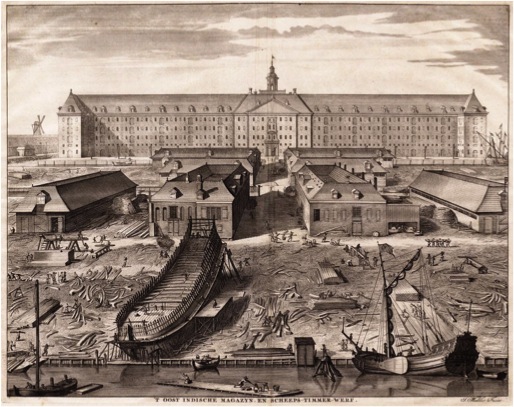
The Dutch did no better in Batavia (present day Indonesia). The Dutch East India Company’s Captain Coen wiped out whole settlements of natives so he could build the colony and the walled defences of the Citadel for the Governor.

Batavia

How did these world powers justify their actions? Because lucrative spices, resources, and a colony was more important than people.

“…we cannot carry on trade without war, nor war without trade” [Capt Jan Pieterszoon Coen, Governor-General of the Dutch East Indies, 1618]

Those words make me squirm. They should give us pause when today the harsh treatment of people is justified in the name of national interest. And they give us pause because we realise that western society – our society – has for hundreds of years been built by seeing the lives of some people as expendable. We treasure things, and dispose of people.

The point of this hard truth is not that we send ourselves on an eternal guilt trip, but that we repent of the tendency to devalue people in preference to possessions. I don’t know exactly how that should be done, but we can start by considering where, and how, the goods we purchase are manufactured. We can do it by persisting with questioning retailers, and realising that there is some power in the dollars we spend in their establishments.

Grace and peace

– Dave

Enough… Money & Wealth

Enough

Over the weeks of June I completed a short four week series at Gateway called “Enough… Money & Wealth”. The idea for the series title came from Compassion Australia “The opposite to poverty is not wealth… it is enough.” What does “Enough” mean? And would we be really satisfied if we had “Enough”? I find these troubling questions.

So, the series looked at how wealth and possessions shape our lives, the formation of our values, and consequently, the expression of our faith and the witness of our church.

I found this series challenging to preach. It’s always a challenge to preach, of course. But this series nailed me a little more than normal. More than other times I was aware that my own life was out of step with what God called his people to in his word. So, to keep myself honest, to let this conviction settle into action, I decided to serialise this series in some blog posts. As I rework them, I am praying that God will drive me to live them more determinedly.

I’d be really happy to have your interactions with these posts, and to engage in discussion via the comments. Let’s see if we can deepen our individual and corporate witness through this series.

I hope you find them as challenging as I did, and it’s my prayer that God will change us all through his word. May he depend our desire to follow him radically, and may his name be praised as we live to his glory.

Grace and peace,

– Dave

PS: It may be that occasional posts finish a little abruptly. This will be because I am trying to follow the basic text of my messages, where each point followed the other, instead of being punctuated by several days. So, I’ll try and make the transitions work as best I can for the blog format.