
Pastor, what do you do when you’re ’out of season’?

Pic: D Groenenboom

Preach the word; be prepared in season and out of season; correct, rebuke and encourage—with great patience and careful instruction.” (2 Timothy 4:2, NIV)

Reflecting on this passage this morning, I thought about that phrase “be prepared in season and out of season.”

In the original, ‘be prepared’ is a call to ‘stand up’ or ‘be ready’ to preach and minister under any circumstance. Lea and Griffin (NAC) see this as staying on task whether you feel like it or not, and/or whether the people under your care find it convenient or not.

I’m guessing most pastors sense when either they or their church is in season or out of season: times of self-doubt, fatigue, feelings of hopelessness and/or helplessness. Or church congregations which may need challenge, correction, or gentle guidance into the newness of the Kingdom (see 2 Tim 4:1).

It would be nice if all pastors found these situations easy to work out. It would be great to know they can pick themselves up in times of doubt, or tiredness, or the weariness of long obedience. Truth is, even if a pastor has sufficient mental clarity to make what they believe to be sound decisions at such times, few have the necessary objectivity and headspace to do so.

This is one of the reasons why plurality of leadership is a very good thing in the church. Besides being biblical, pastors can talk through challenging matters and prayerfully decide with their team what the best approach might be.

So, what does a pastor when they find themselves ‘out of season’? When things are not going well, when ministry – too often – interrupts life, well-being, and healthy practice?

Beyond any team discussion of pastoral challenges, the guided reflection of regular pastoral supervision can be incredibly helpful. Supervision sessions can bring new understanding to how one responds to ministry complexities, to one’s perceptions and perspectives. Pastoral Supervision provides a safe and confidential space to reflect on one’s work, how one is responding to ministry situations, and how one might do it better.

An ‘out of season’ moment…

Consider how Pastor John* dealt with his ‘out of season’ experience…

John’s interactions with Harry* were becoming complicated. It seemed that every time they spoke there was awkwardness and discomfort. John sensed that Harry was unhappy. Was it something John was doing? A direction the church was taking? Something about John himself? He just couldn’t work it out. John knew he had to do something, but it was all too confusing to think clearly about it all.

John, like most pastors, loved pastoral work and often took the role of peacemaker. He didn’t like it when people conveyed disapproval or unhappiness. John was especially uncomfortable because it had gotten back to him that Harry had spoken to others about his feelings. Would others turn against him too? What was Harry’s problem? What had John done wrong? What could he do about it? Could he do anything to change the situation?

An additional complication – not uncommon in church circles – was that Harry had strong connections with some of John’s co-leaders – that made any discussion of the issue quite tricky.

Sure enough, when John was trying to turn off at night, those questions yapped like a stray dog at the heels of his consciousness. So he was wide awake at a time when he could ill afford it. John was tired, confused, isolated and increasingly anxious.

John’s pastoral supervision experience…

John took his experience to his next supervision session. The supervisor sat with John, probing various perspectives, enabling John to fully explore and verbalise his experience. This helped John broaden his perspective and get some clarity on his core responsibilities. Supervision provided a safe space for John to consider what Harry’s point of view might be. Together John and his supervisor explored what Scripture might have to say to John, to Harry, and what impact the Gospel might have on it all.

Supervision helped John untangle his thoughts and responses. The Gospel truths John considered with his Supervisor were not new to him, but he did find some new ways to apply them to his complex situation. John’s Supervisor wasn’t telling John what he should do: he just helped him access his own theology and apply it to his pastoral interactions. In the sessions John was able to decide on a plan to move ahead and identified some specific ways he could interact with Harry.

Supervision helped John find clarity on his own responses and what he might be able to do differently. John felt safe to be vulnerable about himself, his fears, and his thoughts about Harry. He was able to review how things unfolded in subsequent supervision sessions.

The value of supervision

While a coach might have worked with John to identify better goals and strategies, and a mentor might have passed on some of their timely wisdom, John’s professional pastoral supervisor helped him see this issue with greater clarity. He guided John to identify how Scripture and theology informed the context, and drew it all together in a workable action plan to be reviewed in future sessions. 

Supervision is no silver bullet. The sessions can be hard work, but they allow a vulnerability, an objectivity and discernment that can lead to significant learning outcomes and better ministry. For both John and Harry, the Gospel might come to greater expression, and that would be good news all around.

*Not their real names

David Groenenboom

How can I manage pastoral anxiety?

Pastor Bob is not doing great. He’s guessing the stress he’s feeling is not healthy. The feeling leaves him a little insecure, and he wonders whether he’s leading Green Pastures Church as well as he could be. 

Bob – like so many others – is a solo pastor. Sure, he has a team of co-leaders around him. They are good hearted people, faithful Christians, long term members, volunteers. 

Bob gets on well with all of them, although there’s one person – Charlie – whom he’s finding a little challenging lately. Charlie has a strong personality and doesn’t mind telling Bob what the church really should be doing. Bob feels pressured. Charlie has even said Bob should be doing more: more contact with church members, develop outreach opportunities, shorten his sermons a bit, give better application. The last time Charlie and Bob chatted, it was cordial enough, but Bob sensed they weren’t making headway. He guesses Charlie is thinking the same. Bob knows that when Charlie talks, people listen. And what if he’s talking? What if he’s sharing his thoughts about Bob?

Some nights Bob lies awake turning it all over. He’s really tired and needs sleep, but it doesn’t come easily. When he wakes he seems more exhausted than ever. There’s so much to do but his capacity is waning. And it’s not getting any better…

Bob wonders who he can talk to… 

He doesn’t want to burden his wife: she has enough on her plate with her own work and wrangling the kids. Bob doesn’t feel that comfortable talking with her about another Green Pastures leader, anyway. That could get awkward for both of them.

He considers talking with some other Green Pastures leaders. He’s hesitant because they all have good relationships with Charlie. Talking with them might mess with those loyalties. Besides, what would they think? He decides it’s all too risky.

There are other pastoral colleagues nearby, but Bob wonders whether they’d see him as a pastoral battler, or worse: a failure. In a weird way he’s thankful he’s not that close to any of them.

So along with the stress and confusion he feels, Bob is feels isolated and a little anxious. How can he sort this out? How can he find clarity? How can he unravel all his mixed emotions and complicated relationships?

Bob stares at his coffee, and wonders “is this what ministry is supposed to be?” Bob leaves the thought hanging. He doesn’t have any answers.

This is where Professional Pastoral Supervision can really help Bob. Regular supervision sessions can provide a safe space for Bob to work through his situation. Over time, Bob can unravel the tangled bits and pieces, finding some clarity on how to move forward. 

Supervision sessions could help Bob

  • Rediscover his core calling. The reflexive sessions helping him to articulate what matters most and how he can serve his church best
  • Safely explore the situation with Charlie, discerning better responses and reviewing his perceptions about Charlie in the confidential context supervision provides
  • Apply his theological framework to develop better pastoral practice, working through new ideas and approaches that work better
  • Review his workload and consider how he might do things differently

Pastoral Supervision does not provide easy answers or quick fixes. A Supervisor will work with Bob’s ministry philosophy, respect his theological emphases, along with his church context, governance and polity. Professional Pastoral Supervision is an ideal context for personal pastoral development.

Read this to find out how Professional Pastoral Supervision can help you, or slip me a message or email. I’m pretty sure we’ll be able to work something out that helps you keep moving forward in healthy and sustainable ways.

Dave Groenenboom
Paraklesis Supervision
Horsfield Bay, NSW

Find Clarity in Ministry: Embrace Pastoral Supervision

People in ministry often say they don’t have time to unravel the complex pastoral issues that come their way. There are too many people to visit, too many meetings, there are sermons to plan, ministries to lead, contacts to follow up – and none of these fit neatly into organised blocks in the schedule … it never ends and it never seems to get better.

What tends to happen is that because we’re so time poor, when we sense there are complexities bearing down upon us, we’ll often push them out of our immediate awareness by just keeping busy and trying to get it all done.

The stress of all this will often work its way out in some other way: frayed nerves, short temper, irritability, a drink too many, other escapist behaviours …

This is why I love pastoral supervision.

Supervision provides a welcoming and courageous space where pastors can reflect on their work to learn how to do it differently and better.

Supervision is welcoming because it’s an intentional interruption to ministry’s constant demands. As I step into a supervision session, I have permission to pause, to breathe, to relax, and settle into a time of intentional reflection. I will meet with a friend (my supervisor) who comes beside me with an open heart, an accepting attitude, and a non judgemental spirit.

Supervision is courageous because I can wade into whatever is weighing me down as honestly as I can. I will be encouraged to see wider perspectives on the issues and on how I might move forward more effectively. My supervisor will encourage me to see what I really need to know, as opposed to what I merely want to hear. So supervision is a place for me to learn. I will be encouraged to own and address some of the harder lessons I might otherwise avoid. Supervision keeps me honest to myself and to my calling as a minister of the Gospel.

It’s no surprise that some of the most common feedback I receive is that supervision gives greater clarity on complex issues … it to find better ways to move ahead … it open up new perspectives on things that had been significant burdens.

That all sounds pretty positive – but here’s the thing: These are precisely the sort of conversations that pastors rarely have, and yet they are also precisely the sort of conversations they need to have. They bring such value to ministry and pastoral work. They help us bring our ministry practice closer to the theology and values we espouse. They can give new insights into how the Gospel is embodied in ministry – and that can be very transformational!

Where appropriate, I use a redemptive cycle of theological reflection. This method breaks down confusing or complex issues, allowing us to better hear how the Gospel of Jesus speaks to the situation at hand.

I’ll give some detail on the Redemptive Cycle in a future post – but for now, we can all imagine that where pastors can approach their ministry with greater clarity, more insightfully working through Gospel values, they’ll likely be less stressed and working more sustainably. That is a huge win!

Would you like to know more? Email me and we’ll discuss how to take it forward.

Pastor: You Are Not Alone

Pastoral ministry in a local church can be a place of real joy and transformation. It can also have its share of confusion, isolation and on occasions, exhaustion. All this can have real impacts on personal well-being, resilience and ministry effectiveness.

Thankfully, Pastoral Supervision is just the place to talk about it all confidentially and supportively.

Pastoral Supervision is a safe and courageous space to reflect on your ministry, how it might be impacting you and those close to you, and to learn how to do things differently.

That’s why I use the word “paraklesis” – it’s a biblical Greek word which means to call beside, or to come beside another. This is what happens in Supervision: your supervisor will come beside you, help you reflect on how things are going, and help you find clarity amidst all the business and confusion.

Obviously, face to face sessions are wonderful, but technology offers terrific opportunities even when two people cannot be together. I can deliver sessions over Zoom, too, so even if you’re interstate or in a regional area, it’s all workable.

I’m based on the NSW Central Coast, and have 40 years experience in varied local church and organisational contexts, so we’ll likely connect well no matter which context you’re in right now.

‘Like’ this page, and email me if you’d like to explore how this can work for you.

David Groenenboom

Pastoral Supervisor

Paraklesis Ministries

Managing Ministry Creep: Supervision Strategies

Photo by Luis Villasmil on Unsplash

A few weeks ago I had the pleasure of preaching at the installation service of our new pastor. As I prepared for the service, I was reflecting on the tasks any local church pastor might do on a typical week…

…respond to emails, make pastoral calls, address church leadership matters, service planning, sermon prep, connecting with the community, supporting volunteers, keep abreast of what’s happening in the world, train leaders, facilitate discipleship, review ministry programs, meet with a few ministry leaders, Safe Church training, engage new members, connect with visitors, preach a cracker of a sermon, keep learning, keep growing, make sure you take your day off, be a model parent, have a great family, find regular time for prayer and Bible reading…

No doubt, there are a few things I’ve missed, and maybe it’s just me, but ministry seems to be getting more and more demanding. When I was in local church ministry, I found the best way to prepare for Sunday was to have a day and a half of largely uninterrupted time to complete the background exegetical work and to formulate my Sunday message. The problem was getting (and retaining!) that uninterrupted space! The phone keeps ringing. Emails keep arriving. Text messages keep lighting up the phone. And there’s the gloriously noisy Kid’s Ministry just a room or two away…

I’ve started to calling the ever expanding list of pastoral responsibilities ‘ministry creep’. No matter how well planned your schedule is, there are interruptions. No matter how clear your job description is, there are always other things that find their way into your task list. Murphy’s Law: the list of things you have to do always exceeds the time you have allocated to do them. We all know this.

Needless to say, fragmentation and challenges of time management are par for the ministry course. The pressure may not always be intense, but it is constant. It’s hardly surprising, then, that pastors often struggle to stay grounded and keep their head above the waters of schedule and interruption.

Today’s Australian pastor is a hemisphere and two millennia away from the NT Church. Even so, Paul encouraged his younger pastor friend, Timothy, “keep your head in all situations”, “watch your life and doctrine closely”, “train yourself to be godly” (2 Tim 4:5; 1 Tim 4:7, 15-16).

My question is:

How do I do this?

What regular process do I have to keep watch over myself?

How do I train myself to be godly?

And can I even do any of this effectively on my own?

This is where regular pastoral supervision is really important. No doubt, there’s great value in reflecting on your own – we all should do this (and here are some tips to get you started) – but I am never going to have the sort of objectivity I need to really keep myself honest, or to ask myself the hard questions, or even just to probe a bit and notice something that might stand out clearly to another person.

Supervision allows me to step outside of my schedule, to step back from pastoral busyness and ministry creep, and in the caring presence of another, keep watch over myself better. Supervision helps me consider how ministry is impacting my soul, to consider how I can do better in my role, and how I can better engage in my wider ministry context.

Supervision will not make ministry creep go away, but it will more than likely help you approach the demands of your ministry with greater clarity. It will help to take you deeper into your calling, and to be more intentional about the care you bring to the people God has given you.

Ultimately, supervision will bring you back to what matters most: doing ministry better, centring our ministry on honouring Jesus, nurturing his people to maturity, and stimulating his church to embody the Kingdom of God to his world.

When Supervision helps me sort through the clutter and approach my work with greater clarity, it makes sense to make it a priority.


Action steps:

  1. Email me here to discuss how regular supervision can help your ministry.
  2. Speak to your church leadership about making this a regular priority. If you’d like me to connect with your leadership I’d be open to exploring this.
  3. Check out the list of other Supervisors accredited with the Australian Association of Supervisors

Keep watch over yourself?

Good Morning Pastor…

One of your primary callings is to keep watch over yourself.

+ You’re not immune to the sins and failings of others, you may even be more susceptible

+ It’s pretty easy for your life to be out of whack with what you teach and preach. Us pastors are often in denial about this

+ Ministry puts people under greater strain than is often realised. It sneaks up on us

+ Even if you want to keep watch over yourself, very few pastors know how to go about that

…speak to me

How restful is your soul?

Return to your rest, my soul, for the Lord has been good to you.” (Psalm 116:7, NIV)

I read Ps 116 this morning, and I wondered how my soul might return to its rest. How do I do that?

If my soul is the inner me, the deep hearted me, where is my soul now? What condition is it in? Am I even in contact with that part of who I am? How do I feel about what’s making me ‘me’ right now … if I can get a handle on that?

How? And where do I find the time?

+ Family stuff

+ Relationship things

+ Work demands – when will it stop?

+ Self doubt. Sometimes self loathing.

+ Rent. Mortgage. All of those bills…

Where am I? Who am I?

Does any of this land for you?

Who helps you work through all this?

Pastoral Supervision: An Invitation

What is pastoral supervision?

One of the best ways to understand pastoral supervision is to see it in the Biblical concept of “paraklesis”. We find the word group in the New Testament, amongst other things, to describe one person coming beside another to encourage and support them. Jesus used this word when talking to his disciples about the Holy Spirit, whom he would send to lead his people into all truth and be with them forever (see John 14:15ff, 15:26). The word is used to describe Barnabas the ‘son of encouragement’ (Acts 4:36). In Romans 15 Paul uses the word to refer to the endurance and encouragement that comes from Scripture and which brings hope. This is why in pastoral supervision a supervisor comes beside a minister to help them reflect on their ministry, and how they are engaging with that work, with a view to doing things differently in the future.

A safe and courageous space

Pastoral Supervision is a context of both safety and courage. It is ‘safe’ because supervision sessions are governed by strict confidentiality. Ministers and ministry workers can be assured that anything discussed will go no further (the only limitations here are when someone else is at risk, or reportable actions have been disclosed). Over my nearly 40 years in ministry, the best contexts I had to speak very candidly was when I was talking with someone acting as supervisor. Thankfully in my last two pastorates I was blessed with such people, and equally blessed that my local church supported those engagements in principle and financially. Sure, fellow leaders can be trusted too, but I found the supervisory context gave greater objectivity and freedom. In that sense supervision was particularly valuable.

Pastoral Supervision is not only safe, it is also courageous. It affords an opportunity to discuss one’s struggles, fears, joys and aspirations. It really is a blessing to be able to open up about the things that keep one awake at night, or the tendency to avoid certain situations/issues, or the weight of pastoral burdens, interactions with difficult people, even decisions one might struggle with in the local church or wider assemblies. Few ministers have contexts where they can courageously and with vulnerability engage in such self examination with a suitably qualified person.

While I recognise my knowledge of what other pastors are doing is not exhaustive, I think it’s fair to say throughout the recent history of the Australian evangelical church, our ability to engage in disciplined reflection about our calling and how we are going with it has not been a strong point. For too many, ministry experience has sometimes, perhaps often, been one of isolation, loneliness and helplessness. Supervision is a critical piece in changing that scenario.

If you have ever been asked for advice in situations of local church tension or ministry heartache you will probably have recognised the value of early intervention. You may also have observed that it did not eventuate, and that it was probably too late to retrieve the situation. Pastoral Supervision is no silver bullet to prevent such tragedies, but the anecdotal evidence indicates that good supervisory practice is a critical piece in reducing the incidence of pastoral breakdown.

What are your thoughts?

Repairing the Brokenness

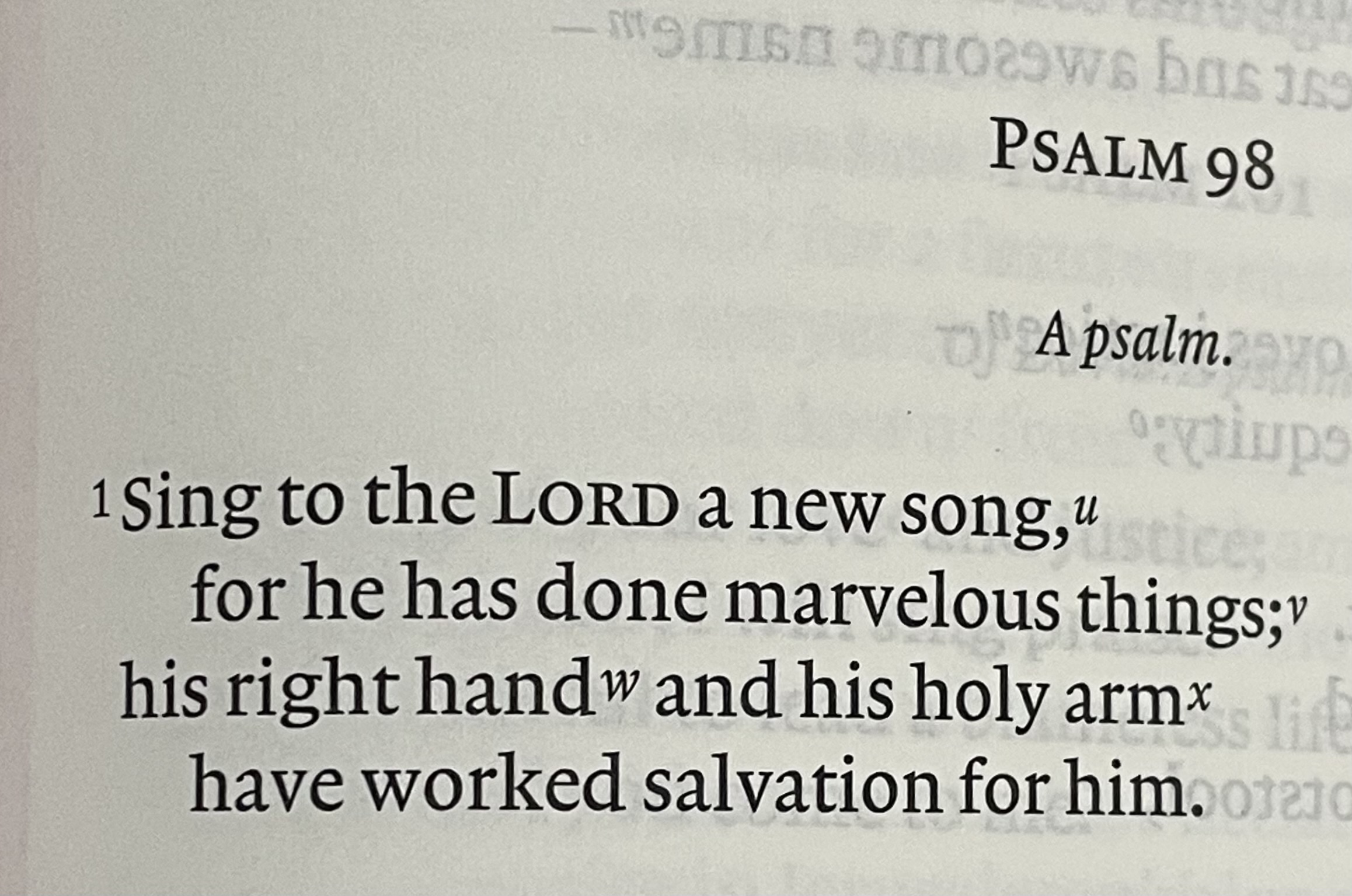
Psalm 98

This Psalm just overflows with jubilation! It voices the ‘new song’ of people who can see that the Lord is coming in righteousness! And they are thrilled to bits!

But that does that mean that God is coming in righteousness?

Well, in this instance it does not mean that he will come in the white hot rage of punishment and retribution where he will obliterate every force to ever stand against him. Yes, that Day will come – but that’s not why this Psalm is so jubilant.

When the Psalm rejoices that the Lord is coming on righteousness, it’s celebrating something else: the coming of the Lord into our world to do “marvellous things.” His “right hand” of power and his arm of holiness are bringing rescue and salvation (v.1).

The Lord has revealed his salvation – the nature of his rescue and its impact – by revealing his righteousness to the nations! So, all people who are not “Israel” will see how God, bringing rescue, puts their lives, their world, their everything, back together again! Amazing! Our God is a justice bringing, brokenness mending, life giving, sin defeating, shalom restoring God!

v.3 reminds us: this is not a new thing. It is the outworking of his covenant promises (eg. Gen 12). His “love and faithfulness” will go to the ends of the earth! This is his promise and his intention.

So it’s no wonder that all people, all nations, burst into rapturous praise (v.4-6)!

It’s no wonder that even the environment in its totality – all nature – rejoices! It’s the delightful opposite to the groaning of creation in Romans 8, because God – coming in righteousness – is addressing the brokenness brought by the fall. Our God is putting things right! He’s repairing what sin has broken! It’s glorious!!

All people and all creation joined in rejoicing in his goodness! All reality is in love with the righteousness and equity he is bringing. I mean, who wouldn’t be thrilled to see that?

But here’s the question you’re asking: How is God doing this? How is God bringing his righteousness today?

Here’s the surprising answer: God is doing it through Jesus, as Jesus rules in your life!

Jesus’ plan is for for God’s righteousness – which he has won for you in his cross and resurrection – Jesus’ plan is for that righteousness to overflow from your life into everything around you.

And what does that mean?

God’s righteousness – his ‘putting things right and mending the brokenness of our world’ starts as you put things right in your life. It comes through you bringing your behaviour and attitudes into line with the character and Kingdom of Jesus (see what the Bible says in Eph 4:17 – 5:2).

God’s righteousness comes to your world as you work, in the strength Jesus gives, to put broken things right around you. Your relationships. Your family. Your friends. The community where you live. Start putting right whatever is wrong. You: making things safe. Living in friendliness. Bringing grace and goodness. Creating a safe environment for women, for children, for those who are vulnerable and lonely.

God’s righteousness comes as you pray for and work to change desperate situations, and you long for grace in Gaza, as you work for an end to environmental degradation, as you act in kindness and respect to First Nations Peoples in your community.

God’s righteousness comes into our world as you work to bless and build your church, to see it thrive, to help it become a sanctuary of peace, a haven of love, against all the madness and anxiety that our culture and communities seem to carry.

God’s righteousness has been won by Jesus, and he’s bringing it to your world as you embody his character and goodness in your words, your attitudes and your behaviour!

How good is that?

Pray this prayer and you may never be the same

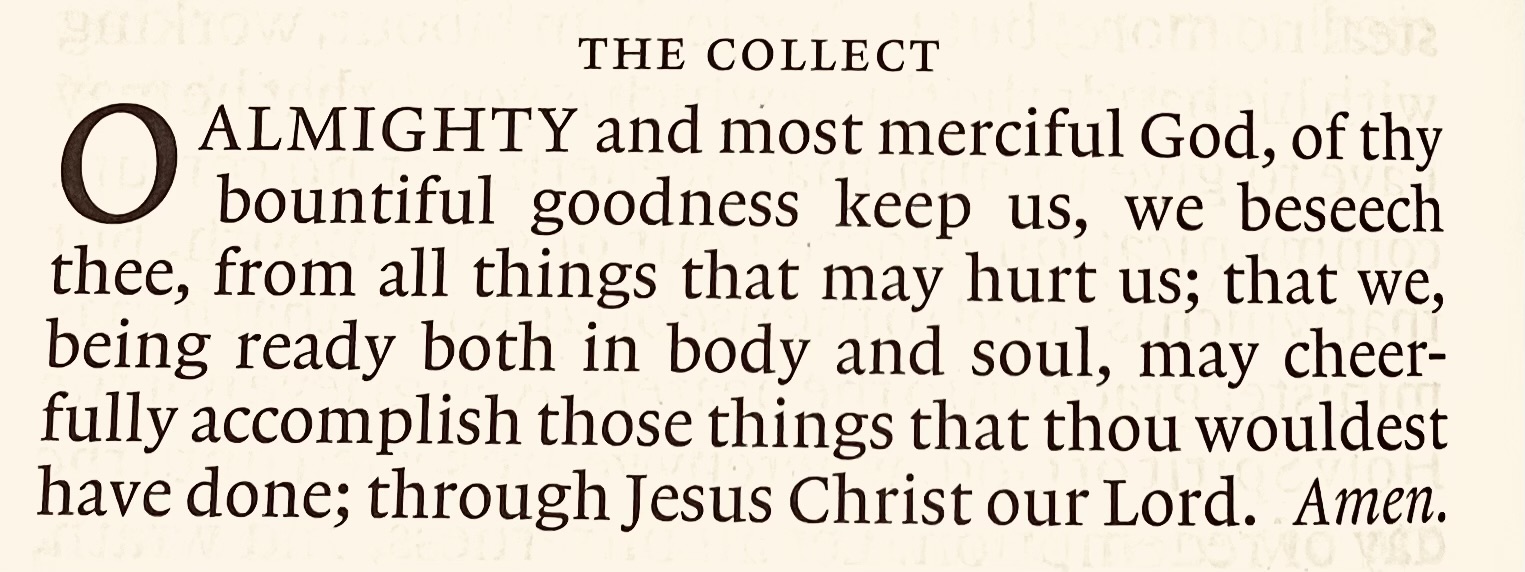
I have been praying this prayer for the last week – it’s taken from the 1662 Book of Common Prayer. While I am not an Anglican, I often go back to the Book of Common Prayer for s structured readings and some beautifully crafted prayers. Not only does the Prayer Book offer rich structure to personal spiritual practices, it is also wonderful literature. You can read about the complex history of how the Book of Common Prayer developed here.

So: back to the prayer. The first part of the prayer asks that we be kept “from all things that may hurt us” – this is a welcome admission that, well, things can and do hurt us, and that we depend on the almighty and merciful God to protect us. The thing to notice is how purposeful this prayer is. It’s not so we can live happy and peaceful lives, or we’ll stay healthy, or that we’ll prosper. The focus of this prayer is that we are ready both in body and soul to

cheerfully accomplish those things
that thou wouldst have done

Think about that: we are praying to do the things he would do!

We are praying for radically changed behaviour. That my life would be a reflection of Jesus’ life. That my attitudes, my words, my actions will be like his. 46 words of total transformation! That is a revolutionary prayer!

Where will I start?

How I treat those close to me?

How money (how much I don’t have, how much I really want) dominates my life?

How I often ignore those in poverty?

What I say about others behind their back?

How the church seems more preoccupied with itself and enjoying its own light than shining that light into the darkness that surrounds it?

Wouldn’t my life look very different if I consciously sought cheerfully to do the things Jesus would do?

Wouldn’t it start to catalyse all sorts of growth in my faith and how my walk with Jesus comes to expression in my life?

Christians today often ask how the church can recover from the scandals of recent decades. True: the church collectively bears much institutional and communal guilt. Agreed: the idea of communal guilt is a little fraught, and there are differences of opinion as to whether, for example, ‘my church’ should freely guilty for something the leader of another church has done.

Be that as it may, there is little doubt ‘the church’ is suffering from a crisis of credibility, largely of its own making.

The simple point I want to make is this: if those who follow Jesus looked more like Jesus in their behaviour, if they resembled Jesus more in their compassion and pursuit of justice, if their public pronouncements more resembled the verbal messages Jesus gave in his ministry, we would probably see a rise in the church’s credibility. I say this because most of the disquiet people express against the church is because of what some church people have done, how they live and behave. Very few people actually struggle with Jesus himself.

If those who follow Jesus behaved more like Jesus the church and the world around it
would be a different place

Here’s my question: how does my life and behaviour need to change so I am cheerfully accomplishing what Jesus would have done?

Are you asking the same question?

Are we both prepared to act on it?