Of the World, But Not In It?

I am writing a new sermon series (with Clinton) on the Sermon on the Mount. My first message is coming Sunday (Feb 07), and it comprises the whole Beatitudes passage – Matthew 5:1-12. “Blessed are the poor in spirit…”

I was reflecting about how Jesus calls his followers, broken as they are, to respond to the brokenness around them. One of the thoughts I had was that only a broken church can respond with blessing to the broken world they are in. This is how we reveal the kingdom of heaven, and show what it is really like.

Then I wondered about how does a church of reasonably comfortable suburban Christians start to enter into the brokenness in their community?

I was thinking we could email local MPs and local government people and ask them for guidance in where the greatest areas of need are. Then an uncomfortable realisation lodged itself in my mind, ‘why do I even need to do that? Why don’t I already know about brokenness in my own community? Why do we find it so hard to know what the greatest areas of need are? Why do we find it hard to see this?’

I think it’s because we get involved in our own lives, busy in our work, busy loving our families. We feel wronged when we don’t have any time to relax with our friends. Our churches are great, but there are so many things to do, so many programs, so many areas of ministry and service, that it’s just too easy to lose touch with the world around us. So we lose our connection with real people and their brokenness. We striving to get ahead financially, we want to make ends meet, become financially independent. We buy into the view that financial independence, comfortable living, owning the latest and greatest, brand-names-on-the-outside wardrobe, are the things that really matter. And as it turns out, we end up being of the world, but no longer in it.

Has the lifestyle of western suburban Christianity become a the new monasticism? Where Jesus’ people withdraw into their own virtual enclave and remove themselves form the world and its suffering? Is this why we do not perceive the brokenness around us?

A Million Miles in a Thousand Years – Don Miller


The story starts when a movie producer wants to make a film about Don Miller’s life. This is all very exciting until Don realises how boring it’s all going to look. So Don and the producers wrestle to develop a storyline that will hold interest. As they wrestle with this, we are drawn into what Don discovers, not only about movies, but about life itself. We start to see how life might work better, both for Don and for us. The surprise this book has for us is how this ‘better story’ might become our reality. 

A Million Miles in a Thousand Years drew me into the questions of my own life. I wondered about the ‘story’ or my own life, and before I knew it, I was thinking about how it could or should develop. As Don and the people of his book faced their challenges, I thought about how I was facing my own challenges, and whether I would meet them more resolutely, or further seek to avoid them.

I was also struck with the observation that the restlessness we sometimes feel in life often arises out of an ignorance of what our story actually is. Too often we do not know what sort of character we are supposed to be. As a consequence, we rarely get the idea that identity and meaning are formed as we grapple with the conflicts that inevitably come our way. Surprisingly, this realisation did not get me withdrawing from the challenge, it actually drew me deeper into it.

Miller’s book does that to you: it is an enticing invitation into hope. You read it and you want to be a better person. I love the way Miller’s warmth and spirituality sneaks up on you, whets your appetite for a fullness of life, and sometimes takes your breath away.


I have provided this review as a member of the Thomas nelson Book Review Blogger program. You can be part of it too by signing up at http://brb.thomasnelson.com/


Funerals: celebrating life

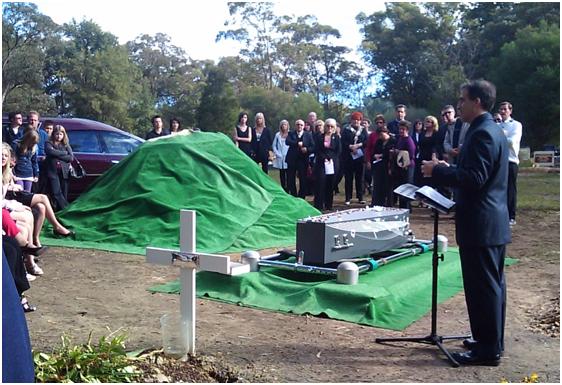
I have seen a lot of coffins, but I had never seen a coffin decorated with piano keys and music notes. Handles for the pall bearers were chrome cylinders attached with piano strings. I liked it. A lot. It was a tasteful expression of Eric’s love for music. While no professional musician, guests spoke of how he listened to, and drank in, and played music on a daily basis.

Before the casket was lowered, instead of throwing in soil, or laying a flower on the casket, people chose a piece of chocolate from a bowl, and placed it on top. I very deliberately placed by piece on B-flat. I don’t know that Eric was so into blues, but it suited my mood on the day.

Later, at the service of celebration, there was a tasteful mix of grief and laughter. Some of Eric’s children spoke, some performed musical pieces, his pastors spoke, guests spoke (more about that tomorrow), and once again, profound hope was expressed in music and song.

I have also seen funeral celebrations turn into a form of crass denial. Where it’s all made out to be a party, where banal humour and christo-pagan superstition permeates proceedings. “Yeah, I bet Bob’s up there now, beer in hand, looking at us all down here, wondering what all the fuss is about and when we’re all gonna get back to work…”

We can all do without that. And really, funerals do more harm than good when they trivialise life like that.

At Eric’s funeral we wrestled with life and its wending course. Together we sought to make sense of Jesus’ claim to be resurrection and life. We did that through our tears. And we celebrated everything Eric had brought into our lives, the talents he used to serve others, the expertise he brought to his workplace, and his quirky style of humour, we were celebrating the work of an extraordinary God in the life of an ordinary man.

But celebration? Seriously? How can you walk out of a funeral more in the lightness of hope than the heaviness of grief? This is the reality of Jesus’ life in us. His is a promise of hope, of life, that cannot be extinguished by death. This is what we have in the good news. When that deep celebration and profound joy resonates, even from a grieving community of followers, resurrection joy is palpable.

This is what we should celebrate at a funeral. How we have seen God’s life come to expression in this person. How we have seen beauty. How we have sensed a pursuit of justice and right. How they showed us a healthy spirituality. How we have learned about relationship, how others have been valued, honoured, and served.

Memories like anchor our affirmation in God’s work of grace in the life of another. We’re reminded that the Gospel is not just a religious idea or a doctrine to be intellectually accepted. It is an invigorating, transforming reality. When these transformational realities take root n a person’s life, they anticipate the new world Jesus will bring: God has already started his work of transformation in his people. Proof positive that Jesus is renewing minds, attitudes and values, and through them bringing change to his world. One life at a time.

Shalom,

Dave

Thoughts Occasioned by a Funeral

Last week we buried Eric. He was a fine person. A good man. A great follower of Jesus. And the first of my youth group generation to die. All that has got me thinking.

I met Eric in 1973 when I started attending his church in Blacktown. My parents had been solid in their faith for years, and had recently decided to switch churches. The church they chose was were Eric and his family attended. I was at a stage in life where I was making big decisions about life direction. I wasn’t being particularly principled about it. I was just in ‘default’ mode. When you are 15 years old, and your parents attend a church where there are no kids your age, there are always going to be more attractive options on a Sunday morning. I did not know it then, but I was at faith’s fork in the road. My parent’s decision to switch was a life saver. The life that was saved was mine.

Looking back now, I see how God used Eric, and a few others, to draw me into faith and followership. They helped me belong. They draw me into a small group who opened the Bible and sought to find its relevance for our lives. It was great. It was real. I came to see how following Jesus could be fun, exciting, and a rich broadening of what it meant to truly live.

At Eric’s funeral I remembered all this. I remarked how we shared a love for music, and great bass lines. He was into keys, I was getting into bass guitar. I remember now that he loved a good Monty Python line. And he loved his trail bike (he had a Kawasaki 250 or something). He let me ride his bike. He even let me ride his bike when I fell off it.

I don’t think Eric was my closest friend, and probably was not his closest friend either. Even so, it was the community, the friendship that Eric and others provided, that became the soil God used to nourish my faith. I am incredibly thankful for that. And I was blessed to have the opportunity to say so at Eric’s thanksgiving service.

Eric was the first of that generation of friends to die. Many of those present had made the same comment. It has given me reason, not only to reminisce, but also to consider life and death, and some of the important aspects of what it means to follow Jesus in such a time as this.

I hope my thoughts will be of value to you.

Shalom,

Dave

Where is God in all this?

Are you asking why? I am. I do regularly when things happen that that hurt and leave me a mangled.

My problem is that I don’t ever get too far past that question.

And I’m guessing that there are many people in Australia and the world over for whom the question ‘why’ is a regular and relentless visitor.

As a follower of Jesus I am not immune to pain and grief and doubt. The questions come

  • What have I done to deserve this?
  • Why did this happen?
  • Is this how God works?
  • Where is God in all of this?

Those questions were driven home with even more intensity this morning as I learned of a Melbourne Pastor who has announced his view that the fires in Victoria are a result of that state’s abortion laws. I am no supporter of abortion, but these words are ugly.

Reading them made me sick. Right in the gut. Angry. And very, very sad.

That voice sounds so arrogant, insensitive, and judgemental. It is devoid of all hope and grace. It reminds me of fingernails running down the blackboard: just stop it. It is callous and heartless. It perpetuates the pain of this tragedy.

And then I got thinking about the big question: ‘where is God in all of this?’

While I’m wary of platitudes, I think there’s something in the Bible’s picture of a seeking God, who risks his own comfort and safety to go after the lost and the broken.

So here is my portrait, for what it’s worth…


I saw Jesus this morning. You may disagree, and others may doubt. But I saw Jesus. I did.

He’s the fellow in the orange suit, the red goggles, the gloves, and the big hard hat.

He was standing there, leaning forward against the pressure of the water.

Beating back the flames.

Now, his face is blistered and burned from the heat.

He’s feeling spent.

But he’s there to save people, to fight fire. To turn back hell on itself.

He’s the bloke wiping the sweat from his brow. Staring. Cuppa in his hand, it’s tipping a little, like he has no strength left.

And you can see the tracks of his tears down the blackened, dirty cheeks.


See the pilot of the Ericson Aircrane dousing the flames with water?

Did you see the woman, weeping on the shoulder of another, because her husband had died?

Or the policewoman, with the mask to her face, looking into the shell of the burnt out car. What is she holding back?

Or the ambo, holding the mask to the guy with the badly burned arm.

Or in every one of the $15m currently pledged from one man to his mate.

This is where God is. At the rescue’s front line. Bringing hope. And a new beginning out of hell’s inferno. He’s been in this business a long time. And we shouldn’t be surprised to see him show up the way he does.


Shalom

When your system meets Jesus

Sometimes we just have to realise that Jesus upsets our systems

An uncomfortable thought, but it’s true. It’s uncomfortable because we are so good at creating systems. We like them because they help us organise our world and develop a sense of normality. We go to school on regular days. We get up in time to catch the train. We have regular habits and routines. Not everyone does the system thing to the same degree, there are some people that seem to hate systems. They have little routine. They sleep in. They miss the train. They seem to be OK with that. But they still want systems in place. They want the pay cheque in the bank when it should be, and they want the bank to accurately and securely manage their money. They want the driver in the other lane to stay in his lane and not cut them off. They want to be able to go through a green light without getting t-boned by some idiot running a red light. It’s true: even the most disorganised people still want some systems, or actually a lot of systems (i.e. the ones they like), and they want them to work and work well.

Churches also have their systems. They help people get connected, they allow for good ministry to happen, they support pastoral care, the help leaders lead with diligence. Most of the time these systems work well. And when they don’t work, people like me have a bad day, and sometimes people get hurt. I think we all realise that.

Today I am thinking that sometimes poor systems get exposed when they try to be more than what they should be. Maybe I should say it like this: you can tell when systems aren’t working when they start colliding with people.

Collisions to remember

Sue was a young woman, a faithful follower, and she formed a relationship with a guy called Adam, who at the time was not a follower of Jesus. Adam wasn’t opposed to Jesus or the church, but in the eyes of those who were looking he wasn’t showing a lot of interest either. Looking back now (and it’s about 15 years back or more), I think with a bit of effort I could have reached this guy. I could have got together with him and shared a bit of life. I don’t know why I never did that. I also think that people in my church could have been more open to Adam, but my guess is (and I’m ashamed now to say it) that because he was not a ‘regular’ there was no major effort to draw him in. Perhaps because he was not a believer he was seen by other young people as some kind of threat. Man, who knows how people would ever come to know Jesus if every Christian acted like that! Anyway, the church leadership decided not to allow their wedding to take place with the blessing of the church. As pastor of the church, I supported that decision. I never should have. We allowed the system to collide with these two people, and the inevitable drift away happened.

Don’t get me wrong: I think the Bible is pretty direct about followers being ‘yoked’ to those who do not. I also believe this addresses more contexts than marriage. It applies to business partnerships, contractual arrangements, and other contexts where people are ‘bound’ together. The reality, though, is that we could have done a whole lot more to really open the door for Adam. We could have expressed selflessness in extending friendship. We could taken a real interest in his life. We could have invited Sue & Adam over for a BBQ, or shared a coffee. We could have celebrated their love and led them into an expression of transformed community. But we did none of that. We didn’t even try. And we allowed the system to squash a Gospel opportunity. I am ashamed to say it was my call, and I got it wrong.

A second occasion: some years ago one of my roles was an ecumenical visitor to another denomination very closely related to our own. In short, the church I work for had done some study on an issue and had come up with what I believed were quite sound, but yet unpopular conclusions. There are always debates about these things, and I guess some readers may remember the issues, and perhaps even disagree with what I say now. That’s OK. There have been disagreements before and the world is still spinning… So, the other church protested very strongly to my own denomination. Personalities got involved. Theological discussions became polarised. Various statements were issued by Synods and Assemblies. In all of this, church structures were used to apply intense pressure to tender parts of the body of Christ. It was ugly. People got hurt. People left churches. Teachers and educators became demoralised. It was a dark night of denominational soul.

I think about those days, and acknowledge quite openly that sometimes my own pain and confusion did not assist in clear, rational and humble communication. Even so, I believe that systems were used to exert pressure, to force decisions, and ultimately – though perhaps unintentionally – to hurt people.

Today I find myself wondering how Jesus feels about that debate. I wonder whether he is still to meet my gaze on The Day, and rebuke me for my part in a church dispute which hurt people, not to mention the church, so badly. I wonder how Jesus feels about all that energy devoted to some disputable point, which really has added no value to the mission of the church or done anything to bring people closer to Jesus. I think the only things advanced in that whole deal were personal egos – one of them was mine. And that is just plain sinful.

On the other hand…

Maybe you’ve read all this and thought there are still some times where you really do have to draw the line. You’re wondering whether people just get their way every time. I wouldn’t want you to get that idea. Jesus never worked that way. When people listened to him, they always changed for the better. So, sometimes we do need to sit down with people and in all humility do what we can to help them see what’s really going on. The Bible is pretty clear about that: ‘If a fellow believer hurts you, go and tell him—work it out between the two of you.’ We need to understand that this action is never the application of a system, it is the loving counsel of a follower of Jesus. This is not about mechanisms and procedures. It is about common relationship in Jesus and the ongoing commitment and support of the body of Christ as we walk with someone toward restoration and reconciliation.

Transforming the system

So how do we know if the discomfort in situation is being caused by a poorly applied system or the Gospel of Jesus? That’s a pretty important question. Perhaps the whole ‘what would Jesus do?’ has been a little overdone, but I also think there’s something in it. Think of it this way: Can we picture Jesus standing in an interchurch meeting and waving an angry finger at representatives of another denomination? Can we imagine Jesus ignoring a guy like Adam, just quietly going soft on him, and not seeking to draw him into fellowship? Can we imagine Jesus not wanting to meet with Adam and talk about life, and what life in its fullness might mean? I don’t think so.

I can picture Jesus going to see a friend who is making some unhealthy life decisions and really seeking to speak to his heart, and doing that in the context of relationship and trust. This is how things get worked out. And more often than not, the result is not a parting of the ways, but a meeting of the minds. Psalm 133 reminds us that when that happens it’s like the Spirit’s oil of blessing being poured over people and into their lives. Nothing better, really.

A few helpful questions

I am no outstanding voice of wisdom, but I have been thinking recently that there are a few questions we can ask that might help us make better decisions when our systems start to hurt people.

One: Will the path we are taking ultimately help people to see Jesus more clearly, or will our path hurt and confuse them?

Two: Will the path we are taking help grace increase and grow? Will it deepen our awareness of who Jesus is and what he came to do?

Three: If we follow this path, what will the impact be on weaker Christians and the young in the faith? Will it draw them closer to God , or push them away?

People are more important than rules or procedures

I think the most important thing to remember is that people are always more important than rules and procedures. This is true every time. This was one of the main points of contention between Jesus and the religious legalists of the day. Rescuing people was more important than Sabbath obedience. Forgiving people was more important than throwing stones. Giving grace to people was more important than expectations and prejudice, even if the person was a tax collector, a Samaritan, or a thief on a cross. Jesus shows us that people matter. Every time.

When your system meets Jesus, your system will change.

…Thanks for listening