So, what’s with all the locust stuff?

In the 1870s a huge plague of locusts descended upon the American Midwest. Back then, the midwest was just being opened up, and the people who first settled there were living very remotely. Their very survive depended n their capacity to develop working farms and grow good crops. This was the tender existence upon which the biggest locust plague ever recorded in modern times descended.

It is estimated there were over 27 million tons of them. I don’t know how anyone weighs a locust plague, but the destructive power of this plague is well documented. No matter how people tried to protect themselves, the locusts continued on their destructive march. There are even accounts of people trying to cover at least some of their crops with blankets, but the locusts even ate the blankets! The plague was unimaginably powerful and totally unstoppable!

In his book, The Locust Effect, Gary Haugen makes the point that when the locusts descended, you can be sure the farmers weren’t thinking about whether to buy a new horse, or how to plough more effectively, or where to place the next fence. All that mattered was for the locusts to stop. Back in 1875 the locusts did not stop. Not only did farmers and their families loose livelihoods they had worked so hard for, some lost their lives, simply starving to death from the plague’s aftermath.

Sometimes I wonder how we have been so slow to see what has really been happening

In The Locust Effect, we learn that there is a plague on the world’s poor. Like locusts, it just keeps happening, and it needs to stop. In many developing countries the poor are subject to daily violence. They live outside of police protection. Justice systems are broken or dysfunctional. Corrupt forces within society do what they can to ensure the system stays broken, and they stay beyond the reach of the law.

Violence comes in many forms: sexual violence (primarily against women); forced land seizures (also primarily with female victims); forced labour and slavery. It also comes with the gut wrenching realisation that the police forces who are supposed to protect and serve society are in many developing world contexts perpetrators of violence against the poor. Watch this clip to get a sense of it all.

Wealthier countries have turned a blind eye to this plague, and many people – like me – who live in those countries have been ignorant of these malicious forces that are destroying so many lives on a daily basis. While we see such great work being done in the developing world, this plague is undermining everything that is being done, and preventing the world poor from thriving. The disturbing reality is this: unless we address the plague of violence everything else we do is only gong to have limited value.

There are no words to describe this evil

I must say, I have only understood this sobering reality after having been on the pre release review team for The Locust Effect. Sometimes I wonder how we have been so slow to see what has really been happening. I read the stories of lives broken or snuffed out, and more often than not I am just stunned. There are no words to describe this evil.

Here are a few things you can do to see how deep the problem is:

You can visit The Locust Effect page to learn more about the modern plague of violence at. You can also read a gripping section of The Locust Effect here.

You can also buy a copy of Haugen’s ground breaking book. These next few days any US sales will result in a $20 donation going straight to International Justice Mission. So buying the book is a great way to help the poor, and not just become informed about the issue.

Watch Gary Haugen talk about his purpose in writing The Locust Effect

PS. before you ask, the authors of The Locust Effect receive no royalties for the book, which is currently sitting around no.30 on the Amazon Best Seller list. All proceeds form the sale go toward ending violence against the world’s most vulnerable people.


Violence: Primary Cause of Poverty in the Developing World – #LocustEffect

BfLyX9JCQAA1Mx1 jpg large

The reality of poverty in the developing world seems ever present. Which week goes by without television or web based news reports showing us thousands of people in refugee camps, or poverty stricken communities coping with natural disaster?

There are also many wonderful non-government organisations seeking responding to the plight of the global poor. Child sponsorship programs like Compassion, World Vision, and others do a tremendous amount of good to develop world communities.

Recently I have read and reviewed The Locust Effect, by Gary Haugen and Victor Boutros (Oxford University Press). This ground breaking book exposes a dimension of global poverty that we simply have not seen: the primary factor perpetuating poverty for the poorest and most vulnerable people on earth is violence. Violence accounts for the reality that despite the generous international aid provided by wealthier nations, and despite the wonderful work done through child sponsorship and other compassionate programs, the plight of the developing world’s poorest people has not changed in any meaningful sense.

BookAngle Permalink 0 0

Law enforcement and justice systems in the developing world are generally broken and dysfunctional. Worse: The Locust Effect cites case after case where police, far from protecting the most vulnerable people in the developing world, actually perpetrate violence against them. The justice systems which are supposed to restrain evil are so broken that they often intensify the violence and suffering of the poor.

The Locust Effect shows us that ending the violence and transforming systems of justice is the missing piece of the puzzle in assisting the poor of the developing world. We need to realise that in terms of our compassionate response to the plight of the global poor, all our efforts will only have limited value if we cannot stop the plague of violence tearing away at the life and hope of the world’s poorest.

There are important implications here for Christian and denominational aid organisations. We certainly need to continue what we are doing to assist good mission, grow Gospel ministry, and to address the needs of the communities we are working with. At the same time, Christian aid and mission organisations need to partner with agencies like International Justice Mission. As they do, they can assist in the reformation of justice systems long broken and dysfunctional. This will also provide much needed support for those who have suffered, and continue to suffer, at the hands of violent perpetrators.

If this is any interest to you, I urge you to buy a copy of The Locust Effect. The authors are deeply Christian men, and the organisation they work with, International Justice Mission, does profound and valuable work coming to the aid of the world’s poor. The Christian worldview evidenced in IMJ’s work harmonises wonderfully with a Christian reformed heritage. There are many opportunities for collaboration.

In future posts, I will examine some more specifics of why violence is likened to a plague of locusts. Until then, please order a copy of The Locust Effect.

While the book is published in an academic format (footnotes, etc) it remains exceptionally readable. For me, it was an eye opening and, in places, confronting read. It has been incredibly valuable in deepening my understanding of global poverty, and how we should be responding as Christians. I heartily recommend it to you.

All copies of The Locust Effect sold during the week of Feb 03 will attract a $20 donation to IJM from a very generous friend of the organisation (US buyers only). So, for those of you in the US, buying the book is like making a donation to this very important work! Brilliant!

All general book royalties go straight to IJM

Will You Let Your Light Shine?

“To let their light shine, not to force on them their interpretations of God’s designs, is the duty of Christians towards their fellows. If you who set yourselves to explain the theory of Christianity, had set yourselves instead to do the will of the Master, the one object of which the Gospel was preached to you, how different would now be the condition of that portion of the world with which you come into contact! Had you given yourselves to the understanding of his word that you might do it, and not to the quarrying of his word wherewith to buttress your systems, in many a heart by this time would the name of Jesus be loved where now it remains unknown. The word of life would then by you have been held out indeed.”

– George MacDonald, Creation in Christ, 1889

Church Health & the Challenge for Leaders

Striving for church health has some very challenging implications. In future posts I’ll look at the implications for the church as the body of Christ, and following that how striving for how we engage with the world around us. Make no mistake: the call to church health is not for the faint hearted. It is as demanding and unrelenting as it is a path toward maturity and spiritual formation.

What I want to mention now is the implication for leadership. There are lots of things that work toward church health, but if leadership is not fully supportive of and engaged in the pursuit of Scripture’s call to church health, nothing else the church does will be sustainable.

At this point the sobering reality is that for churches in my own denomination, NCD results show the area we consistently struggle in is this very area: leadership and discipleship. Is it that we don’t want to do it? Or we are not interested? Or we just don’t know how? Unsure. Maybe it’s more something that we’ve never really been skilled to do. Some will look back with longing eyes to the good old days of full on catechism process, where children commenced catechism classes at age 12 or 13 and finished at about age 18, hopefully with a profession of faith. I acknowledge that this system created some reasonable depth in understanding our confessional perspective. I also acknowledge that where this is no longer practised there has been little else to grow an appreciation for our reformed confessional heritage. An additional and more serious complication is there have been few systematic examples of intentional, coherent and effective discipleship processes.

The call to church health is not for the faint hearted. It is demanding and unrelenting

There is little sense in belting ourselves around the head because of this. What we need to do is recognise how we pull up short, and then do better. Fellow elders and pastors: this is where we must shoulder God’s call. Paul expresses it this way: “He is the one we proclaim, admonishing and teaching everyone with all wisdom, so that we may present everyone fully mature in Christ. To this end I strenuously contend with all the energy Christ so powerfully works in me.” (Colossians 1:28–29, NIV)

Paul was consumed with the goal of bringing the church to maturity in Christ. He placed this call before the leaders of the church in Collosse. Presenting everyone mature in Christ was the focus of every proclamation, admonition and teaching. This was the ‘heavy lifting’ ministry of heavy lifting which consumed all his energy.

Big question: is this the focus of your ministry? Are these the goals you are striving for as a pastor or as an elder? Is this the focus of your church council? Is this what the people in your church would say is the priority of your leadership?

This is such a humbling call, friends. I am so far from this goal, and the shortcomings I mentioned above are clearly there in the congregation I serve. What we are doing is making some changes this coming year. It might seem a cop out to just talk about ‘plans’ at this point. We all know what really matters is whether plans get implemented, and whether that implementation yields desired outcomes. In the next post I’ll go through some of our specific plans for 2014. For now, I’m praying our ongoing discussion and collaboration will help us become better builders of discipling culture. It would be tremendous if we could do this work together.


Q: what are your suggestions for building a better discipling culture? Leave a comment and become part of the discussion.

Growth, Health & ‘The Gospel’

Here at Gateway Community Church we’ve been listening to God’s call to make and grow disciples, to have a healthy church, to ensure our structures work best for these ends. We have a long way to go, but there are a few things we want to start doing. The next few posts will outline what some of them are.

Our first priority is this: we want have clarity and unity in ‘the Gospel’.

This is not always straightforward. R C Sproul has written about some of the distortions and over simplifications of ‘the Gospel’ here. For some, ‘the Gospel’ amounts to jargon: ‘we’re here for the Gospel’, ‘this is a Gospel church’, ‘what matters is the Gospel’, ‘nothing but the Gospel’, ‘I love Gospel music’ – all well and good, but what do you actually mean by ‘the Gospel’?

Amongst the people of the Christian Reformed Churches of Australia, ‘the Gospel’ is commonly a set of orthodox truths about Jesus, for example:

  • Jesus is the eternal Son, only begotten of the Father
  • he became a man, born to Mary
  • he lived a sinless life, suffered and was put to death on the Cross
  • his death bore the sin and punishment his people deserved
  • he rose from the dead, winning their rescue, restoring them to life, and reconciling them to the Father
  • he ascended to heaven, and now sits in the most powerful place in the universe
  • he will return to judge all humanity and to recreate the universe which now, rightly, belongs to him

These truths are crucial: If I fudge on one aspect, I don’t have the full picture of who Jesus is. This is why good theology matters: it helps me think clearly about who God is, what he has done in Jesus, and why it all matters. I believe the statements above are objective realities, absolute certainties. They remain true whether I believe them or not. In this sense, the Gospel simply is.

Even so, when at Gateway said ‘we want to have clarity in the Gospel’ we were, however, talking about more than agreeing to a raft of objective truths. This because it is possible to accept those truths but still not live under them. Think of it this way, I believe Capt. James Cook sailed Endeavour into Botany Bay in 1770. I can study the accounts of his voyage, read his diaries, and get some sense of the man. But when I roll out of bed in the morning, James Cook is not going to make a difference to how I live. Why? Because acceptance of historical truths is not necessarily life changing.

The Gospel is considerably more than a happy announcement of forgiveness to a lost sinner.

So, how is ‘the Gospel’ more than a statement of objective truth? How is the Gospel the transformational good news? In this sense: The Gospel is the person of Jesus and everything he has come to do. John Piper opens this reality beautifully in his 2005 ‘God is the Gospel‘. I would just change Piper’s title to make it read ‘Jesus is the Gospel’. I say this because ‘accepting the Gospel’ is more than agreeing with a set of truths: accepting the Gospel is accepting Jesus, bowing the knee to him, naming him as my Lord, my Leader, my Rescuer, the Redeemer and ultimate Restorer of my world and this universe.

We want to be clear about this: The Gospel is considerably more than a happy announcement of forgiveness to a lost sinner. It is that, for sure, but the Gospel announces Jesus’ restoration, his new creation, his Kingdom coming to expression in our here and now. It proclaims the inexhaustible hope that Jesus is reconciling all things to the Father. Can we find a more earth shattering, life changing, heart transforming statement of the Gospel than what we read in Colossians 1? …

“For God was pleased to have all his fullness dwell in him, and through him to reconcile to himself all things, whether things on earth or things in heaven, by making peace through his blood, shed on the cross.” (Colossians 1:19–20, NIV)

We want Gateway to understand this glorious Gospel. We want this reality to be the ground for our unity. We want this Jesus to be the focus of our ministry and mission. This Gospel, Jesus Himself, has staggering implications for how we live and behave, for how we engage our community and our world. Perhaps the most humbling reality of all is the wonder that through Jesus we now get to bring new his creation to expression (see 2 Cor 5:17-21).

As leaders we are convinced that the more unity we have in this very big picture, the more we will all pull in the same direction, and the more glory will be given to Christ our King.

Why your church needs effective structures

Night watch

In my last post I spoke of the need for church health, and how God changes churches one life, one decision at a time. It would be nice if all that growth would happen automatically.

Problem: growth and health are never automatic. If we go back to my vegetable garden analogy, we’re reminded how you have to do a lot of work to get good growth – especially in Perth. We had to turn 10 square metres of sand into arable land. We added all sorts of stuff: Organic matter. All round fertiliser. Bentonite clay to help the sand clump into something like loam. Bags of sheep manure (apologies to my neighbours). On the top we mulched with nitrogen rich lucerne hay. Add to that more water than our rainwater tank could hold, and we were starting to head in the right direction.

We did this because (A) we looked at what we had, and (B) we knew what it needed to be. Once we knew those things, we could work out (C) what we had to do to our garden to get to where we wanted to be. Through it all our goal was to create the best environment for growth.

We can use a similar process when we’re thinking about bringing our churches to health. It is the task of the church, and in particular the leaders of the church, to set the best environment for growth. So leaders need to (A) take a realistic look at how things are, and (B) listen to God’s word to determine where they should be. Once they know these things they can (C) develop strategies to reach their goal.

I actually think this method is pretty helpful. (A) – where are we? (B) – where do we need to be? (C) – what do we need to do to get there? Sure, there are lots of little things to complicate the picture: what factors have led us to this point? What barriers might we encounter in the future? What limitations do we face? But the basic method is still helpful.

And just so we’re clear, moving toward health is more than a matter of method. The questions of A, B & C are best addressed in a spirit of humble dependence on God, of prayerful searching of God’s will, and a deep desire to honour Jesus and bring his new creation to expression. So we need pastors, elders and leaders with more than a smart methodology. They need to be people with a Gospel heart, who are rich in the Word, and filled with the Holy Spirit and wisdom. People who can honestly assess their current situation, and interpret relevant factors and influences.

When leaders like this seek to move a church toward health, they will be wrestling with the need to have the most effective structures, systems and ministries. They will be seeking to create the best context they can for growth and health. They will be working for a church that embraces change.

The church needs leaders who seek the best context for growth and health


We all know change like this is hard. We will need to let go of some things we love. Things that make us comfortable. Mostly it is hard work, but if these are the changes God calls us to, they are right and they are good.

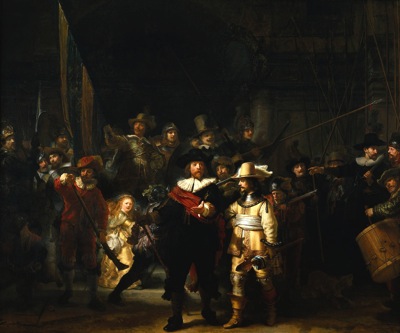
‘The Night Watch’ is a colossal painting by Rembrandt van Rijn. Measuring around 3.5 x 4.4 metres it dominates an entire room in Amsterdam’s Rijksmuseum. The painting was completed in 1642 – the height of the Dutch golden age. Over the next 300 years, the painting was lovingly preserved and maintained. The custodians of the painting no doubt had the best intentions, but all those coats of lacquer darkened to tones of the painting so much that people thought it was a night scene, hence the popular title. After Word War II, however, the painting was restored to reveal its well lit early morning hues.

Here’s my point: for the first 300 years the restorers had the absolute best intentions. They were the experts in their day. No one better for the job, and no better methods than the ones they employed. But in time more effective preservation methods were discovered, and the old methods were dispensed with. See, the method was not the important thing. What really mattered was the end result, and the beauty of the work.

Sometimes Churches focus on the wrong thing. And the methods, the well worn practices become the focus. These things might not be wrong in themselves, but when they become the focus, the beauty of what needs to be seen can be so easily obscured. What started as clear as day might end up dark as night. And then we need the courage to undergo a work of restoration and transformation. Hard work. And those focused primarily on the traditional methods and practices may find this an uncomfortable and disturbing process. But at the end of the day, our prayer is that the work of the Master will be seen for what it really is, and that he will receive the praise which rightfully belongs to him.

Q: Are you aware of methods and practices in your church which obscure the Master’s work? What might you do to address this?

How can I help my church to be more healthy?

Health Alert

It is surprising how often we talk about what God wants our churches to do. Every leadership meeting, every regional council, every Synod – we all discuss what God would have us do.

Implementation is where we tend to fall down. That may be true, but the question of your own personal resolve and desire is more basic. So, let me ask: Do you really want your church to be a more healthy place? Do you really want to grow? If so, the question really becomes one of how to bring growth and health about.

There are no easy answers here. No pat formulas.

When it comes to personal health there are some basic rules to follow: don’t smoke, maintain a healthy diet, exercise regularly, don’t barrack for Collingwood, etc. When it comes to specifics, however, what I need to do to become healthy might be very different to what you need to do.

It’s the same with church growth and health. There are general things every church should be mindful of. Here, tools like NCD can be really helpful, and Jack de Vries can help you with all of that. But once we get past that general picture, specific strategies will vary a lot.

Some think you can just copy what has worked well in some other context into their own. I am not convinced. For a start, I am not ‘him’. My church is not their church. Their local community is not mine. Maybe that other church would even do it differently now. So, be careful about bolting someone else’s program or strategy onto your own context. This rarely works.

So, back to the question: what are some of the general things to keep in mind about growing disciples and church health? First: God brings his church to health one life at a time. One personal context of change and transformation after another. Programs and things have their place, but the better strategies always focus on people. Nothing changes until people start to change. 


God brings his church to health one life at a time


Which brings us to a second question: how do people change? How will Gospel transformation start to be seen more and more? Answer: one decision at a time. Obviously, this needs to start in our own heart. There’s no point in expecting other people to change, to grow, to follow and obey if I am not interested in doing that myself. 

Some think this focus on personal decision and desire displaces God’s sovereignty. I think this is crazy logic. Here’s why: when it comes to obedience and growing as a Christian, God’s sovereignty rarely operates outside of human responsibility.

What I mean is that you can pray for growth and to be more like Christ all you like, but if you do not get out off the couch and do something, you will never change. People who are always waiting for God to make them grow or to change them on the inside, who are not prepared to do anything about it, are just being lazy. Lazy Christians and lukewarm churches do nothing to show the glorious wonder of God’s transforming grace before his watching world. The light of his word, and his recreative work through his Son is too often hidden under the bucket of human indifference.

So your response, your obedience, your desire for your church to be more healthy is critical. Every time you decide to do something to honour Jesus, every time you decide to turn you back on sin and its chaos, every time you decide to respond with compassion, every time you obey God’s word and follow his call, every time you put the needs of others before your own, Gospel transformation becomes more visible. People see it. The church sees it. The watching world sees it. And in the end it brings glory to God (see 1 Pet 2:12).

This last thought has enormous implications for churches and individual Christians, but I’ll have to leave that for another time.

For now, I want us to embrace that thought that change and growth is not only God’s expectation, the normal way he brings people to growth is though his Spirit drawing people to change their behaviour and their attitudes one person, one decision at a time.

The Call to Growth: Business Method or God’s Desire?

Is the call growth a selling out to secular business method?

When discussions revolve around encouraging growth in Christians, or setting goals around church health, or setting any goals at all, some people will suggest the bible has been exchanged for the methods of Harvard Business School. I have never been convinced by those criticisms.

Leadership writer Ken Blanchard become a follower of Jesus following a career as a top level management expert. Blanchard’s The One Minute Manager has sold over 13 million copies since its release in 1982. The interesting thing is that after Blanchard become a Christian, he was surprised to find many of the basic principles he had written about were found in the Scriptures. That doesn’t mean the bible is a textbook on management or leadership. It probably just means that there is not much new under the sun. It might also mean that thinking about leadership and goal setting is not a bad thing after all. 

In reality, Scripture calls us to growth, and to be purposeful about it. On the night before he went to the Cross, Jesus had this prayer for his followers: 

Righteous Father, though the world does not know you, I know you, and they know that you have sent me. I have made you known to them, and will continue to make you known in order that the love you have for me may be in them and that I myself may be in them. (John 17:25–26, NIV)

Did you know that? Even Jesus prayed that the love between the Father and himself would be fully expressed in his people. No doubt, Jesus’ heavenly prayer ministry (see Heb 7:25) also focuses on drawing us deeper into his life and likeness. It is hard to imagine Jesus’ prayers not flowing out of his divine desire to save us completely. 

In Paul’s writings, however, our understanding of the purposeful nature of God moves to an entirely different level. In almost every letter Paul wrote he expresses his desire for people to grow, and keep growing. Christians believe the Scriptures are more than Paul’s words. They are God-breathed, so when we hear Paul speaking, we hear God speaking. So Paul’s prayers reveal the heart of God for his people.

Here are some examples:

I keep asking that the God of our Lord Jesus Christ, the glorious Father, may give you the Spirit of wisdom and revelation, so that you may know him better. (Ephesians 1:17, NIV) 

For this reason I kneel before the Father, from whom every family in heaven and on earth derives its name. I pray that out of his glorious richese he may strengthen you with power through his Spirit in your inner being, so that Christ may dwell in your hearts through faith. And I pray that you, being rooted and established in love, may have power, together with all the Lord’s holy people, to grasp how wide and long and high and deep is the love of Christ, and to know this love that surpasses knowledge—that you may be filled to the measure of all the fullness of God (Eph 3:14-19)

And this is my prayer: that your love may abound more and more in knowledge and depth of insight… (Philippians 1:9, NIV) 

Not that I have already obtained all this, or have already arrived at my goal, but I press on to take hold of that for which Christ Jesus took hold of me. (Philippians 3:12, NIV) 

For this reason, since the day we heard about you, we have not stopped praying for you. We continually ask God to fill you with the knowledge of his will through all the wisdom and understanding that the Spirit gives, so that you may live a life worthy of the Lord and please him in every way: bearing fruit in every good work, growing in the knowledge of God,… (Colossians 1:9–10, NIV) 

He is the one we proclaim, admonishing and teaching everyone with all wisdom, so that we may present everyone fully mature in Christ. To this end I strenuously contend with all the energy Christ so powerfully works in me. (Colossians 1:28–29, NIV)

The big question is whether the things that matter to God matter to us

See how these prayers reveal Paul’s strategy? His deepest desire was for Christians to grow to maturity. He agonised over the growth of the churches he pastored. This was not just because he was a passionate apostle. It was because the Spirit of Jesus drove his heart and mind into the very heart of God for the the church. 

It mattered to Paul that churches would grow. It mattered to Jesus that he would be fully revealed in his followers. It matters to God that Jesus’ followers grew to full maturity in his Son. The big question is whether the things that matter to God matter to us. If God is purposeful about his work in us, we better be purposeful in the work we do for him. 

The more we reflect Christ’s purposes and the more churches move toward the kind of maturity Jesus desires for them, the more healthy this churches will be. They will be places of grace, love, forgiveness, joy, restored community, deepening relationships, and loving, compassionate, transformational mission. 

A powerful, motivating, stimulating vision isn’t it?

I love Jesus, but do I have to be radical?

My opening post reminded us that growth is natural and normal. It also openened up the thought that health is desirable. Whether we are talking about growing vegetables, human beings, organisations, or the church – it is a normal expectation to want them to be healthy.

As we worked through these concepts at Gateway, we began to think that God actually wants us to be radical followers of Jesus. But we knew the word using ‘radical’ would be a little risky. We hear how people become extremists by being taken in by a militant leader and radicalised over a period of time. Normally, the consequences of such actions are terrible.

At other times, when we hear the word ‘radical’ we think of those rent-a-crowd protesters we see on TV. People who don’t wash their hair, don’t eat meat, and don’t use deodorant. A caricature, I know, but you get the drift.

‘Radical’ may have some negative overtones in our culture, so we need to understand the word well. To be ‘radical’ is to go right to the core, right to the heart, right to the root. So, when we’re talking about being ‘radical disciples’ we’re talking about people who not only accept the teaching of their Master Jesus, who not only accept Jesus at an intellectual level. We are really talking about people who take his transforming grace right to the core of their lives, right to the heart of their values, right to the root of everything they seek to do and to become. To be a ‘radical disciple’ is to be as totally transformed by the grace of the Gospel as we possibly can be.

when we’re talking about being ‘radical disciples’ we’re talking about people who take his transforming grace right to the core of their lives

If this is what being a radical disciple is, then it is hard to imagine anything better than everyone being exactly that: a radical follower of Jesus.

Here’s the challenge: the call to be radical disciples pushes us away form some of the negative expressions of the church and Christians today.

Radical disciples are not people who keep their Christianity for Sunday, and who forget about Jesus’ claim on their lives as leave their palace of worship.

Radical disciples are not people who have an occasional thought about Jesus, or who restrict their ‘time with Jesus’ to 10 or 20 minutes every day. They don’t divide their time into ‘time for God’ and whatever the rest is: time without God? Who knows.

They are not people who worship every now and then. They don’t just put in an appearance at weekly gatherings, or who tilt at doing a ‘church job’ every now and then.

Here’s what radical disciples are: They want their entire life, everything they do, everything they think, to be an expression of the new life they have received in Jesus.

Every hour of every day they want to breathe the new heavens and the new earth, to be living, walking, talking, loving expressions of life the way God created it to be.

Radical disciples live in the profound privilege of bringing Jesus’ new creation to expression.

More and more they live and breathe this desire to honour God in everything: their family, their work, their sex life, their relationships, their leisure choices, their spending habits. Everything.

Radical disciples display something similar to my overzealous gardening habits: they check themselves out regularly to see whether they are growing. They know that growth is normal, growth is natural, and health is desirable.

Q: Do you think the call to be radical is helpful? Do you think we can make it a positive value in today’s cultural climate?

Next: Is the focus on growth something God calls us to in His word?

Being a disciple: Growth is normal and natural

I’ve been working on material which outlines some of the big picture responsibilities of the church today. I thought this material might be of interest to a wider audience, so here it is.

This material has already been preached at Gateway Community Church, and while these posts won’t be in the form of entire sermons, you are free to use the material in any way that helps you. Please give credit where credit is due…

IMG 0189

Since moving to Perth a few years ago, I’m developing a new appreciation for the challenges of gardening. We’re trying to grow a few vegetables, and it’s proving to be more difficult than I thought. This is basically because growing things in Perth is like trying to grow things at the beach. The last time I went to the beach, I did not see too many vegetable plots or rose gardens. Our problem is that our suburb used to be an actual sand dune. Actually, it still is a sand dune. It’s just that we have covered the sand dune with places to live.

So, if you want to grow some vegetables you will need to develop some skills in soil improvement. There is a lot to do: Add bentonite to create a loamy consistency. Add organic matter: compost, sheep manure, blood and bone. Keep an eye in the pH balance. Don’t forget to mulch your vegetable garden with lucerne hay.

In addition, I have been trying to become a more biblical gardener.

The prophet Zechariah talks about life in the new heavens and the new earth, and says ‘In that day each of you will invite your neighbour to sit under your vine and fig tree,’ declares the LORD Almighty.’ (Zechariah 3:10, NIV)

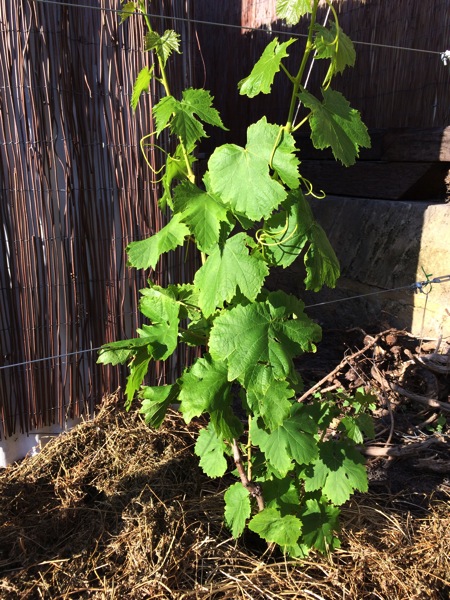
I thought this was good advice, so I planted some a couple of grape vines and two olive trees. I know olive trees are not figs. But being olives, they are biblical enough for me.

Gardening teaches you patience. This is not an easy lesson to learn. So much is instant these days. Entertainment. Power. Hot water. Music. But this does not work with a garden. You plant the seed and wait. Nothing is fast. The fastest result will still be a few weeks away. Most of the time, you’ll be waiting at least two or three months to harvest some produce.

Growth is slow. I go out every other day and see how the plants have grown. I check the vines. Do they need more support? More training? De-budding?

I check the olive trees. I look for the tiny blossoms, sure signs that there will be a harvest. After a few weeks the flowers start setting to fruit, and things are looking positive.

Interestingly, one of our olive trees doesn’t have any flowers on it at all. This is a bit of a mystery. I go every other day, searching for those tell tale buds, but there’s nothing. Nada. Zip. And I think to myself: that’s just not right. It should have blossoms like the other one. It’s the same variety, it’s in the same stage of development, bought from the same old Italian man on the other side of town, propagated with the same arthritic hands, coaxed along in the same broken English. Identical contexts, but different result.

So I am wondering whether there’s something wrong with that second tree. It may have a problem. (You may even suggest that if I am going out there every other day to look for blossoms, maybe I am the one who has the problem!)

The question is: why am I thinking there might be something wrong with that tree?

I am asking that question because it is natural to grow, to be healthy, to be fruitful. Isn’t this the basic direction of life? Vegetables should grow and be fruitful. Olive trees should get buds and produce a delicious crop.

Growth is natural and when it is not happening we have to ask some important questions.

Same with people. We expect little ones to develop and thrive and grow and learn. Parents rejoice when their baby takes that first step, when they utter their first word. This is growth. It is natural. And it is very good.

It’s the same for people who follow Jesus. For Christians. For churches. Growth and development is the most natural thing. I’m not necessarily saying a church which grows in number is automatically healthy. I am pretty sure that a church which offered free beer every Sunday would probably experience some good growth. Doesn’t mean it would be healthy.

It is true, though, that healthy churches and healthy Christians grow.

As far as this post is concerned this is still an unproven statement. The next posts will build a case for growth. I hope they will challenge us into it. For now the lesson of the olive tree is probably enough. Growth is natural, and when it’s not happening, we have to ask some important questions.