
Last week we spent some time in Bath, Somerset. Best known for its Roman Baths, still operational after 2000 years, Bath boasts a rich architectural and social history.
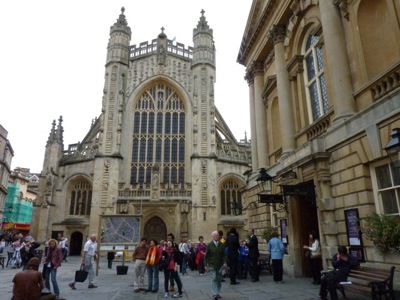
Bath Abbey
Bath Abbey was founded in the 7th century, and rebuilt in the 12th and 16th centuries. Like most Abbeys and ancient churches, the Abbey presents a visual history of piety, fame and achievement.
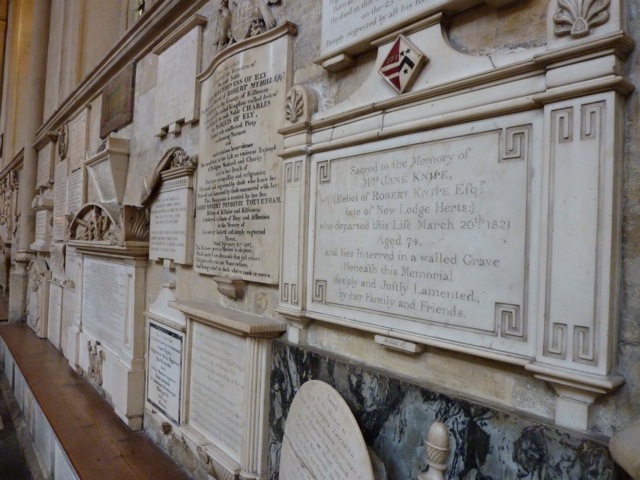
Crypts line the floors while the walls covered with memorials to saints, gentry, and people of note. Sir Isaac Pittman, who invented shorthand notation. Captain Arthur Phillip, leader of the First Fleet, Governor of Australia also features in a memorial.
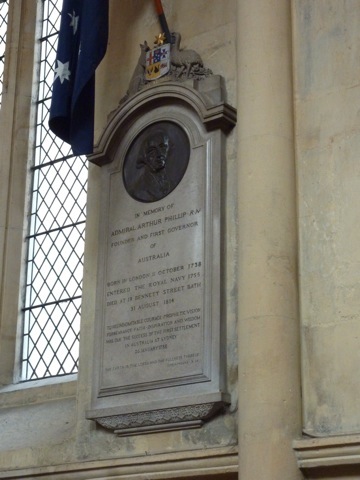
Memorial to Arthur Phillip
I do not know how many memorials there are in the Abbey. Probably hundreds. As I was walking through the Abbey, something occurred to me. Why do we have memorials? Why do we have this idea of achievement? Why do we honour achievement? And perhaps most importantly, why does achievement inspire us? It’s true: If we listen to our heart, we find ourselves drawn to those who make outstanding achievement. A roman architect in the first century AD. Thomas ‘Beau’ Nash (1674 – 1762) who in the 18th century, the town’s celebrated ‘dandy’, made substantial advances in breaking down some of the class divisions in Bath society, even if he di do it through some interesting means. Bishop Oliver King who undertook the building of the current Abbey in the early 1500s.
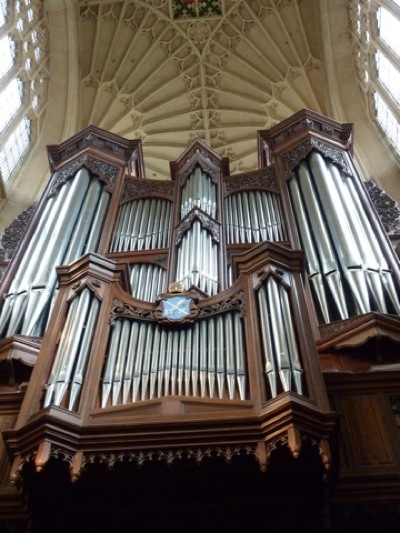
The organ in Bath Abbey, fanned arches in background
There is something in us that yearns to achieve. Every one of us. We want to do whatever we do very well. We want to excel, and develop, and pioneer, and create.
There is something in us that yearns to achieve. Every one of us. We want to do whatever we do very well. We want to excel, and develop, and pioneer, and create. Even we we do something very well, we still want to do better. It is in is to strive for perfection.
This desire is from God. The Genesis account tells us that God has placed his image in us. More: We are his image. And this means we want to do what God does. The early chapters of the Bible tells us that God wanted to create. And he did. He excelled. He caused life to abound. He caused the universe and humanity to thrive. It was all very good. It is not surprise that we find our purpose in imitating him.
We also know about rebellion and the Fall. While these are the natural inclination of our being, it’s not how this life giving, glorious achieving God first made us. In fact, Jesus’ coming is to draws us back to God’s original purpose. That’s why we imitate him, reflect his glory, and direct all our achievement to his wonderful praise.
Who has inspired you to be more than what you once were? What would to really long to do, or be?
Grace and peace: Dave
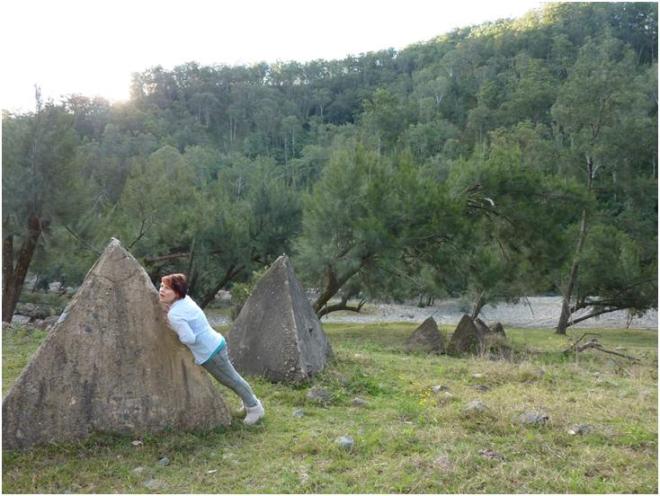 We rattled another 40 odd kilometres down the track to Paddys Flat, where the road crosses the Clarence River. Here we found the WWII tank traps (see pic, with Erin giving the size perspective), supposedly set up along
 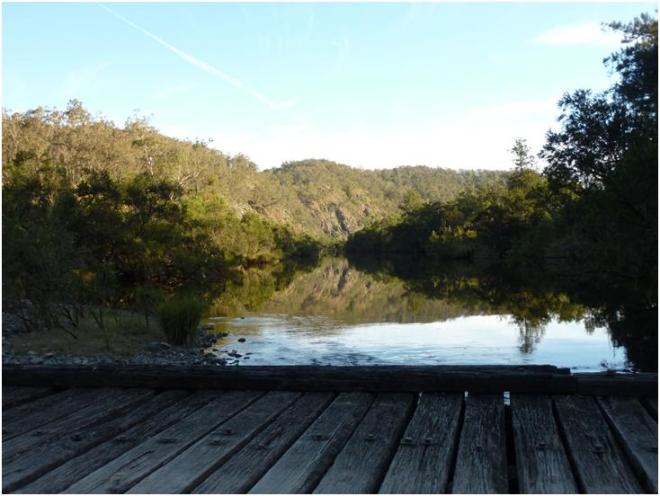 (Pic: Crossing the Clarence River at Paddys Flat, near the tanks traps on the ‘Brisbane Line’)
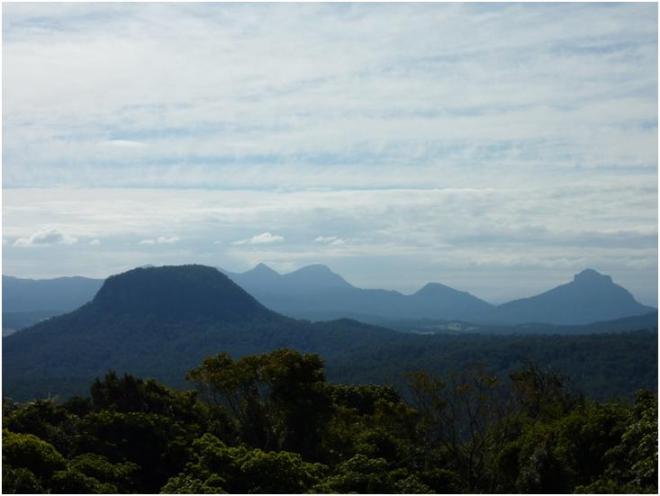 Back in Urbenville, we visited Glad’s shop again to find out about the condition of some local roads. The shop assistant told us how you could get a great view of the surrounding area from a fire tower, about 15km down the road. So we drive the 7 km to North Yabbra Road, and another 7km to the track to the Fire Tower. The walk to the top was a steep and strenuous 20min climb. A steady and persistent pace seemed to be the trick. It occurred to me that the ascent to the fire tower stretched my cardio vascular system better than the stress test I had undertaken a few weeks before. I have never had any heart problems, and have never felt any reason for concern. Even when recently I found out that my heartbeat was a little irregular, I was relaxed about it, and subsequent tests showed there were no issues. As we walked up the mountain, with my heart rate at around 190, I started to wonder what would happen if I started having serious chest pain. There was no anxiety, or fear. Just a thought. It’s funny how in an instant, your thoughts can take you to the deep recesses of your soul. The thought pressed deeper: “Well, what would happen? What would you do?” It caught me off guard a little. So I let it play out. I imagined having to sit down, with Leonie, Erin and James gathering round. Someone would have run to the top of the hill with my phone, and call for an ambulance. The thought dug in deeper, and I reminded myself that whether the phone works or not, or whether the ambulance arrives on time are not the really big questions. I went deeper, and said, simply, “Dave, you are mortal. One day you are going to die.” Whether it was this day or another day, it was OK, because the life God has given me in Jesus is life that cannot be taken away. I was comforted to feel real peace about that. I was just happy to live the life God has given me in the here and now. And with this I pushed on.
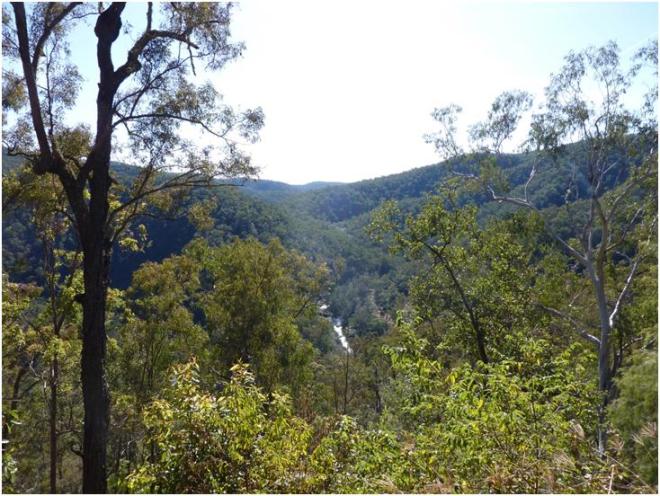 Located on the upper reaches of the Clarence River in NSW, this upper Clarence high country hideaway is a great place to unwind. Some will come here to walk, others for off road adventures, others to kayak through the many rapids down the river, and still others just to camp. I come here to replenish the mind. There’s no mobile reception (unless you drive about 4km up the ridge), no email, very little power, and no shops. You need to bring all your food and equipment with you, and be reasonably self sufficient for the duration of your stay. The nearest supplies can be purchased un Urbenville, about 50 mins drive. While access is manageable for a conventional vehicle with reasonable clearance. Our Subaru handles the track with ease. There’s a bit over 30km of unsealed road after the turnoff after crossing Wallaby Creek, so you won’t want to be in a hurry. (pic: view down the gorge to ‘Twin Waters’ taken about 2km form Clarence River Wilderness Lodge)
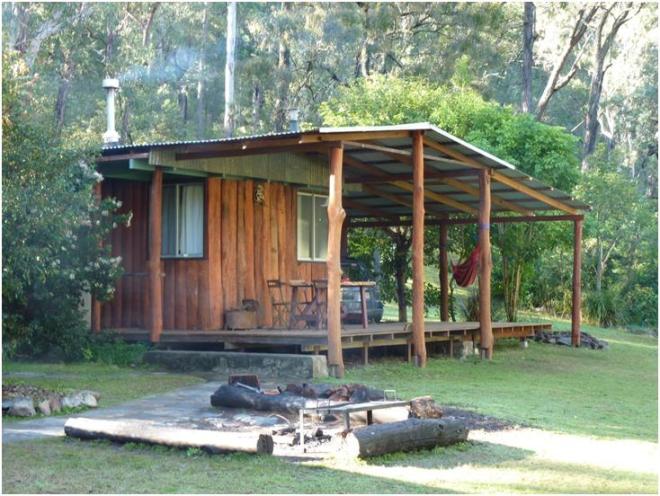 We occupied one of the two self contained cabins. These are compact, rustic units with huge outside living/dining areas. Tables and bench tops are constructed from solid slab eucalypt. Our ensuite was small, complete with a galvanised iron shower base and an eco-friendly (and nose friendly) composting toilet. Sharon and Steve have worked hard to make their property ecologically responsible, and by my observation they are pretty good at it. Each cabin has a small slow combustion wood heater which, once going, you find you’re down to short sleeves, even in mid winter.
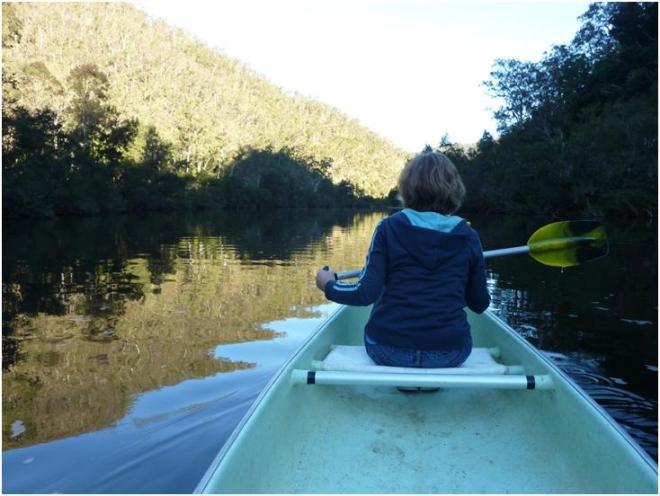
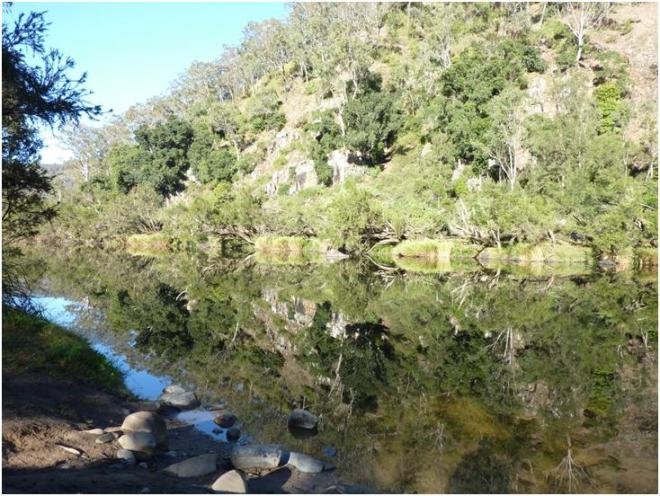 Platypus or not, the river is so incredibly peaceful. The rest of the world seems to evaporate, and the mind’s eye narrows so that it is just you, your canoe companion (in this case, Leonie), the boat, the river, and whatever you’re looking at. The canoe cuts the mirrored lake, sharing ripples either side, there’s the occasional paddle gulp, and just for a while you are impossibly lost in it.
 Not everyone likes this sort of holiday. Some want restaurants, espresso lounges, clubs, shops, home comforts. For me, Clarence River allows me to back off and unwind, to loose myself from the demands of career and calling. Today the thought returned, that I should just come here and write. Come here and think. For when life’s noise is left behind, I can hear more clearly my own life voice. Things become more certain. And I get to hear and see, without distraction, the voice and the heart of the one who made it all in the first place.
 The highway wiles and wends its way through the Great Dividing Range, passing north of the Mt Lindesay plug (pic). This section of the Mt Lindesay Highway is very windy – you won’t want to be in a hurry!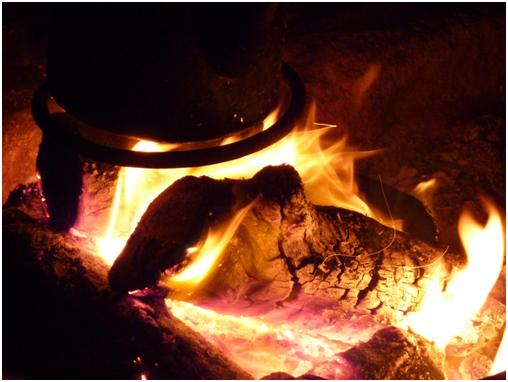
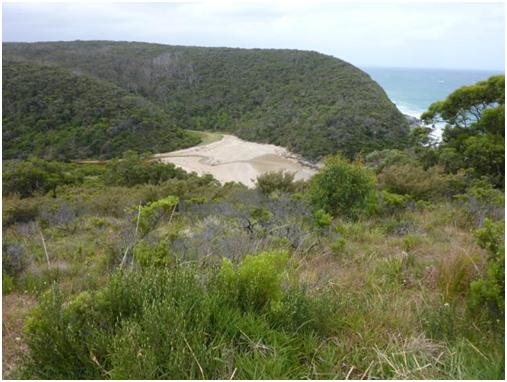 I am no environmental scientist, of course, but my observations were that this was not just a problem on Col’s block. All through the vicinity the Manna Gum stands are under attack. On one excursion to Parker River, we could see tall Manna Gum skeletons standing above the tree canopy (see picture, above and to the left of the beach area). Is this further evidence of koala blight? Driving from Cols block in Otway Park through to Blanket Bay, the picture appeared consistent. These cute, furry little critters were doing a great deal of damage, and in some cases bringing irreversible change to the environment.
 Paraklesis