God and Treasure

IStock 000004408974Small

We hear a lot today about nations operating in the national interest. Sometimes, hopefully often, that is a good thing. Like keeping people safe and protecting them from aggression. There are times though, when ‘national interest’ is code for naked national self-centredness.

The book of Exodus was written after God delivered his people from a superpower which, to put it bluntly, was just operating in the national interest.

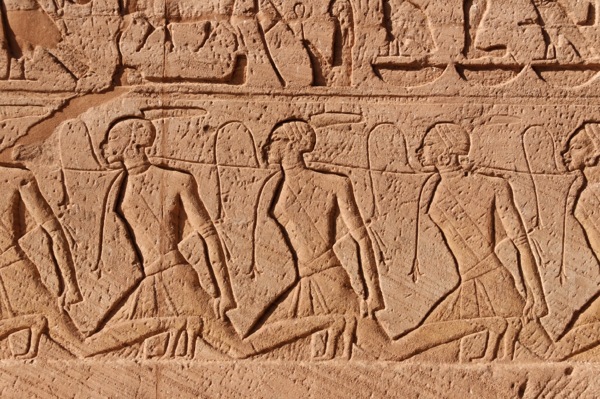
Ancient Egypt was a mighty nation, dominating the world stage at the time. And Pharaoh was using the people of Israel as cheap labour – the cheapest, actually, because they were slaves and had no choice in the matter.

So God’s people cried out. And the Lord heard their cry.

Pharaoh, however, ignored it. He made the people of Israel work even harder. Worked them to death.

Why?

Because Pharaoh valued production above people. Pharaoh would have fitted comfortably into some of today’s developing world labour markets. Places where the dollar matters most, where questions are never asked about the actual human cost of the item or the project.

Into this kind of ugliness came the Lord of life: Yahweh the Rescuer, the Saviour.

“The LORD said, “I have indeed seen the misery of my people in Egypt. I have heard them crying out because of their slave drivers, and I am concerned about their suffering. So I have come down to rescue them from the hand of the Egyptians and to bring them up out of that land into a good and spacious land, a land flowing with milk and honey — the home of the Canaanites, Hittites, Amorites, Perizzites, Hivites and Jebusites. And now the cry of the Israelites has reached me, and I have seen the way the Egyptians are oppressing them.” (Exodus 3:7–9, NIV)

The Lord hates it when any people are oppressed. Even more so when they are his people. So he led them out of Egypt with a mighty hand and an outstretched arm. He led them across the Red Sea on dry ground. The Lord did this because of his covenant with Israel. He had promised to bless them, and make them a blessing. He had promised to make their descendants as numerous as they stars in the sky and the sand on the seashore. God’s promises matter. He never goes back on his word.

So now, with the Red Sea sand still stuck between their toes, as they camped on the border, ready to enter the land of promise, God renewed his covenant with them:

“‘You yourselves have seen what I did to Egypt, and how I carried you on eagles’ wings and brought you to myself. Now if you obey me fully and keep my covenant, then out of all nations you will be my treasured possession. Although the whole earth is mine, you will be for me a kingdom of priests and a holy nation.’ These are the words you are to speak to the Israelites.”” (Exodus 19:4–6, NIV)

These verses show the kind of nation Israel was to be:

First, in contrast to Egypt, and other nations, Israel was not to be a nation driven by seeking treasure. They would find their comfort in being treasure. Yahweh’s treasure! They would not need to find their security or significance in things because Yahweh was their security. The fact that they were loved and saved and rescued by him was their significance.

Second, Yahweh called Israel to be a kingdom of priests. It sounds like an odd thing for a country to be. How can a nation have a priestly function?

Well, we know that a priest is someone who represents others in a religious context. A mediator. A go between.

So, Israel was to represent the nations to the Lord. They were to bring the needs of the nations around them to his throne of grace. In times of famine they were to pray. They were to act compassionately in times of disaster. They were to ask the Lord to be merciful and gracious to all the peoples around them.

But it wasn’t just bringing the nation’s needs to the Lord. They were also to bring the Lord and his will to the nations. They would proclaim the truth of God and invite other nations to accept him in faith and live under his covenant. As priests, then, they spoke on the nation’s behalf to God, and on God’s behalf to the nations.

Third, they were to be a holy nation. We tend to think holiness has to do with religious acts and places. In the Old Testament, holiness is not first and foremost religious acts and things. Holiness is a personal quality. To be holy is to be separate, to be distinct, to be set aside for a particular purpose.

So, thinking that through, how would this nation show their holiness? The answer is that they would reflecting the character of the Lord in their national and personal lives. This would happen as they followed the Lord’s commands as a nation and as individuals:

1. worship only God
2. worship no idols
3. use God’s name only with reverence
4. remember the Sabbath day, allowing for rest and worship
5. Honour your father and your mother
6. You shall not murder
7. You shall not commit adultery
8. You shall not steal
9. You shall give false testimony or lie
10. You shall not covet what belongs to others

As God’s people did this, they would be displaying a life and values radically different from Egypt and every other nation on earth.


…a life and values radically different from every other nation on earth … this transformed life is one of the ways they would be a blessing


What was their motivation? Well, they did not obey in order to be loved and rescued. Yahweh already loved them and rescued them. They were already his special possession. The answer is that their obedience was all about gratitude and thanksgiving. It was not a requirement to earn love, but a response to the love the Lord had freely given. This changed and transformed life would be one of the ways they would be a blessing to the nations around them.

It was as if the Lord was saying, you have come out of a nation where people treasured wealth and power more than people…

You will not live for treasure or possessions. You will live because you are my treasured possession.

You are a Kingdom of priests: you will bring the nations needs to me, and you will bring my will to the nations.

You will be a holy nation. You will separate yourself from all the dehumanising values of oppression that you saw in Egypt. You will be different, distinct, to all that.

This call presented Israel with their identity. They would be totally unique as compared with all the nations around them. The Lord’s work in them was to be a total reorientation of life. A radical alteration how they were to engage the world around them.

This call was to shape the national ethos of God’s people. In my next post I’ll pose the question of how that is relevant tot God’s people today.

– Dave

What is your treasure?

Enough - banner

Enough… Treasure

Read: Exodus 19:1-8

Last week Leonie and I watched The Hobbit. The story starts with the dwarfs losing all their treasure, and ends with them mountain an expedition to win it back from the wiles of the dragon. In the midst of it all we are introduced to Golum, and to Bilbo Baggins who manages to take Golum’s personal treasure, which he has named ‘My Precious’.

Great movie. Wonderful fantasy. And yet expresses a profound truth: The quest for treasure does not leave us. The thought that somewhere there is something that will make work unnecessary, or give us beauty, or deliver success, or make life easy – or better still – eternal, is deliciously captivating.

Truth is: We are all seeking some kind of treasure.

This desire lies at the core of the human heart. And we direct our lives to pursuing it.
Here’s an email I received while I was writing this sermon:

EBay

Look at how this ad is positioned: it tasks about what you love; it panders to your interests, passions and preferences; it’s addressed to your needs, and asks you to follow. It’s a profound example of how our culture works.

Advertising tells us a lot about ourselves, and what we think is important. They say that kids in the USA are exposed to something like 40,000 ads per year. A study in Queensland found that because of the use of children in advertising, by the age of 7yrs, 71% of girls want to be slimmer.

Advertising knows the truth of the human heart: that we all treasure something.

Broadly speaking, our economy is build around the laws of supply and demand. Around the belief that healthy markets and economies should always expand. And markets expand by producing things that people want. You’ve got to be competitive, so companies look to reduce costs: labour, utilities, plant & equipment, human resources.

When I was a kid, cheap stuff was made in Japan. As conditions improved in Japan, the cheap labour market labour shifted to Taiwan, and then to China. Then on to Vietnam, and now? Bangladesh. Recently, 1200 people died in a building collapse in Bangladesh. The pressure to keep costs down led to shortcuts in safety and building standards. These workers endured terrible conditions to produce fashion items predominantly for our shops.
It happened because the manufacturers and retailers place more value on profit and production than on people. [You can view an excellent report on this terrible tragedy on ABC Australia’s “Four Corners” via iView]

It is an unpleasant thought, but this is actually part of our culture’s history. English colonists simply settled in Australia, believing it to be Terra Nullius – owned by no one. No one considered the rights of the people who were already here. Efforts were made to settle peacefully, but when resistance came, it was met with terrible and disproportionate force.

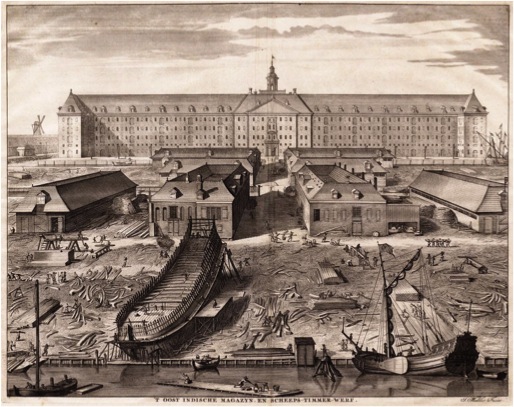
The Dutch did no better in Batavia (present day Indonesia). The Dutch East India Company’s Captain Coen wiped out whole settlements of natives so he could build the colony and the walled defences of the Citadel for the Governor.

Batavia

How did these world powers justify their actions? Because lucrative spices, resources, and a colony was more important than people.

“…we cannot carry on trade without war, nor war without trade” [Capt Jan Pieterszoon Coen, Governor-General of the Dutch East Indies, 1618]

Those words make me squirm. They should give us pause when today the harsh treatment of people is justified in the name of national interest. And they give us pause because we realise that western society – our society – has for hundreds of years been built by seeing the lives of some people as expendable. We treasure things, and dispose of people.

The point of this hard truth is not that we send ourselves on an eternal guilt trip, but that we repent of the tendency to devalue people in preference to possessions. I don’t know exactly how that should be done, but we can start by considering where, and how, the goods we purchase are manufactured. We can do it by persisting with questioning retailers, and realising that there is some power in the dollars we spend in their establishments.

Grace and peace

– Dave

Enough… Money & Wealth

Enough

Over the weeks of June I completed a short four week series at Gateway called “Enough… Money & Wealth”. The idea for the series title came from Compassion Australia “The opposite to poverty is not wealth… it is enough.” What does “Enough” mean? And would we be really satisfied if we had “Enough”? I find these troubling questions.

So, the series looked at how wealth and possessions shape our lives, the formation of our values, and consequently, the expression of our faith and the witness of our church.

I found this series challenging to preach. It’s always a challenge to preach, of course. But this series nailed me a little more than normal. More than other times I was aware that my own life was out of step with what God called his people to in his word. So, to keep myself honest, to let this conviction settle into action, I decided to serialise this series in some blog posts. As I rework them, I am praying that God will drive me to live them more determinedly.

I’d be really happy to have your interactions with these posts, and to engage in discussion via the comments. Let’s see if we can deepen our individual and corporate witness through this series.

I hope you find them as challenging as I did, and it’s my prayer that God will change us all through his word. May he depend our desire to follow him radically, and may his name be praised as we live to his glory.

Grace and peace,

– Dave

PS: It may be that occasional posts finish a little abruptly. This will be because I am trying to follow the basic text of my messages, where each point followed the other, instead of being punctuated by several days. So, I’ll try and make the transitions work as best I can for the blog format.

Retreat day – Guilderton

I am sitting at a picnic table on Stephen’s Cresc in Guilderton, WA, looking over the Moore River.

It has taken me 90 mins to drive here, and before I do any of the things I have in mind for today, I just want to sit and listen in the quiet.

The descending call of a Whistling Kite, the gentle cooing of some Spotted Doves, interrupted by angry staccato bursts of some unidentified Honeyeaters.

Across the small waterway – just another little inlet on the Moore River estuary, a couple of men engage in animated conversation. I can’t tell what they’re saying. It doesn’t matter. Seven kayaks ply their way across the inlet.

20130514-112435.jpg

A pair of ringnecks burst past in a flash of fluoro green and yellow. A Red Wattle Bird calls. A congregation of White Tailed Black Cockatoos scriyaws their morning choir practise, while a Wedge Tailed Eagle slides in large lazy circles, magnificently indifferent to smaller birds’ attempts to pester him out of their territory.

The sun is on my neck.

The wind is at my back. It blows away the business of recent weeks.

God is close. His world is beautiful.

Our Church Council is working through Greg Ogden’s Leadership Essentials, and recently I was challenged to reinstate monthly prayer and process retreat days. This is the first of those days for a long time.

Theology According to Penfolds Grange

Grange Vertical1 300x200

As we walked around the bottle shop at The Blue Cattle Dog, he asked, “if you knew Jesus was coming again wouldn’t you want to buy a bottle of Penfolds Grange just to see what it was like?”

I thought for a few seconds, and said ‘No mate, I probably would not. I think the wine in the new heavens and the new earth is going to be way better that anything that Penfolds – or anyone else – can offer.”

He looked puzzled. “Why would we have wine in heaven?”

“Well, why wouldn’t we?” I responded. “What makes you think there won’t be great wine in heaven? And food better than anything we can imagine?”

This seemed to confuse him even more. He said he knew we would still have bodies, but wondered whether they would be the kind that will have need for food or drink, or any other kind of sustenance.


Will we eat in heaven? Live in homes? … Will there be a structured society? Or will it be a case of some kind of bodied existence will little or no relation to the world around us?


And then I started wondering about this little exchange, and why I thought an eternal physical reality, with joys like eating and drinking was such an obvious thing to expect, and why he thought it was so abnormal…

What do you think? Will we eat in heaven? Live in homes? Walk in national parks? Or grow vegetables in the backyard? Will there be a structured society? Or will it be a case of some kind of bodied existence will little or no relation to the world around us?

These are not just academic questions, the answers to which we’ll only know when Christ returns. My belief is that the picture you have of where you have come from (Eden) and the picture you have of where you’re going (eternity) will determine the shape of your spirituality and your mission in the present.

So, the more I thought about it, the more I was convinced that my friend would probably have most of the Christians in Australia on his side, and that maybe I was a minority.


How you see where you have come from (Eden) and where you’re going (eternity) will determine the shape of your spirituality and your mission in the present.


After all, haven’t we always been told that the heaven is a spiritual place? And doesn’t that mean there will be nothing physical or material there? Isn’t it true that this earth will pass away, and be burned up and there’ll be nothing left of it?

This is the tension I want to wrestle with. In future posts I want to draw on some of the biblical themes relevant to these questions.

For now, why not let me know what your thoughts are?

Grace and peace,

Dave

God is with you – whatever is happening

A middle aged man grieves the loss of his father. Confused and confronted by some family reactions, he prays for peace among his siblings so they can honour their father’s life.

Two young people are prepare to marry. Their ‘right now’ a juggle of plans for a wedding breakfast, settling a guest list, a honeymoon, and their day to day lives.

A middle aged man sits in the morning traffic, mind blank with the yawning sameness of his daily commute. His mind flickers between being free from the grind, the financial reality of a mortgage, the boss’s expectations, and uncomfortable relational realities at home.

A young woman plans a community event, desktop stacked with schedules, memos, invoices. Under pressure. Phone rings. Plans change. Again.

Another walks home, weary from an early start. Thinks about her lack of love, and ponders shallow friendships. She doesn’t like to think about it, or where her life is headed. Or whether.

Some people say that God is only with us when we’re doing the right thing, when our lives are heading in the right direction, when we’re honouring him with right living and acceptable behaviour.

Others will say that God is really only present when were doing spiritual stuff. When we in ‘quiet time’. We read our Bible regularly, we use the right version, we pray in a humble spirit, we worship in spirit and truth, witness regularly.

Ask them, and they won’t have an answer for the people in the grind of life, except that faith is probably not strong enough, and that it’s no surprise they are doing it so tough.

The God of grace is not impressed with the musings of the comfortable, who believe their responses somehow make him present. Scripture reveals a God who is present and who is there, whatever is happening.

When the people of Israel gathered on the promised land’s fenceline, the Lord reminded them that if they were faithful to him they would be blessed in the field. He would protect them fro the enemy. Their sons and daughters would be strong, healthy. Their harvests plentiful.

Best of all: The Lord will dwell with them. He would be with them. He would be their God, and they would be his people.

Scripture reveals a God who is present and who is there, whatever is happening.

Later, when the Lord points out the implications of any future disobedience – and they are awful, horrible things – he never says ‘and I will not be with you, I will forsake you and leave you alone forever.’ Whatever happens, and whatever path his people would tread, whether faithful or rebellious, God would still be with them. Yes, he would despise their behaviour and hate its outcomes. But he would still be with them because of his covenant. His promise to be their God would never fail, because he is faithful, even when they were faithless.

Whatever is happening in your life today: whether it brings a cheer, or whether you are overcome with pain and grief, God is with you.

He knows your life is broken. And he gently whispers that his plan is to heal, and mend, and make right. He is with you. Trust him.

Upon a Hill

Three men shared death upon a hill,
But only one man dies;
The other two—
A thief and God himself—
Made rendezvous.

Three crosses still
Are borne up Calvary’s Hill,
Where Sin still lifts them high:
Upon the one, sag broken men
Who, cursing, die;
Another upholds the praying thief,
Or those who penitent as he,
Shall find the Christ
Beside them on the tree

“Upon A Hill”, Miriam LeFevre Crouse

This Is What Forgiveness Looks Like

On May 20, 2012, 18 year-old Takunda Mavima was driving home drunk from a party when he lost control and crashed his car into an off-ramp near Grand Rapids, Michigan. Riding in the car were 17 year-old, Tim See, and 15 year-old, Krysta Howell. Both were killed in the accident.

Takunda Mavima lived.

Mavima pleaded guilty to all charges and was sentenced to between 30 months and 15 years in prison.

Despite their unimaginable grief and anger, both the sister and the father of victim, Tim See, gave a moving address to the court on behalf of Mavima, urging the judge to give him a light sentence.

“I am begging you to let Takunda Mavima make something of himself in the real world — don’t send him to prison and get hard and bitter, that boy has learned his lesson a thousand times over and he’ll never make the same mistake again.”

And when the hearing ended, the victim’s family made their way across the courtroom to embrace, console, and publicly forgive Mavima.

Make sure this image sticks with you forever:

Hug
Photo Credit, Chris Clark, Grand Rapids Press.

There will be a time in your life when someone will wrong you. God forbid they take the life of your child. But it will happen. And what matters most isn’t how it happened, but how you respond to it.

And if you’re a person of faith, the calling is even greater. The gospel of forgiveness isn’t a high calling for the heroic individual, or a counter-cultural description of heavenly perfection. It is a principle central to the gospel itself – the very heart of our faith in which we are called to embody.

In the swelling sea of human destruction, the little story of Takunda Mavima and a family from Michigan is a lighthouse on a hill, a beacon of hope, guiding the way for all our ships to pass through.

Right now, how can you prepare yourself with a clear plan of action to forgive in the darkest of times?

This post was written by @JustinZoradi and is used with permission. It first appeared on Justin’s blog, and later on Don Miller’s Storyline

Justin

A better story – and why I haven’t blogged for the last six months

Let me start by apologising for not posting anything for the last six months. You might be wondering what happened…

Well, over time, I had gone cold on the whole idea of posting. My feelings varied. One day I wanted to pick it up again, and the next day I’d be thinking ‘who wants to read this anyway?’

I suppose with everything that happened with my exit from Redlands, my confidence had been slam dunked. I would be the first to say that I do not always find criticism easy to manage. But in this case what was said (admittedly by a small number of people) disturbed and appalled me. It left me bruised, broken, and damaged.

You can move on physically and take up residence on the other side of the country. But those voices stayed with me. They worked to undermine my desire to write regularly. They attacked my ability to pastor with confidence, to preach with a sense of urgency and passion, to do anything worthwhile, really. Maybe it was only those close to me that noticed my struggle, or felt it. Most of the time I survived by pushing through these darker times, praying that God would help me through, and that he would enable me to stand.

It’s an odd thing, really, how voices of untruth and ungrace can be so dogged and persistent in your mind. Rationally, of course, you can work it all through. You know what has been said is a lie. You know it is untrue. You’re aware of all the other dynamics in the situation. But beyond all your rationalisation, the evil one delights to use these voices as his own. He uses them to undermine the reality of what Jesus has done in you and for you. The accuser always attempts to recast Gospel reality into an ugly, chaotic falsehood.

In my case, those voices spoke to my own insecurities. They exposed my tendency to want to do things in my own strength. To protect myself with my own defences. To answer the voice of accusation with my own resources. What a curse self reliance is. How much better to have answered as Jesus did, throwing himself on the faithfulness of the Father, and citing the Word to the accuser’s face.

So, in reality, an absence of writing was an indication that the voices of the past were still demonising me.

So, what has changed? Well, I am seeking to live more in the strength of Jesus and his work in me and for me. It is his reality which determines who I am today and what I do. His truth sets the agenda, and it conquers every malicious voice the accuser might seek to use.

Of course, I have known Jesus’ reality for around four decades now. And it’s true that I never ‘unknew’ those wonderful truths. But it’s also true that everything which has happened has given me a fresh opportunity to embrace and own the good news again. It’s a daily decision to follow truth, and to place your trust in it.

Over recent months I have been reading posts from Don Miller’s Storyline blog. Miller’s blog has example after example of people impacted deeply by the grace of Jesus, and who want to live in that reality.

A few years ago, I read Miller’s book ‘A Million Miles in a Thousand Years’ Here again, the book works with the story metaphor. It challenged me to think of what kind of story I am living, what kind of part I am playing, what kind of character I am becoming.

Million Miles

Then, a few weeks ago, I had one of these ‘aha’ moments. It is reflected in how often the first person pronoun is used in the last sentence of the previous paragraph. Here is the profound reality: I get to make the decisions about my story, my part, my character. Sure, God is sovereign, and I believe that were it not for his love my will would be bound in all rebellion and the fall. But in his grace I am still a free agent. Jesus calls me to live his new life and his better way. On top of that, Jesus lives in me through his Spirit, recreating my inner nature, and empowering me – albeit imperfectly – to follow where he leads.

…because of Jesus, I get to decide how my story will unfold…

Here’s the point: Because of Jesus, I get to decide where my life is going, and how my story is unfolding. And those voices? Well, they don’t get to shape my story any more. No longer do they have the capacity to influence the unfolding events of my life.

I own my story. And in Jesus’ name I am embracing his work of change and transformation. Those ugly voices will still appear from time to time. But the grace of Jesus speaks a more beautiful and liberating reality.

Thanks for listening…

Dave

Forgiveness is God’s Nature (5)

I have never been able to understand those who say that the God we read about in the Old Testament is angry and vindictive, while the God we read about in the New Testament is loving and kind. The reality is that God has always been gracious and forgiving, and this flows right out of the core of his being.

Think of the account of Moses on Mt Sinai in Exodus 34. Moses had asked to see the glory of The Lord, and God agrees to pass by and allow Moses to see ‘his back’. There is much in this passage that is hard to grasp, but one thing that is very clear is the nature and character of The Lord. As God passes by he proclaims his own name to Moses: “The Lord, The Lord, the compassionate and gracious God, slow to anger, abounding in love and faithfulness, maintaining love to thousands, and forgiving wickedness and sin, yet he does not leave the guilty unpunished; he punishes the children for the sin of the parents to the third and fourth generation.”

Sure, punishment is mentioned. But the thing to note is what receives the emphasis. The first things mentioned are compassion, grace, slowness to anger, love, faithfulness, more love, and forgiveness. This provides the backdrop for any words about punishment: if God is going to be compassionate and gracious and loving, then he must call to account those who are not compassionate, gracious and loving. But that’s another post…

The main thing to see is how close forgiveness is to the heart of God. Right at core of his character is his desire to forgive.

Forgive is an interesting word. The Hebrew word is nāśā. It means to lift, to carry, to take up, to lift off. So, right at the core of God’s heart is his deep inclination to lift off the burden that weighs people down. God desires to lift off the weight of sin and guilt. He does not want to see people bent and broken by wrongdoing and the fall.

It reminds me of John Bunyan’s Christian, who makes his journey with a ridiculously huge burden strapped to his back. That burden is his own sin. Christian can’t get rid of it, no matter what he tries to do. But here’s the deal: God can get rid of it. And if we pay attention to what God says is at the core of his being, it’s clear that he wants to lift that burden: he forgives wickedness and sin.

In case you wondered whether this desire to forgive was at the heart of God, we see the same thing said about the Servant of The Lord in Isaiah 53 “Surely he took up our pain and bore our suffering”. The ‘giveness’ of God is expressed in the giving of his Son, Jesus, who took up our pain and suffering, our transgressions and iniquities.

So these are core realities for God, for how he reveals himself, for how he sees himself, as well as the core mission of his son, Jesus Christ. God’s giveness is the foundation of his forgiveness. Our sin and guilt can be forgiven and forgotten because our wonderful God lifts it off us, and carries it away from us, in all he has done through Jesus his son.

When it comes to being forgiven, and being forgiving people, we have to start with the nature of God, with his core characteristics, and the clear reality of what he has done through Jesus. He is a deeply gracious God, and his desire is to forgive all your wrong and every sin.

Is this how you are used to thinking about God?

What does the fact that forgiveness is at the core of God’s heart mean to you?