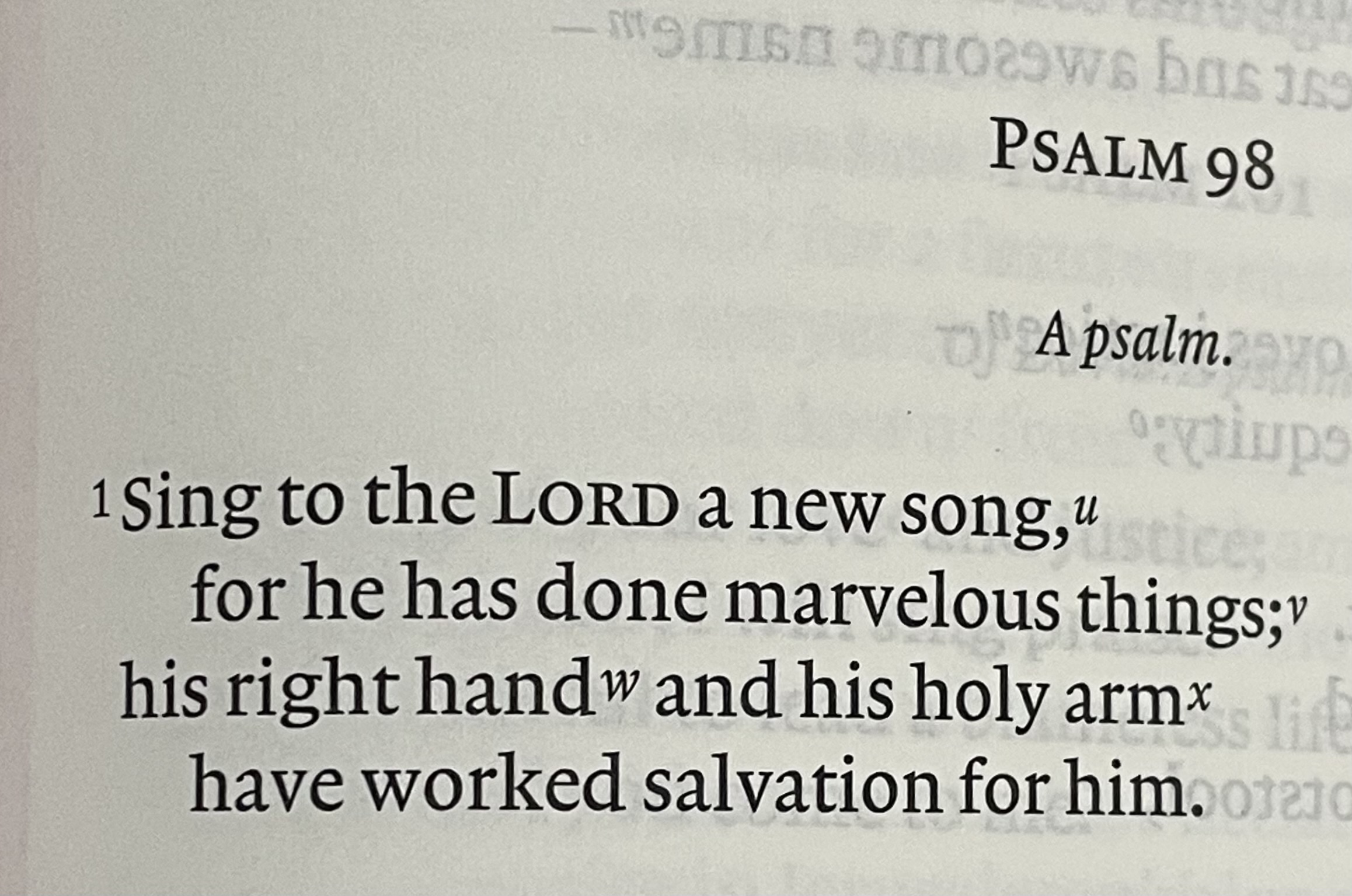

Pastor, what do you do when you’re ’out of season’?

Pic: D Groenenboom

Preach the word; be prepared in season and out of season; correct, rebuke and encourage—with great patience and careful instruction.” (2 Timothy 4:2, NIV)

Reflecting on this passage this morning, I thought about that phrase “be prepared in season and out of season.”

In the original, ‘be prepared’ is a call to ‘stand up’ or ‘be ready’ to preach and minister under any circumstance. Lea and Griffin (NAC) see this as staying on task whether you feel like it or not, and/or whether the people under your care find it convenient or not.

I’m guessing most pastors sense when either they or their church is in season or out of season: times of self-doubt, fatigue, feelings of hopelessness and/or helplessness. Or church congregations which may need challenge, correction, or gentle guidance into the newness of the Kingdom (see 2 Tim 4:1).

It would be nice if all pastors found these situations easy to work out. It would be great to know they can pick themselves up in times of doubt, or tiredness, or the weariness of long obedience. Truth is, even if a pastor has sufficient mental clarity to make what they believe to be sound decisions at such times, few have the necessary objectivity and headspace to do so.

This is one of the reasons why plurality of leadership is a very good thing in the church. Besides being biblical, pastors can talk through challenging matters and prayerfully decide with their team what the best approach might be.

So, what does a pastor when they find themselves ‘out of season’? When things are not going well, when ministry – too often – interrupts life, well-being, and healthy practice?

Beyond any team discussion of pastoral challenges, the guided reflection of regular pastoral supervision can be incredibly helpful. Supervision sessions can bring new understanding to how one responds to ministry complexities, to one’s perceptions and perspectives. Pastoral Supervision provides a safe and confidential space to reflect on one’s work, how one is responding to ministry situations, and how one might do it better.

An ‘out of season’ moment…

Consider how Pastor John* dealt with his ‘out of season’ experience…

John’s interactions with Harry* were becoming complicated. It seemed that every time they spoke there was awkwardness and discomfort. John sensed that Harry was unhappy. Was it something John was doing? A direction the church was taking? Something about John himself? He just couldn’t work it out. John knew he had to do something, but it was all too confusing to think clearly about it all.

John, like most pastors, loved pastoral work and often took the role of peacemaker. He didn’t like it when people conveyed disapproval or unhappiness. John was especially uncomfortable because it had gotten back to him that Harry had spoken to others about his feelings. Would others turn against him too? What was Harry’s problem? What had John done wrong? What could he do about it? Could he do anything to change the situation?

An additional complication – not uncommon in church circles – was that Harry had strong connections with some of John’s co-leaders – that made any discussion of the issue quite tricky.

Sure enough, when John was trying to turn off at night, those questions yapped like a stray dog at the heels of his consciousness. So he was wide awake at a time when he could ill afford it. John was tired, confused, isolated and increasingly anxious.

John’s pastoral supervision experience…

John took his experience to his next supervision session. The supervisor sat with John, probing various perspectives, enabling John to fully explore and verbalise his experience. This helped John broaden his perspective and get some clarity on his core responsibilities. Supervision provided a safe space for John to consider what Harry’s point of view might be. Together John and his supervisor explored what Scripture might have to say to John, to Harry, and what impact the Gospel might have on it all.

Supervision helped John untangle his thoughts and responses. The Gospel truths John considered with his Supervisor were not new to him, but he did find some new ways to apply them to his complex situation. John’s Supervisor wasn’t telling John what he should do: he just helped him access his own theology and apply it to his pastoral interactions. In the sessions John was able to decide on a plan to move ahead and identified some specific ways he could interact with Harry.

Supervision helped John find clarity on his own responses and what he might be able to do differently. John felt safe to be vulnerable about himself, his fears, and his thoughts about Harry. He was able to review how things unfolded in subsequent supervision sessions.

The value of supervision

While a coach might have worked with John to identify better goals and strategies, and a mentor might have passed on some of their timely wisdom, John’s professional pastoral supervisor helped him see this issue with greater clarity. He guided John to identify how Scripture and theology informed the context, and drew it all together in a workable action plan to be reviewed in future sessions. 

Supervision is no silver bullet. The sessions can be hard work, but they allow a vulnerability, an objectivity and discernment that can lead to significant learning outcomes and better ministry. For both John and Harry, the Gospel might come to greater expression, and that would be good news all around.

*Not their real names

David Groenenboom
Find Clarity in Ministry: Embrace Pastoral Supervision

People in ministry often say they don’t have time to unravel the complex pastoral issues that come their way. There are too many people to visit, too many meetings, there are sermons to plan, ministries to lead, contacts to follow up – and none of these fit neatly into organised blocks in the schedule … it never ends and it never seems to get better.

What tends to happen is that because we’re so time poor, when we sense there are complexities bearing down upon us, we’ll often push them out of our immediate awareness by just keeping busy and trying to get it all done.

The stress of all this will often work its way out in some other way: frayed nerves, short temper, irritability, a drink too many, other escapist behaviours …

This is why I love pastoral supervision.

Supervision provides a welcoming and courageous space where pastors can reflect on their work to learn how to do it differently and better.

Supervision is welcoming because it’s an intentional interruption to ministry’s constant demands. As I step into a supervision session, I have permission to pause, to breathe, to relax, and settle into a time of intentional reflection. I will meet with a friend (my supervisor) who comes beside me with an open heart, an accepting attitude, and a non judgemental spirit.

Supervision is courageous because I can wade into whatever is weighing me down as honestly as I can. I will be encouraged to see wider perspectives on the issues and on how I might move forward more effectively. My supervisor will encourage me to see what I really need to know, as opposed to what I merely want to hear. So supervision is a place for me to learn. I will be encouraged to own and address some of the harder lessons I might otherwise avoid. Supervision keeps me honest to myself and to my calling as a minister of the Gospel.

It’s no surprise that some of the most common feedback I receive is that supervision gives greater clarity on complex issues … it to find better ways to move ahead … it open up new perspectives on things that had been significant burdens.

That all sounds pretty positive – but here’s the thing: These are precisely the sort of conversations that pastors rarely have, and yet they are also precisely the sort of conversations they need to have. They bring such value to ministry and pastoral work. They help us bring our ministry practice closer to the theology and values we espouse. They can give new insights into how the Gospel is embodied in ministry – and that can be very transformational!

Where appropriate, I use a redemptive cycle of theological reflection. This method breaks down confusing or complex issues, allowing us to better hear how the Gospel of Jesus speaks to the situation at hand.

I’ll give some detail on the Redemptive Cycle in a future post – but for now, we can all imagine that where pastors can approach their ministry with greater clarity, more insightfully working through Gospel values, they’ll likely be less stressed and working more sustainably. That is a huge win!

Would you like to know more? Email me and we’ll discuss how to take it forward.

Repairing the Brokenness

Psalm 98

This Psalm just overflows with jubilation! It voices the ‘new song’ of people who can see that the Lord is coming in righteousness! And they are thrilled to bits!

But that does that mean that God is coming in righteousness?

Well, in this instance it does not mean that he will come in the white hot rage of punishment and retribution where he will obliterate every force to ever stand against him. Yes, that Day will come – but that’s not why this Psalm is so jubilant.

When the Psalm rejoices that the Lord is coming on righteousness, it’s celebrating something else: the coming of the Lord into our world to do “marvellous things.” His “right hand” of power and his arm of holiness are bringing rescue and salvation (v.1).

The Lord has revealed his salvation – the nature of his rescue and its impact – by revealing his righteousness to the nations! So, all people who are not “Israel” will see how God, bringing rescue, puts their lives, their world, their everything, back together again! Amazing! Our God is a justice bringing, brokenness mending, life giving, sin defeating, shalom restoring God!

v.3 reminds us: this is not a new thing. It is the outworking of his covenant promises (eg. Gen 12). His “love and faithfulness” will go to the ends of the earth! This is his promise and his intention.

So it’s no wonder that all people, all nations, burst into rapturous praise (v.4-6)!

It’s no wonder that even the environment in its totality – all nature – rejoices! It’s the delightful opposite to the groaning of creation in Romans 8, because God – coming in righteousness – is addressing the brokenness brought by the fall. Our God is putting things right! He’s repairing what sin has broken! It’s glorious!!

All people and all creation joined in rejoicing in his goodness! All reality is in love with the righteousness and equity he is bringing. I mean, who wouldn’t be thrilled to see that?

But here’s the question you’re asking: How is God doing this? How is God bringing his righteousness today?

Here’s the surprising answer: God is doing it through Jesus, as Jesus rules in your life!

Jesus’ plan is for for God’s righteousness – which he has won for you in his cross and resurrection – Jesus’ plan is for that righteousness to overflow from your life into everything around you.

And what does that mean?

God’s righteousness – his ‘putting things right and mending the brokenness of our world’ starts as you put things right in your life. It comes through you bringing your behaviour and attitudes into line with the character and Kingdom of Jesus (see what the Bible says in Eph 4:17 – 5:2).

God’s righteousness comes to your world as you work, in the strength Jesus gives, to put broken things right around you. Your relationships. Your family. Your friends. The community where you live. Start putting right whatever is wrong. You: making things safe. Living in friendliness. Bringing grace and goodness. Creating a safe environment for women, for children, for those who are vulnerable and lonely.

God’s righteousness comes as you pray for and work to change desperate situations, and you long for grace in Gaza, as you work for an end to environmental degradation, as you act in kindness and respect to First Nations Peoples in your community.

God’s righteousness comes into our world as you work to bless and build your church, to see it thrive, to help it become a sanctuary of peace, a haven of love, against all the madness and anxiety that our culture and communities seem to carry.

God’s righteousness has been won by Jesus, and he’s bringing it to your world as you embody his character and goodness in your words, your attitudes and your behaviour!

How good is that?