John Piper interviews Rick Warren – a definite ‘must watch’

I have just taken 90 mins to watch this excellent interview between John Piper and Rick Warren. It is definitely worth your time to do the same. Here’s why…
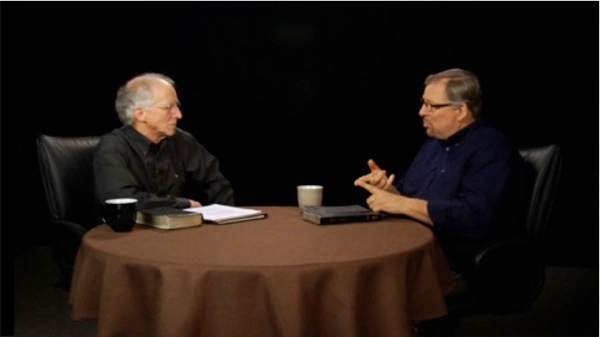
Piper  Warren

You can view the interview here:

My interest was piqued because Warren’s Purpose Driven Life was incredibly influential some years ago, having become one of the biggest selling books of all time (after the Bible). PDL was also a great resource for the development of the small group ministry at Redlands Christian Reformed Church in 2003. That we could have sermons, small group studies, and reading materials all themed together was a terrific way to launch into our small group ministry. We have never looked back.

Beyond any organisational aspects, the subject matter of the Purpose Driven Life was also a great encouragement and stimulation to us. That’s why we could not understand some of the negative criticism levelled at the book. Rick Warren was denounced from some quarters as a mean centred theologian, light on theology, as one who played fast and loose with the text of the Bible, as well as a raft of other criticisms.

So when Rick Warren recently published the interview between John Piper and himself, I thought that was not to be missed. John Piper is of course one of the more popular reformed evangelical voices in the USA. His views are widely received and respected in circles where I serve amongst the Christian Reformed Churches of Australia.

If you’re a person who loves the reformed heritage, I would encourage you to watch the interview in its entirety. As you do, you may just

* Be challenged: that there is good reason to be respectful of Rick Warren’s ‘Purpose Driven Life’ and thankful for the contribution his work has made to Jesus’ Kingdom and glory

* Be surprised: that there is not so much separating Rick Warren and John Piper. Well, that’s how I saw it. You draw your own conclusions

* Be reminded: that we need to be balanced and gracious in the way we deal with what other Christian leaders say and do. Australian Christian leaders are sometimes a little too quick to engage in the tall poppy syndrome. We are not immune to this weakness, friends.

* Be encouraged: Piper and Warren are so gracious to one another and so warm in their interaction. I found myself saying ‘I wish I would interact a little more like that’. They made me desire to honour Jesus more in my work

Q: Leave a comment and let us know what you think about this interview
Building a Community of Men

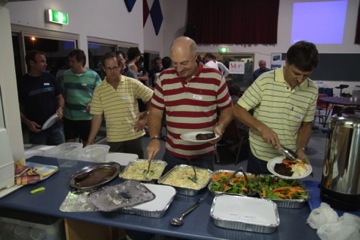
Tonight was the first get together for The Meating – a new men’s community at Redlands CRC. There were three basic elements to what we did:

1. Great food: We ordered prime Rib Fillet, 25mm thick from Fitzsimmons in Carindale, and it was delicious, melt in the mouth beef. With some salads as sides we ate really well

Food


2. Great company: 50 men from all age groups and walks of life. Some have followed Jesus for a long time. Others were still wondering what it was all about. Across the board the blokes loved the night. Great community, wrestling with real issues, and some time to break it down in groups of three or so.

3. A Great speaker: Peter Janetzki local counsellor and host of Brisbane’s 96.5 FM’s Talking Life opened up the issues of (amongst other things) authentic masculinity, passivity, cultural change and its impact on how boys and men develop, and what this means for men who follow Jesus.

PJ


It was amazing that after 30 mins there still wasn’t a sound in the room. Every man was locked on, thinking through what it would mean for them to build a community where men and boys were encouraged into strength and action with character. We knew that we needed this.

So many models of masculinity today have little to do with strength and action with character. We see plenty of strength and action from our sporting heros, but so very little good character. Character cannot be legislated or mechanically applied. It’s interesting how when you look at Jesus, we see strength, action and character in perfect balance. Jesus presents an incredibly attractive picture of restored masculinity.

One of the things ‘The Meating’ will seek to do is create some something of the ‘village’ or ‘community’. It we can do that in a way that shows the Kingdom, it might just end up being a village that raises better children.

Question: What do you think are the biggest challenges to authentic masculinity today?

A New Experience in Bible Study

On Monday Feb 7 2011, at Redlands CRC we will start a new chapter in listening to and sharing God’s Word. Here’s what we’re doing:

Clinton and I will be starting a new preaching series Acts: An Outward Movement. We will be working our way through the book of Acts (Chapters 1-19). As we move through, we’ll examine how Jesus powerfully worked through his church in the New Testament, and how they engaged in His mission.

Each week, in the lead up to Sunday sermons, users will be able to journey through the book of Acts with some daily readings. We’ll be publishing these readings every day at RCRC Interactive. At this new blog, you’ll find the readings added every day, a few questions for each reading, and you’ll be able to interact with the questions and other users (via blog comments).

Then on Sundays, we’ll have sermons in the AM and PM that will unfold teaching from the book. If you’re part of RCRC, we would encourage attendance at both AM & PM services so you can follow the complete series. That’s not always going to be possible, we know, so all the sermons will be available for download from RCRC’s website. You can also grab the podcast through iTunes: just search for Redlands CRC.

In the week that follows the Sunday messages, we’ll be providing small group study guides for group work and personal study. You will also find these at RCRC Interactive, and yes, you’ll be able to put your thoughts onto the blog.

Our plan in all this is that we all deepen our understanding of God’s call into his mission. More than that: we want to be drawn into action and witness. Our prayer is that we’ll be better equipped to live His message, and that all glory and honour will be His.

What to do now: it would be great if you could visit RCRC Interactive, and let us know what you’re thinking and how you’re being challenged.

We’re particularly excited that potentially people all around the world can join us in this journey. What a wonderful expression of the unity of the Spirit and the church universal!

Please leave a comment and tell us what you think about all this!

Grace and peace

Dave

How to tell people about Jesus (3): …a few resources for answering the tough questions

In my last post I mentioned some books which I find helpful in addressing some of the common questions people ask. Here are a few titles to consider (feel free to recommend some others you have read in the comment section)

I may not need to say it, but there are no perfect books out there. You may not agree with everything an author says. That’s OK. People don’t agree with everything you say, either, and we need to relax about that. As always, test all things, and hang on to the good.

iStockphoto.com

The Case for Christ – Lee Strobel
Strobel recounts his own faith journey, and in so doing answers questions about the reliability of the New Testament, the historicity of the resurrection, and the person of Christ. Strobel’s background in law and journalism make this both a great resource and a well reasoned approach. It’s easy to read, and well priced to give away. Strobel writes as an ex-atheist, so you can be sure he knows where people are coming from.

The Case for Faith – Lee Strobel
In this book, Strobel builds on the foundation laid in his first work. He addresses some of the common the objections people may raise about believing in Jesus: the presence of evil and suffering; what about those who have never heard the good news? Or how do we explain the goodness of God in the face of the Bible’s teaching about Hell? Strobel opens up the issues of violence in church history. His section on the rarity and role of doubt in a believer’s life is especially helpful.

The Case for a Creator – Lee Strobel
Strobel addresses the perceived tension between science and faith, showing how many well respected scientists now see evidence of design in the universe and life systems. There is also a great DVD series which would be a great resource to work through in a small group setting.

Searching Issues – Nicky Gumbel
Nicky Gumbel is well known for the Alpha course. This book addresses the seven most common questions raised in Alpha course settings: suffering, other religions, sex before marriage, the New Age, homosexuality, science and Christianity, and the Trinity. There is also a helpful study guide for group work.

Simply Christian – NT Wright
A more inductive approach geared towards the thinking agnostic or atheist, while still very readable and accessible. Wright wants to get people thinking about what they see in their world and in the people who live in it. Staring with people’s longings, he looks at how the Bible presents God and the importance of Jesus, and finishes with what it means to be called followers of Jesus and to seek a world that God delights in. Reading this book brings memories of C S Lewis’ ‘Mere Christianity’. It’s a brilliant read!

Books like these can really help others to work through questions that trouble them. They will also help the reader become more effective as they share the message about Jesus.

Remember:

it is God who changes the heart, and not the power of an argument

. So read the best resources, and pray for God to use you

Q: Which book and resources have you found most helpful for sharing the good news? Leave a comment…

Grace and peace: Dave

Ministry to the unknown

A few years ago we visited Saddleback Church in Los Angeles. A lot of things impressed me. I remember the army of 60 volunteers who gave a few hours of their time every week to assemble thousands of newsletters for the next day. I was impressed with Saddleback’s commitment to see their vision, mission and values applied right across the board. I know some people find some of Rick Warren’s canned and contrived, but their alignment to their vision has really worked to make this huge church an effective community of mission and ministry.

One memory is particularly inspirational. As we walked from the car park to the worship centre we were met by one person after another whose ministry was to make us feel welcome. It was as if their passion was to minister to the unknown. We were unknown to them, but they greeted us like family. Like we were old friends. I remember one particular greeter, a young girl of about 11 or 12 years old. Newsletters in one hand, the other outstretched in a gesture of welcome, smiling warmly toward us, “so nice that you’re here today, welcome to Saddleback!” It was beautiful. I thought I might have seen something of heaven in that moment.

People who welcome others to worship or other gatherings of Jesus’ community have such a critical role. Theirs is a ministry of first impressions. This is always important. But the stakes are way higher when people who might be far from God are entering a place of worship for the first time.

So the people in these roles should be the warmest and most relational people available. People who delight to minister to the unknown, and who will love people they do not know. Not only will these people give others a powerful reason to return and a positive first experience, they will also be revealing the character of a seeking God to those who may be seeking him.

Q: how can you draw those involved in greeting ministry at your church into a more Christlike expression of ‘ministry to the unknown’?

Grace and peace: Dave

Location:Sturgeon St,Ormiston,Australia

Come Once, Come Weekly

Did you make it to a Sunday Service yesterday?

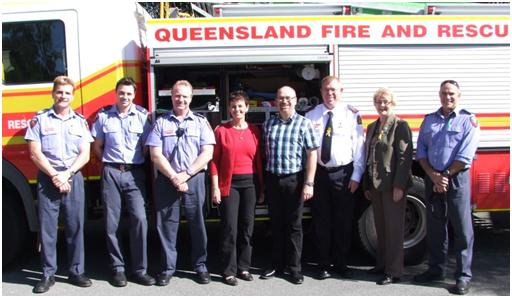
At Redlands CRC in the AM we welcomed Redland City Mayor, Melva Hobson and Councillor Wendy Boglary, and we hosted representatives from Queensland Police, State Emergency Services, and Queensland Fire & Rescue Service. To celebrate our National Day of Thanksgiving, we wanted to specifically thank those who work in police and emergency services. So we issued special invitations, got in the commercial espresso machines, and treated them to some great Christian affirmation. We also made gestures of thanks to some in the church family who do so much behind the scenes and yet who are not often affirmed. It was great to honour God together for what he does through people! It was so encouraging to hear (and feel) the buzz in the room! It really is good to glorify God as we meet together. Thanks for being part it!

Truth is, not everyone makes it every Sunday. For some, this is unavoidable. Whether through career or other circumstance, from time to time we just cannot make it.

But did you know that a proportion of the Redlands CRC family attend only once every two or three weeks?

Is that you?

I know: no one needs a guilt trip. But having a good look at how we spend our time, and what we spend our time on, could be a timely thing to do. I’ll leave that exercise to you…

As you think about Sundays, though, it’s good to remember the metaphor Paul uses to describe the church in 1 Cor 12. He refers to it as ‘the body of Christ’. One of the key points he makes is this:

Now you are the body of Christ, and each one of you is a part of it. ” (1 Corinthians 12:27, TNIV)

God wants you to be active in the church. If your typical attendance pattern is to come every second week, or every third week, or less – have you ever thought about the impact that has on the body? You might think that it doesn’t matter too much whether you’re there or not. If you don’t think it matters, try this: take just one piece of your body out of the picture – just for a day. Let’s say, your left hand. You’re probably right handed – it shouldn’t matter that much, right? Or a toe – or even a section of a toe – ever tried walking with an ingrown toenail? See, if just one small part is out of action, the rest of the body knows all about it.

The reality is that God really loves it when the body is working well. Every part of it. He loves it when the body is healthy. He loves is when the body worships and serves and works the best that it possibly can. He loves it when the whole family meets and worships together!

It may even be that the body needs you more than you need the body. Either way, when the whole body works well together, God is honoured and is grace is more evident in the church and in the world.

So why not make a plan to come more regularly: come once, come weekly. Glorify God with His people, and together pray that the wonderful news of his son will be carried into his world just that little bit better as we do.

Dave

Members of Queensland Fire & Rescue, along with Cr Wendy Boglary
Dave Groenenboom, Tom Short (SES), and Mayor Melva Hobson

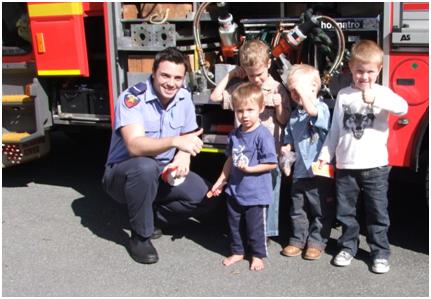
Another QF&R Officer with some of the more important people at Redlands CRC

Photos: Kev Hudson

See you Sunday…

Are you planning to go to your church this Sunday? Given that we are about glorifying God, I want to encourage you to place it on the top of your agenda.

The reason? Worship is about God. Who we are, or what we want, are not the most important questions when it comes to worship. The focus is that God is good. God is great. God is gracious. God loves our world. God gave us Jesus. Do we need any other reasons?

An old confession of the church says our chief purpose as men and women is to glorify God and enjoy him forever. Gathering on Sunday is one of the best ways to express this.

Sure, we are all busy. Every day is another juggle of work, family, and everything else.

God, however, is not one of many. He is the centre of our life. He is our all.

And He created you to worship Him.

So, right now, can I encourage you to get out your diary and write “Glorify” on Sunday. Attend the 9am or 5pm gathering. Renew your commitment to worship. Honour the God who has given you life, and come, with all his people, to celebrate his goodness.

See you Sunday!

Of the World, But Not In It?

I am writing a new sermon series (with Clinton) on the Sermon on the Mount. My first message is coming Sunday (Feb 07), and it comprises the whole Beatitudes passage – Matthew 5:1-12. “Blessed are the poor in spirit…”

I was reflecting about how Jesus calls his followers, broken as they are, to respond to the brokenness around them. One of the thoughts I had was that only a broken church can respond with blessing to the broken world they are in. This is how we reveal the kingdom of heaven, and show what it is really like.

Then I wondered about how does a church of reasonably comfortable suburban Christians start to enter into the brokenness in their community?

I was thinking we could email local MPs and local government people and ask them for guidance in where the greatest areas of need are. Then an uncomfortable realisation lodged itself in my mind, ‘why do I even need to do that? Why don’t I already know about brokenness in my own community? Why do we find it so hard to know what the greatest areas of need are? Why do we find it hard to see this?’

I think it’s because we get involved in our own lives, busy in our work, busy loving our families. We feel wronged when we don’t have any time to relax with our friends. Our churches are great, but there are so many things to do, so many programs, so many areas of ministry and service, that it’s just too easy to lose touch with the world around us. So we lose our connection with real people and their brokenness. We striving to get ahead financially, we want to make ends meet, become financially independent. We buy into the view that financial independence, comfortable living, owning the latest and greatest, brand-names-on-the-outside wardrobe, are the things that really matter. And as it turns out, we end up being of the world, but no longer in it.

Has the lifestyle of western suburban Christianity become a the new monasticism? Where Jesus’ people withdraw into their own virtual enclave and remove themselves form the world and its suffering? Is this why we do not perceive the brokenness around us?

Funerals: celebrating life

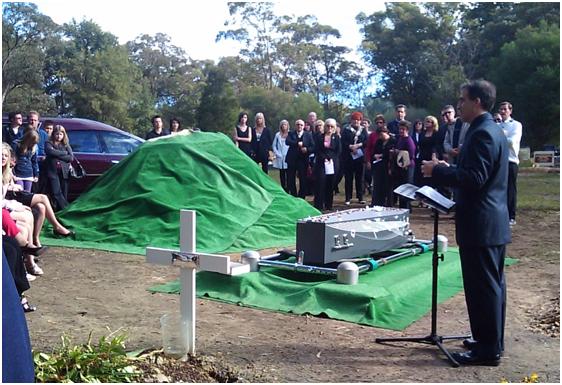
I have seen a lot of coffins, but I had never seen a coffin decorated with piano keys and music notes. Handles for the pall bearers were chrome cylinders attached with piano strings. I liked it. A lot. It was a tasteful expression of Eric’s love for music. While no professional musician, guests spoke of how he listened to, and drank in, and played music on a daily basis.

Before the casket was lowered, instead of throwing in soil, or laying a flower on the casket, people chose a piece of chocolate from a bowl, and placed it on top. I very deliberately placed by piece on B-flat. I don’t know that Eric was so into blues, but it suited my mood on the day.

Later, at the service of celebration, there was a tasteful mix of grief and laughter. Some of Eric’s children spoke, some performed musical pieces, his pastors spoke, guests spoke (more about that tomorrow), and once again, profound hope was expressed in music and song.

I have also seen funeral celebrations turn into a form of crass denial. Where it’s all made out to be a party, where banal humour and christo-pagan superstition permeates proceedings. “Yeah, I bet Bob’s up there now, beer in hand, looking at us all down here, wondering what all the fuss is about and when we’re all gonna get back to work…”

We can all do without that. And really, funerals do more harm than good when they trivialise life like that.

At Eric’s funeral we wrestled with life and its wending course. Together we sought to make sense of Jesus’ claim to be resurrection and life. We did that through our tears. And we celebrated everything Eric had brought into our lives, the talents he used to serve others, the expertise he brought to his workplace, and his quirky style of humour, we were celebrating the work of an extraordinary God in the life of an ordinary man.

But celebration? Seriously? How can you walk out of a funeral more in the lightness of hope than the heaviness of grief? This is the reality of Jesus’ life in us. His is a promise of hope, of life, that cannot be extinguished by death. This is what we have in the good news. When that deep celebration and profound joy resonates, even from a grieving community of followers, resurrection joy is palpable.

This is what we should celebrate at a funeral. How we have seen God’s life come to expression in this person. How we have seen beauty. How we have sensed a pursuit of justice and right. How they showed us a healthy spirituality. How we have learned about relationship, how others have been valued, honoured, and served.

Memories like anchor our affirmation in God’s work of grace in the life of another. We’re reminded that the Gospel is not just a religious idea or a doctrine to be intellectually accepted. It is an invigorating, transforming reality. When these transformational realities take root n a person’s life, they anticipate the new world Jesus will bring: God has already started his work of transformation in his people. Proof positive that Jesus is renewing minds, attitudes and values, and through them bringing change to his world. One life at a time.

Shalom,

Dave

New Year’s Revolutions

Welcome to 2009

It may be nineteen days late, but I’ve been on leave for the last three weeks, so this is the first chance I’ve had to express some thoughts and prayers I have been working through for the two months. I have called these ‘New Year’s Revolutions’, because most of them I just want to keep rolling around, returning, reforming and reframing with greater focus.

So here’s what I am looking at

  1. I want a more prophetic and challenging ministry. That means I want to listen to what’s going on in my life, the lives of people around me, the culture in which I live, and hold that up to God’s call to be a people implementing and anticipating new creation. I want to speak to and expose our blind spots and the complacencies of my own culture. I want this to be decisive, incisive and breathed by the Spirit. Please understand: I do not want to suggest that we are all slacking off. The truth is, there are lots of people at RCRC who are great servants in great ministry. But we do have a tendency to favour what like and want, rather than true needs around us. I 2009 I would love to see that change
  2. I want to see more spiritual passion. I could be wrong, but sometimes I sense that we’re wary about a rich expression of following Jesus in life and worship. Whether it’s a lavish gift, some outward expression of heartfelt joy, or a rich sense of community and acceptance when the community of Jesus followers gather. For this reason, I think it would be good to ask a few questions of ourselves:
    1. Is my celebration of God as expressive as my celebration of great exam results or the victory of the team I love? Which one is better? Which gives me more hope?
    2. Is my welcoming of Jesus followers on Sunday as warm, expressive and heartfelt as the meeting of a best friend I have not seen for a long time? Does our expression of community say something about the wonderful transformation Jesus has brought and is bringing?
    3. Is God really the centre of my celebration on Sunday? How could I give better expression of this with his new community?
  3. I want to lead and preach toward full commitment and Christ centeredness. We all know perfection only comes when Jesus returns so I’m not thinking of dividing us into business class Christians and the economy variety: some Christians who have ‘made it’ and others who haven’t. But let me ask you – and let me keep asking you:
    1. Are you in top spiritual condition? Where do you rate yourself on a scale of 1-10 where 1 is ‘not at all Christ centred’, and 10 is ‘as Christ centred as I think I can be’. Let’s say you give yourself a 6/10. Do you think God is satisfied with that? If not, what do you have to do to move up a notch? What attitudes have to change? What do you need to put to death? What needs to come alive?
    2. Is RCRC in top spiritual condition? What needs to change? What do we need to do more, and what should we be doing less?
    3. Are you in a context where you are being stretched theologically? Where your desire to know God and serve him is really being deepened? Are you seeking greater opportunity to grow? Have you made a goal to nurture your faith significantly in 2009? Have you signed up for Foundations? (watch this space)
  4. I want to see RCRC truly embrace a healthy outward focus. We’ve talked a lot about this: serving our community, being salt and light, being an agent of hope for Redlands. Now we have take it to the next level. I know we are all busy. Me too. I probably can’t do more things than what I am doing at present, so I need to think of the following:
    1. What can I drop or do differently? Letting something go doesn’t mean I no longer agree with it, or that it’s become bad. It may just mean that as I change and meet new opportunities being a good steward means I need to do things differently
    2. What will I do to specifically serve the outward mission of the church? Jesus has given his transforming love to me minute by minute – so how will I implement something of his transformation in my life? You may not be Mother Theresa, but here are 10 suggestions (as distinct from commandments) to start you on your way:
      1. visit some lonely people
      2. cook a meal for the single mum a few doors away
      3. ring/email school chaplains to let them know I’m praying for them
      4. offer to mentor a child at a local school
      5. get involved in something like the Matthew Stanley Foundation or the Melanoma Awareness Foundation – two causes that have been too close to home for many
      6. help Meals on Wheels
      7. pray for the Missional Communities group at RCRC
      8. send regular encouragement to those involved in RE teaching
      9. support RCRC specifically engaged in evangelism ministry
      10. just pray daily for my church to move from ‘in here’ to ‘out there’. Pray for Ministry Team people like Dan Neville, Geoff Hughes and Rod McWilliams as they seek to lead us into this

And then, a wish: I would love to see some healthy creative ministry develop, specifically for powerful communication at Sunday services. I am not talking about ‘skits’ so much, as well produced, well presented, dramatic presentations that support, add texture, and harmonise with what preachers like me present. These can be so powerful!

I wouldn’t mind betting that there are a few people in the RCRC family who could run with this – speak to me! What a great way to use your talents and gifts to bring God’s message of grace and hope to people!

Friends, I know this year will have its share of challenges. We all, by God’s grace, need to pull together and in the same direction. Ours is the rich privilege of taking the blessings God has so richly poured out on us, and using them to bless those who have no hope, or power, or love. God has blessed us with life in Jesus, and this year we get to celebrate it afresh with one another.

What we need to understand it that the purpose of that life and blessing is to carry it to the community around us, so that the world may know there is a God who is transforming His world through His Son, Jesus.

Shalom,

Dave